Connect with us

Africa

Fuel Price & Mobility: Nigeria’s Need for Technological Awakening, by Yusuf Babatunde

Published

on

FUEL

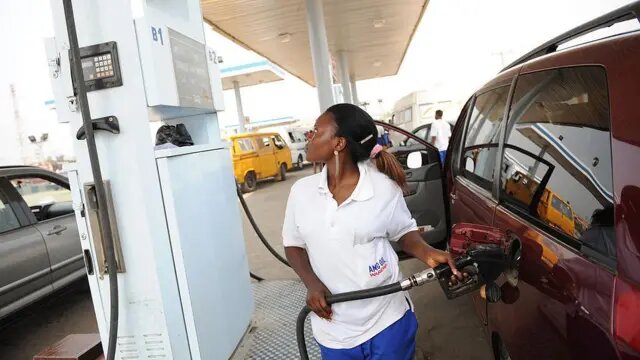
At an all-time high of 34.2%, Nigeria’s inflation’s effect on fuel price volatility is one that can not be overemphasized. But it’s high time we acknowledged that our addiction to fossil fuels is no longer sustainable – especially in a fast-evolving world.

Although many factors—including the fluctuations in global oil prices have left our fuel prices skyrocketing, but this crisis presents an opportunity for innovation—only if FG would see beyond the presence.

No progressive country in the world would turn a blind eye to the potential of technology in transforming its mobility landscape and reducing its dependence on fossil fuels. Electric vehicles, alternative fuels, fuel efficiency technologies, mobility-as-a-service, and smart traffic management are no longer futuristic concepts; they’re viable solutions Nigeria, too, needs to start embracing on a large scale.

When you look at how countries like Norway have strategically transitioned to electric vehicles, how Sweden has pioneered biofuel initiatives, and how Singapore’s facilitated intelligent transportation systems, then one would realize that these demonstrate that technology can liberate Nigeria too from the shackles of fuel dependency.

So, then, the question arises: what’s holding Nigeria back? Our government’s hesitation to invest in alternative energy sources and transportation infrastructure is staggering. The Innoson CNG buses (some of which are already on the roads in Lagos and Abuja) are worthy of commendations, but it’s just like rotating in a circle. It’s not really the solution. The most effective solution would have been that the 36 state governments and FG invest heavily in technology and develop a comprehensive national electric vehicle policy. This would undoubtedly reduce the demand for fuel, and as such, the hike in price would fall drastically.

Advertisement

That fossil fuels pose existential risks to the planet and climate change, is another reason the Nigerian government needs to transit from them and encourage public-private partnerships for mobility-as-a-service and smart transportation systems.

The benefits to be cupped from this are numerous, some of which are reduced fuel imports and increased foreign exchange savings, improved air quality and public health, enhanced economic productivity and competitiveness, and even, creation of new industries and job opportunities.

Nigeria’s future depends on our willingness to embrace technological disruption. We must seize this moment to redefine our mobility landscape and secure a sustainable future. Whether we will continue to perpetuate our fossil fuel addiction or will we choose the path of innovation is a choice we need to make for the progress of this country.

Yusuf Babatunde is the CEO of Mapleby Autos

Advertisement
Continue Reading
Advertisement
Click to comment

Leave a Reply

Your email address will not be published. Required fields are marked *

Trending Contents

Topical Issues

Abba Dukawa Abba Dukawa
Africa16 hours ago

Reciprocity in Conflict: How Covert Attacks Provoke Resistance -By Abba Dukawa

Governor Abba Kabir belongs to every Kanawa and to no one – he's the people's governor, above political affiliation. One...

JAMB and UTME JAMB and UTME
Forgotten Dairies19 hours ago

The Role of Technology in Nigeria’s Education System -By Alheri Una

To fully maximize technology in education, government investment is crucial. Public-private partnerships can help provide internet access, digital devices, and...

Egbetokun Egbetokun
Africa20 hours ago

Setting The Record Straight On The So-Called “IGP’s Boys” Narrative -By Danjuma Lamido

Nigeria deserves a Police Force that is firm, fair, and accountable, and a media ecosystem that reports responsibly. We must...

Russian-Indian Business Dialogue, December 2025 Russian-Indian Business Dialogue, December 2025
Forgotten Dairies20 hours ago

Russia–India Dialogue Provides Platform for Strengthening Bilateral Entrepreneurship -By Kestér Kenn Klomegâh

Participants noted the development of Russia–India cooperation and implementation of joint business projects will continue at major international platforms, including...

David Sydney David Sydney
Africa20 hours ago

The Importance of Proper Legal Documentation in Business -By David Sydney

Where a business relationship is undocumented or poorly documented, even a legitimate claim may fail for lack of proof. Oral...

Bola Oyebamiji Bola Oyebamiji
Politics1 day ago

The Deputy Question: How APC’s Choice Will Shape Osun’s 2026 Contest -By Kolapo Tokode

A Christian, Oke offers religious balance to Oyebamiji’s candidacy. He is widely regarded as financially buoyant and politically influential, particularly...

Forest Forest
Africa1 day ago

The Devastating Impact Of Deforestation -By Favour Haruna

We can mitigate deforestation's effects by adopting sustainable choices and supporting conservation.Reduce paper usage, choose sustainable products, and spread awareness....

NEPA - DisCos NEPA - DisCos
Africa1 day ago

Electricity Tariffs in Nigeria: Who Really Pays and Who Benefits -By Jennifer Joab

To fix the system, Nigeria needs more than just tariff reviews. There must be transparency in band classification, rapid rollout...

Kate Henshaw Kate Henshaw
Africa1 day ago

You Can’t Photoshop Discipline: Kate Henshaw, Fitness, And The Hard Truth We Keep Dodging -By Isaac Asabor

Kate Henshaw did not say anything new. She said something true. And truth, especially when stated plainly, unsettles people who...

Rivers - Wike and Fubara Rivers - Wike and Fubara
Africa1 day ago

How Wike, Fubara and Rivers’ Lawmakers Are Disrespecting President Tinubu -By Isaac Asabor

What Wike, Fubara, and the lawmakers have done, collectively and individually, is to tell Nigerians that the President can speak,...