Africa
Governor Fubara Is Right About IGP’s “Fraudulent” Actions: Who Orchestrated Lifu’s Judgment? Otisi Panel Exposes the Truth; The Police and Judiciary Owe Rivers State an Apology, by John Egbeazien Oshodi

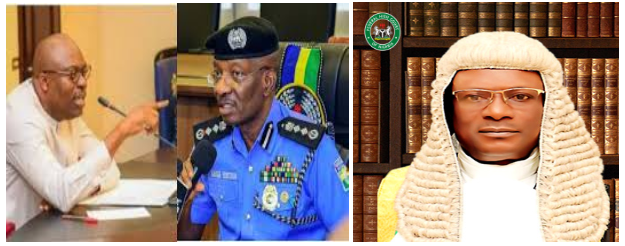
In a pivotal moment for Rivers State’s political landscape, Governor Siminalayi Fubara’s defiance against the Nigerian Police and their alleged interference in the state’s local government elections shines a spotlight on the deepening conflict between state sovereignty and judicial overreach. Fubara’s refusal to abide by the Federal High Court’s “fraudulent “judgment from justice peter Lifu, coupled with his dramatic confrontation with Inspector General of Police (IGP), Kayode Egbetokun, exposes the growing divide between state leadership and federal judicial decisions that seem to overstep constitutional boundaries. At the core of this battle stands the Otisi panel’s recent ruling, which nullified the Federal High Court’s decision, which sought to bar the Rivers State Electoral Commission (RSIEC) from holding elections. This ruling holds significant weight, not just for Rivers State but for Nigeria’s broader democratic processes.
Governor Fubara’s Critique of the IGP: “Fraudulent” and “Wicked”
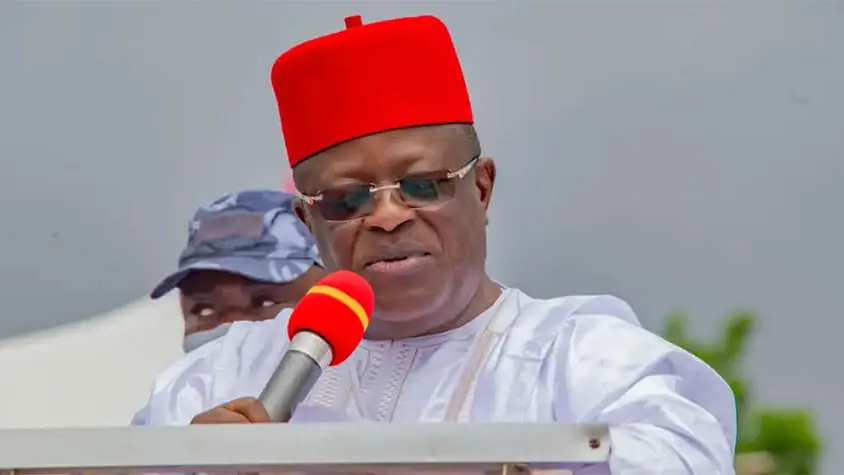
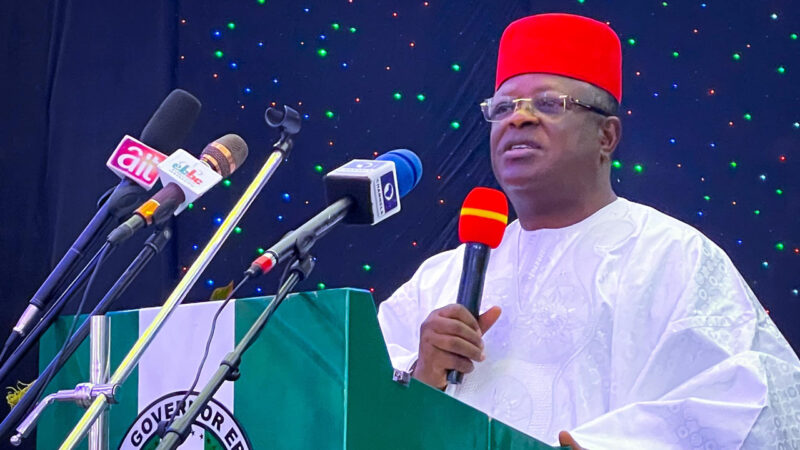
Governor Fubara did not hold back in his critique of IGP Egbetokun, accusing him of fraudulent and wicked actions in relation to the October 5, 2024 local government elections. Fubara’s strong condemnation of the IGP underscores the frustration and betrayal felt by local leaders when judicial rulings appear to undermine their constitutional rights and democratic processes. “We don’t need your security,” Fubara boldly declared, refusing to accept police intervention in what he viewed as the state’s rightful election process. This was not just about election security—it was about asserting Rivers State’s autonomy.
The standoff between Fubara and police officers on October 4, 2024 in Port Harcourt was a turning point. Fubara’s personal intervention, when police attempted to disrupt the operations of the RSIEC, was an act of defiance that sent a strong message about Rivers State’s commitment to self-governance, especially in the face of judicial decisions that seemed more concerned with obstructing elections than protecting the right to vote.
The Otisi Panel’s Ruling: A Victory for State Sovereignty
At the heart of this judicial struggle is the Court of Appeal’s ruling, which nullified the decision of Justice Peter Lifu of the Federal High Court in Abuja. Justice Onyekachi Otisi’s panel found that the Federal High Court had no jurisdiction over Rivers State’s local elections, especially in light of Section 28 of the Electoral Act, which only governs federal elections, governorship elections, and area council elections in the Federal Capital Territory (FCT). This ruling is a monumental affirmation of state sovereignty and the separation of powers.
The panel’s decision is a landmark victory for Rivers State, confirming that the state has the right to manage its electoral process without interference from federal courts or law enforcement. By overturning Lifu’s “fraudulent judgement”, the Otisi-led panel reaffirmed that the RSIEC could proceed with the October 5 elections despite the federal court’s attempt to block them. This ruling marks a critical step in asserting the autonomy of state governments and local electoral commissions across Nigeria.
The Complex Web of Political Manipulation and Judicial Overreach
The dispute over Rivers State elections underscores a dangerous pattern of political manipulation and judicial overreach. Governor Fubara’s accusations against IGP Egbetokun reveal a growing concern about the compromise of federal institutions, particularly in Rivers State. The governor suggested that the IGP’s actions were part of a coordinated effort with former Governor Nyesom Wike to obstruct the October 5 elections.
This suspicion of political collusion between law enforcement and political figures has raised serious questions about the integrity of Nigeria’s judicial and law enforcement systems. Fubara’s allegations suggest that the Nigerian Police, under the leadership of IGP Egbetokun, may be playing a dangerous role in political interference, rather than fulfilling their constitutional duty to ensure the safety of the electoral process.
In light of this, the Otisi panel’s ruling serves as a refreshing reminder of the integrity of state authority. It emphasizes that state governments must not be held hostage by federal judicial overreach or political manipulation, particularly when such actions are designed to derail the democratic process.
Fubara’s Defiance: The Fight for Judicial Independence
Governor Fubara’s defiance of federal court rulings represents more than a political act; it is a stand for judicial independence. By insisting that the elections proceed, even in the face of legal opposition and police intervention, Fubara has placed himself at the forefront of the battle for Rivers State’s democracy. His declaration that “we don’t need your security” reveals the deep mistrust he has for federal institutions that he believes have been compromised by political interests.
Fubara’s actions—and the Otisi panel’s subsequent ruling—reflect a broader movement in Nigeria where states are challenging the growing overreach of federal judicial power. The question remains: will the Nigerian judiciary continue to be manipulated by political forces, or will it rise above these pressures and uphold the principles of fairness, independence, and autonomy?
A Call for Judicial Accountability and Apology
The ongoing saga between Governor Fubara, IGP Egbetokun, and the Federal High Court in Abuja under Justice Lifu is a glaring example of judicial abuse and political manipulation at its worst. The Otisi panel’s ruling cuts through the political smoke and mirrors, exposing the blatant flaws and overreach in Justice Lifu’s decision. This ruling wasn’t just legally flawed; it was a deliberate abuse of jurisdiction, one that undermined the constitutional rights of Rivers State and disrupted the democratic process with reckless disregard. The manipulation at play here has not only caused unnecessary turmoil in the state but has shown the depths to which some are willing to go to subvert justice for political gain. This is a scathing indictment of a judiciary that must be held accountable for its failures.
In light of this ruling, it is time for the Nigerian Police and Judiciary to own up to their errors and offer a public apology to Rivers State. Their actions in undermining the state’s electoral rights and interfering with the democratic process must be acknowledged, and the damage caused must be rectified.
As Governor Fubara asked, “What kind of a country is this?”—a country where state rights are trampled upon by a compromised judiciary and political manipulation. The Otisi panel’s ruling is a victory for justice, but it is also a call for greater accountability within Nigeria’s judicial system. It is time for the police and federal courts to acknowledge their role in undermining Rivers State’s sovereignty and to offer an open apology for their interference in the state’s electoral process.
A Path Forward: Restoring Integrity and Upholding Justice
The future of Rivers State’s democracy depends on the ability of the judiciary to rise above political pressures and act impartially. The Otisi panel’s ruling is just one step in the ongoing fight for state sovereignty and judicial independence. The people of Rivers State have shown their resolve in the face of injustice, and now the judiciary and law enforcement must step up to restore integrity to the system and apologize for the damage caused by their misguided actions.
The battle for justice in Rivers State is far from over, but it represents a critical moment in the fight for fairness, transparency, and democratic integrity across Nigeria. This recent ruling serves as a reminder that justice must be blind to political influence and that state governments have the right to govern their own elections without external interference. The people of Rivers State have spoken—now, it’s time for the judiciary and law enforcement to take responsibility and make things right.
As Nigeria awaits the outcome of Hamma Barka’s panel on the remaining Rivers State cases, the significance of Rivers State in the nation’s political and economic landscape cannot be overstated. Rivers, as a major oil-producing state, plays a central role in Nigeria’s economic stability, being one of the key contributors to the nation’s oil revenue. The stakes are extremely high, not just for Rivers State, but for the entire country. Any further interference with its governance, especially through fraudulent judicial rulings and political manipulation, risks destabilizing a critical pillar of Nigeria’s economy. Rivers State cannot be treated as a political battleground for power-hungry elites without facing dire consequences.
For this reason, those in positions of power must be extremely careful. No more fraudulent judgments must be allowed to take root, especially when they threaten the very foundations of democratic governance in Rivers State. President Tinubu, who is deeply involved in the political currents surrounding these events, must take heed and avoid being complicit in these dark and dangerous maneuvers. Aligning with figures like Nyesom Wike and engaging in schemes that undermine the state’s autonomy could lead to irreversible consequences. The people of Rivers are resilient, and if the forces of political manipulation continue to push them to the brink, there will be a reckoning—a fire that will be impossible to contain once ignited.
Rivers State’s fight for sovereignty is not just a local issue; it has national implications. The nation’s future depends on whether the rule of law and democracy can be preserved in Rivers, or if political figures, judicial overreach, and law enforcement corruption will continue to dictate its fate. Those in power must choose carefully—any attempt to undermine Rivers State and its people will not be without consequence. The fire will burn, and history will remember those who tried to extinguish it.
Furthermore, the leadership of the Nigerian Police, particularly IGP Egbetokun, must take a hard look at the nonsensical and counterproductive nature of their involvement in this situation. The actions of IGP Egbetokun have shown a disregard for professionalism and the law in the service of political expediency. The police leadership must learn from this stupidity and reassess their role in ensuring the security of the electoral process, rather than being pawns in the political games of the powerful. This is a moment for self-reflection and a clear recognition of the importance of acting in the best interests of the law and democracy, not serving political agendas. The consequences of failing to act with integrity will echo far beyond this moment—into the very future of Nigeria’s democracy.

Professor John Egbeazien Oshodi, born in Uromi, Edo State, Nigeria, is an American-based police and prison scientist, forensic/clinical psychologist, public policy psychologist, and legal psychologist. He’s a government advisor on forensic-clinical psychological services in the USA and the founder of the Dr. John Egbeazien Oshodi Foundation for Psychological Health. With a significant role in introducing forensic psychology to Nigeria through N.U.C. and Nasarawa State University, he’s also a former Secretary-General of the Nigeria Psychological Association. He’s taught at esteemed institutions like Florida Memorial University, Florida International University, Nova Southeastern University, and more, and is currently an online faculty member at ISCOM University, Weldios University and Walden University.