Forgotten Dairies
Iran’s $2 Million Toll Is Not a Fee : It Is a Declaration of War Against the World -By Fransiscus Nanga Roka
Restoring free passage through Hormuz ain’t about knocking down Iran for the sake of it. Expect? What it does mean, is the hope that no country will make the world hostage to its economy. If the world must pay millions to pass through international waters, then there is no reasonable order. What ‘s more, if the rules based order is to survive and flourish, such extortion in Hormuz can never be accepted again.

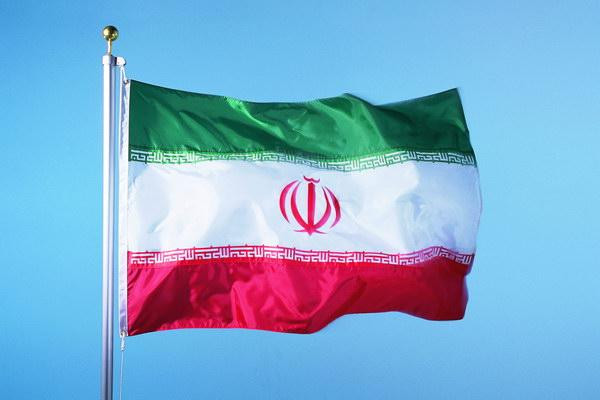
The Strait of Hormuz has long been regarded as the world’s most important economic chokepoint. Nearly one-fifth of all global oil is piped through this narrow passage between Iran and Oman. Its strategic place cannot be stated enough. Between Iran and Oman, global one-fifth oil throughput will come across this narrow corridor. Naturally, then, some experts say it is also one of the world’s most important geopolitical fault lines. Iran has now begun to charge ships up to $2 million in order to secure passage through their territorial waters, thus asserting new rights over the strait. It’s a straight up toll. Since when did they start doing this in wartime? This isn’t for self defence. In fact, what it really amounts to is economic coercion on an international scale and it is, in a way, a declaration of war against the international order itself. For decades, the world has treated the Strait of Hormuz as an international lifeline, not a national toll booth. The principle was simple: no one state could hold world trade routes hostage. But when Iran demands millions of dollars just for ships to pass through an artery used by all humankind, that is more than an exercise in sovereignty. The global economy is being operated like a joystick by force. Forthwith freight rates soar. Shockwaves of events erupt, architecture deteriorates, suppliers tremble and faraway countries from Europe to Asia check on the stocks in their purses now governed by a plot which believes itself true and fair simply because it is welcoming to foreigners. Iranian officials say the fees are an indicator of strength and the price of war, but what this message really means is even more dangerous: whoever can threaten the Strait of Hormuz is able to rewrite the rules for global trade.
If this principle is adopted, the entire post World War II order will come to an end.
The freedom of navigation is not a mere slogan; it is the foundation for modern prosperity. Without it, international law has no meaning; alliances are fragile and trade depends upon whoever nearest controls a missile battery’s good will.
This is why the current crisis cannot be treated as a regional dispute. It is putting to test whether the United States, Israel, and the United Kingdom, the very powers that have long guaranteed maritime security are willing to enforce rules they made themselves.
Iranian provocations have met with warnings, sanctions and nibbling strikes over the past several years. Each time, however, Tehran has moved on from the initial response: attacking tankers, seizing ships, closing lanes and now asking tolls for entry from one of world’s most important waterways.
The lesson Iran learns can be summed up in one sentence: Escalation works.
If this charge of $2 million is accepted, there will be a new reality in which international trade moves only when Tehran agrees. That reality, however, not confined to the Persian Gulf because it also lies along the Red Sea and southern China Sea every strategic corridor wherein power bets law may replace other laws
Some may argue that to step up is to run more risk; yet the opposite may well be true. The longer people permit economic strangling in Hormuz, the sooner there is likely to be a major war because weak actions invite stronger ones.
Historically, chokepoints cannot be sustained indefinitely. They either become secured or advance towards being perceived crisis points forever.
Washington and London must assume the responsibility and Jerusalem. Not that they are looking for a war, but because their respective countries have the capacity and obligation to prevent any single state from turning this world’s most important waterborne trade route into a private toll road.
Restoring free passage through Hormuz ain’t about knocking down Iran for the sake of it. Expect? What it does mean, is the hope that no country will make the world hostage to its economy. If the world must pay millions to pass through international waters, then there is no reasonable order. What ‘s more, if the rules based order is to survive and flourish, such extortion in Hormuz can never be accepted again.
Fransiscus Nanga Roka
Faculty of Law University 17 August 1945 Surabaya Indonesia