
Forgotten Dairies
When Rivals Mourn: El-Rufai’s Loss And Nigeria’s Human Side -By Isaac Asabor
Tinubu’s condolences carry a subtle yet powerful reminder: leadership is often measured not just by policies or electoral victories, but by the capacity to recognize shared human experiences, even with those who have taken divergent political paths. In a country frequently consumed by factional disputes and rivalries, such a gesture is notable for its sincerity.

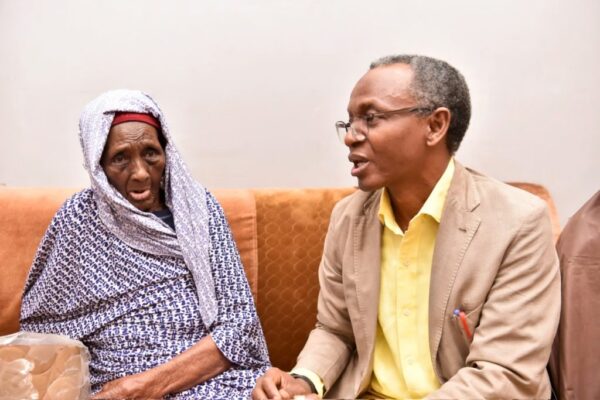
In the theater of Nigerian politics, public gestures are often scrutinized through the prism of ambition, rivalry, and alliances. Yet, there are moments when the human condition cuts through political theater, demanding acknowledgment that transcends party lines and personal ambitions. The recent passing of Hajiya Umma El-Rufai, mother of former Kaduna State Governor Nasir El-Rufai, is one such rare instance when political differences were set aside in the face of an immutable truth: loss.
President Bola Ahmed Tinubu, National Security Adviser Nuhu Ribadu, and Kaduna State Governor Uba Sani all reached out to console Mr. El-Rufai, sending a clear signal that even in Nigeria’s often fractious political environment, grief remains a universal equalizer. Beyond these high-profile figures, other eminent Nigerians also offered heartfelt condolences, including former Attorney General Abubakar Malami, former Kaduna governor Ahmed Mohammed Makarfi, and Dr. Yunusa Tanko, reflecting the depth of Hajiya Umma’s influence and the shared respect she commanded.
For President Tinubu, the message was both personal and presidential. He expressed “profound condolences,” describing Hajiya Umma as a matriarch whose life nurtured children who themselves shaped Nigeria’s political and social landscape. The president’s statement hinted at empathy forged from personal experience. “Losing a mother is a pain unlike any other,” he noted, emphasizing that the bonds of family, and the loss thereof, transcend political disagreements.
Tinubu’s condolences carry a subtle yet powerful reminder: leadership is often measured not just by policies or electoral victories, but by the capacity to recognize shared human experiences, even with those who have taken divergent political paths. In a country frequently consumed by factional disputes and rivalries, such a gesture is notable for its sincerity.
Nuhu Ribadu’s message was equally poignant. Known primarily for his hardline stance against corruption and for a political trajectory that has at times been at odds with El-Rufai, Ribadu nevertheless allowed his grief for Hajiya Umma to supersede political baggage. He recalled “fond memories of shared moments” with the late matriarch, describing her as a nurturing and caring figure.
Herein lies a critical lesson in public life: while political disagreements may be perennial, personal bonds, however tenuous, endure. Ribadu’s tribute, though brief, underscored an essential truth often overlooked in governance and politics: empathy is a currency that maintains relevance, even in the most adversarial settings.
Governor Uba Sani, El-Rufai’s successor in Kaduna State, likewise extended condolences, highlighting Hajiya Umma’s qualities of grace, moral clarity, and community stewardship. Sani’s message illustrates a delicate balance, respecting the legacy of a predecessor while asserting his own leadership identity. In commending the late matriarch for her stabilizing presence and counsel, Sani managed to affirm continuity of values even amidst political evolution.
This gesture is instructive. In a landscape where successors often seek to erase the traces of their predecessors, Sani’s acknowledgment of Hajiya Umma’s influence demonstrates that leadership can coexist with humility and respect.
The outpouring of sympathy did not stop with immediate political allies or rivals. Abubakar Malami, also sent a deeply personal message to El-Rufai, and wrote, “Mallam Nasir El-Rufai, I received with deep sadness the news of the passing of your beloved mother, Hajiya Umma El-Rufai. On behalf of myself and my family, I extend my heartfelt condolences to you and the entire El-Rufai family over this profound loss. The death of a mother is an irreplaceable loss, and I pray that Almighty Allah grants her Aljannatul Firdaus and gives you the strength and fortitude to bear this sad loss. In this moment of grief and in the face of your current challenges, please be assured of my prayers, solidarity and unwavering support. May her gentle soul rest in perfect peace.”
Similarly, Ahmed Mohammed Makarfi, reflecting the sentiments of a seasoned political elder, offered: “I extend my heartfelt condolences to the family of H.E Nasir El-Rufai over the passing of his mother. Her death is a profound loss to all who knew her. May Allah (SWT) forgive her shortcomings, illuminate her grave, and grant her Aljannatul Firdaus.”
Dr. Yunusa Tanko, representing his family, added: “On behalf of myself and my family, we extend our sincere condolences to the family of Nasir El-Rufai on the passing of his beloved mother. May Almighty Allah grant her eternal rest, forgive her shortcomings, and grant the family the strength and patience to bear this great loss. Our thoughts and prayers are with you during this difficult time.”
These voices, diverse yet unified in grief, underscore a critical reality: the respect and admiration Hajiya Umma commanded cut across political affiliations, reminding all that some human truths are universal.
The convergence of condolences from leaders across political divides, including estranged allies and critics, reflects a shared understanding: death is a universal experience, immune to party affiliation or personal animosity. From Femi Fani-Kayode’s heartfelt message to Reno Omokri’s reflections on the inevitability of death, the chorus of sympathy underscores that grief can momentarily suspend even the harshest political battles.
Given the backdrop of the foregoing facts, consider the metaphorical resonance of a subtle yet powerful image: the “rat that bites but cools the wound.” In politics, rivalries often gnaw at our ambitions, pride, and reputation, leaving behind wounds that may not be visible but are deeply felt. Yet, in moments of human tragedy, those same rivals can extend gestures of compassion, the proverbial breeze over a painful bite, easing the sting and reminding us of our shared vulnerability. Therein lies a timeless lesson, captured in an African proverb: “One’s enmity with another should cease whenever either of them is bereaved.”
For El-Rufai, who has navigated fraught relationships with key figures including Ribadu and President Tinubu, these gestures are particularly significant. His shift to the African Democratic Congress (ADC) and vocal criticism of the ruling All Progressives Congress (APC) may have widened political chasms, yet in mourning, these divisions momentarily dissolved. It is a reminder that political distance need not translate into emotional detachment.
Nigeria’s political discourse is often dominated by suspicion, maneuvering, and contestation. Yet, the outpouring of sympathy illustrates a counter-narrative: that beyond the public theater of disagreement lies a shared moral and emotional universe where respect, compassion, and acknowledgment endure.
This episode challenges both leaders and citizens to reconsider the intersection of politics and humanity. Leadership is not solely a measure of electoral victories or policy achievements; it is also reflected in the capacity to recognize and honor the profound human experiences of those around us. Grief, as witnessed here, is a force that transcends office, title, and faction, reminding even the most hardened political actors of life’s impermanence.
Moreover, the public visibility of these condolences amplifies their significance. In a country where political interactions are scrutinized for hidden motives, such acts of empathy send a message: beyond strategy and rivalry, there remains an ethical imperative to honor shared humanity.
As Nigeria continues to navigate complex political landscapes, the death of Hajiya Umma El-Rufai serves as a solemn, instructive moment. It illuminates a rare truth: even in a society where politics often dominates public perception, human connection can pierce through the fog of rivalry. From Tinubu’s heartfelt words to Ribadu’s personal recollections, from Sani’s respectful acknowledgment to the consoling voices of Malami, Makarfi, and Tanko, the common thread is unmistakable: loss transcends politics.
In the end, perhaps the most enduring lesson is that political life, however contentious, is still lived within the boundaries of human experience. Grief, empathy, and the capacity to offer comfort are reminders that even amidst power struggles, the basic tenets of humanity, compassion, recognition, and respect, remain non-negotiable. In mourning together, these leaders provided not just solace to one man, but a subtle affirmation that, at least occasionally, politics can pause in deference to the human heart.




















You must be logged in to post a comment Login