Africa
Is Tinubu’s Government Attacking Public Opinion? -By Isaac Asabor
If such prominent figures can be publicly smeared, what happens to the average Nigerian? Activists, journalists, and even ordinary citizens are being harassed, arrested, or jailed for social media posts. The Cybercrime Act, meant to tackle internet fraud, has been repurposed to silence critics. Nigeria’s digital spaces are now monitored battlefields where free speech is under siege.


Public opinion, once the soul of democracy, is fast becoming an endangered concept in Nigeria. In his foundational text “Mass Communication: Theory and Practice”, Professor Ifedayo Daramola defined public opinion as “the consensus or aggregate views held by the public on a burning issue or about a product, service, organization, individual or government.” Today, under President Bola Ahmed Tinubu, that consensus is being muffled, criminalized, and dismissed as noise.
Across democracies, public opinion serves as a compass for governance, a check on excesses and a guide for policy. But in Nigeria, dissent is increasingly treated as disloyalty. Criticism is no longer just unwelcome, it is met with propaganda, persecution, and even prosecution.
The response to Dr. Akinwumi Adesina’s recent remarks is a clear case in point. As President of the African Development Bank, his warnings about inflation and food insecurity were rooted in economic fact and public concern. But rather than address the issues, government sympathizers launched character attacks, accusing him of “de-marketing Nigeria.” Constructive criticism was twisted into betrayal.
Similarly, former President Olusegun Obasanjo, no stranger to controversy, was vilified for urging national introspection. His call to heed public discontent was met with a coordinated media attack. The message was unmistakable: speaking truth to power is a punishable offense.
If such prominent figures can be publicly smeared, what happens to the average Nigerian? Activists, journalists, and even ordinary citizens are being harassed, arrested, or jailed for social media posts. The Cybercrime Act, meant to tackle internet fraud, has been repurposed to silence critics. Nigeria’s digital spaces are now monitored battlefields where free speech is under siege.
We are not just witnessing the marginalization of dissent, we are witnessing its criminalization. And with that, democracy begins to rot.
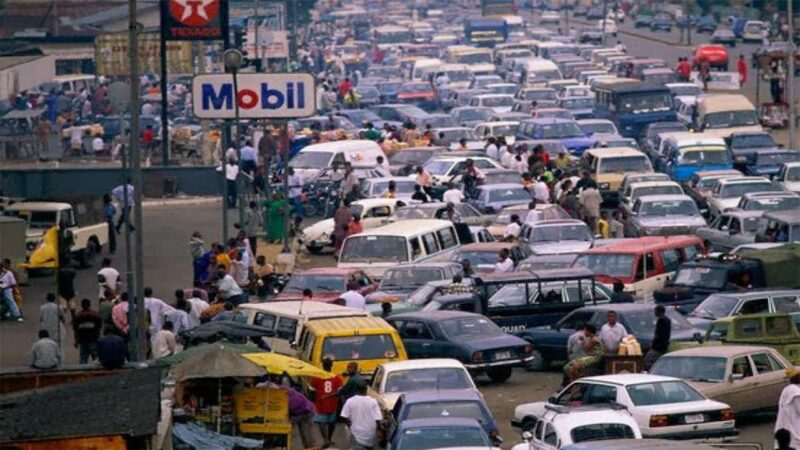
The pattern is painfully familiar. On May 29, 2023, Tinubu’s first day in office, he abruptly removed fuel subsidies without consultation. The fallout, mass suffering and economic instability, was met with hollow promises of palliatives, most of which remain unfulfilled or hijacked by political networks. Yet instead of listening to the people, this government invests in PR spin, inflated numbers, and empty slogans.
While the official narrative claims “progress,” the reality on the ground is brutal. Inflation continues to soar. Unemployment is rising. Families cannot afford school fees, rent, or even basic food items. A “mudu” of rice is now priced beyond the reach of the average Nigerian. But when citizens cry out, they are branded unpatriotic.
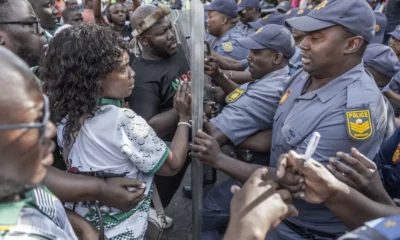
This silencing of public opinion is not just a failure of leadership, it is an erosion of democratic rights. In today’s Nigeria, social critics are blacklisted, protesters are brutalized, journalists are tailed, and whistleblowers vanish. Instead of engagement, the state offers intimidation. Instead of reform, repression.
Let us be clear, patriotism is not silence, just as unity is not uniformity. Loyalty to Nigeria is not blind allegiance to a political figure. A government that cannot withstand criticism lacks the legitimacy it so desperately clings to.
In fact, the danger signs are glaring. From Tunisia to Egypt to Libya, we have seen what happens when leaders ignore the will of the people. Nigeria is not exempt. The public mood is tense, tired, and angry. One market woman in Lagos put it best in raw pidgin:
“Shebi dem talk say cassava, ewa and agbado go cheap if we vote dem? Today we no fit buy am again. So who we offend?”
This is not mere grumbling. It is a national outcry. President Tinubu, once a symbol of democratic resistance, now presides over a government that is suppressing the very freedoms he once fought for. This is not just ironic, it is deeply troubling. If he truly wishes to honor his democratic credentials, he must reverse course.
To lead a democracy is to tolerate opposing views, not crush them. It is to listen, not silence. Critics are not enemies of the state, they are its conscience. Without them, governance becomes guesswork, and democracy becomes dictatorship by another name.
If Tinubu wants to be remembered as a democrat and not as an autocrat in disguise, he must create space for public opinion to thrive. That includes protecting journalists, encouraging civic voices, and ending the weaponization of state instruments against dissenters.
Democracy does not die in a single day. It is suffocated over time, by fear, by silence, and by the unchecked arrogance of power.
Given the foregoing ominous signs, the question is not just whether public opinion is being attacked. It is whether this administration still values democracy at all.