
National Issues
A Glimmer of Hope In Religiously Fragmented Plateau State -By Abdulkadir Salaudeen
It is also in Jos that the globally recognized Imam Abdullahi Abubakar (now late) sheltered about three hundred Christians during one of those crises in Jos. He hid them inside his mosque from marauding killers. May God have mercy on him and his likes as he rests in his grave.


Plateau State used to be the cynosure of all eyes and a dreamland for those yet to visit it. It is not only the home of peace; it is also the home of tourism. Those who coined its motto as “Home of Peace and Tourism” were spot on (at least, back then).
When it was so named, it was indeed a home of peace and tourism. It was a tourist attraction, a top resort for foreigners who came to explore. It was cosmopolitan in both outlook and essence, with its gates open to all. People from different ethnicities coexisted, practicing different religions without being torn apart by the divisive threads of religiosity.
But when people became extremely intolerant on the basis of religion and let religion negatively impact them, rather than practicing the ideals that foster peaceful coexistence, things took a turn for the worse, and the state became chaotic — a center of violence.
Religious suspicion takes center stage, and erstwhile peaceful Muslims and tolerant Christians suddenly become arch enemies, battle-ready, and trigger-happy. The peaceful coexistence that characterized the state gives way to burning mutual animosity. The “Home of Peace and Tourism” becomes the “Home of Conflict and Desertion.”
One may ask: “Who did this to us in Plateau State?” Any attempt to answer this question leads to pointing accusing fingers at one another. Christians claim the Muslims started it, while Muslims insist they are peace-loving people and violence isn’t in their DNA – it is in the Christians’. Therefore, trying to answer the above question will not solve the problem. It will aggravate it.
So, what is the solution to religiously instigated fanatical killings in Plateau State and Nigeria at large? I searched for the answer – the solution. Fortunately, I found it. The solution isn’t the government, which is more inclined to paying lip service to ending insecurity, and insulting victims rather than consoling them.
Let’s take for instance, President Tinubu’s recent chilling and unpresidential statement in Jos to those who lost loved ones: “You have no light at the airport. I have to fly back within the next 10 minutes. To the victims, there’s nothing I can give you but a promise that this experience will not repeat itself.” The statement adds insult to injury; it does not heal it at all. It’s neither consoling nor assuaging.
The best the government can offer is a promise – and it has been promising, will continue to promise, if allowed, till eternity. Until we have responsible elected officials, we will keep receiving promissory notes, as if we are in a ‘promiscratic’ regime.
Are clerics the solution? Our ulama, imams, pastors, reverends, and other ‘men of God’ could be a solution. Unfortunately, however, many have chosen to fuel the fire of disunity and religious crisis.
So what is the answer? The answer is us, and the solution lies within us. We can change the narrative, insist on being positively different, and say no to injustice and senseless killings.
I will cite three to four cases in Jos that offer a glimmer of hope – if we can live by the ideal. A Christian saved a Muslim from rabid killers in Jos during the recent crisis! Can anyone imagine that? This is not to say Christians or Muslims aren’t generally their brothers’ keepers. It is to emphasize that antagonism, mutual enmity, and ‘violence contest’ define interfaith relationships in Plateau State, probably more than anywhere in Nigeria.
Sa’idu Murtala, a Muslim, was at Angwan Rukubu when the attack occurred. Weapon-wielding thugs were looking for Muslims/Hausa to slaughter in the Christian-dominated area. Murtala recalls, “I completely lost my senses, thinking I will be killed because the situation was terrifying – people around me were angry.”
Looking for an escape route, a Christian man quickly got him into his house and hid him in his wife’s room. He spent the night there, was offered food, and was shepherded to a safe area at dawn. Murtala couldn’t believe it – it was like a dream. He narrates: “He (the Christian man) knows I am a Muslim because I used to do business there daily and leave for my area. He knows my faith. My phone, which I gave out for charging, was returned after things calmed down. They all know I’m a Muslim. I will never forget this man who saved my life.”
According to Premium Times, youths in Angwan Rogo, another Muslim-dominated community, took two elderly Christian women and handed them over to the military for safety. “Don’t worry. There is no problem,” one of the Muslim men said in a viral video as they ushered the two Christian women into the military vehicle.
There are many other instances – this is just representative. This is what happens when Muslims and Christians choose to be humans, not trigger-happy religious bigots with empty skulls. May peace-loving people like these multiply in our community.
I am not done. Many must have seen this headline and read the story (I won’t narrate it): “Plateau: Christian woman returns missing N1m to Muslim trader.” Amidst the grief in Jos, with Christians and Muslims mourning loved ones, a Christian woman exhibited a rare trait – trustworthiness, a quality racing towards extinction in Nigeria.
Today, a Muslim doesn’t trust a Muslim when it comes to money. Christians aren’t different. A Nupe man doesn’t trust his Nupe brother, likewise the Hausa. Mutual trust, even within intra-religious and ethnic groups, is lost.
This Christian woman is different. If she had been bigoted and possessed by a religious devil, like many other Christians and Muslims, the devil in her would have instructed her: “Keep the money. After all, it belongs to a Muslim – a useless Muslim. You do not need to make a Muslim happy. By returning the money, you will be empowering Muslims and Islam. It is better you spend it for Christ or on yourself and your family.”
But because she is godly – truly religious, honest and trustworthy – she returned the money to the Muslim trader. In her words: “I am a petty businesswoman. I know what it means to suffer loss. If I put that kind of money into my business, I believe God would punish me.”
This is when religion is reformative and transformative, not corruptive and corrosive. Her name is Sarah Luca. She must be celebrated. This is my little way of celebrating her.
With this rare religious tolerance and disposition, even in places like Jos and states like Plateau, there is a glimmer of hope that mutual hatred and senseless religious killings can be stopped.
It is also in Jos that the globally recognized Imam Abdullahi Abubakar (now late) sheltered about three hundred Christians during one of those crises in Jos. He hid them inside his mosque from marauding killers. May God have mercy on him and his likes as he rests in his grave.
Yes! We can live together. Yes! We can be our brothers’ keepers irrespective of religion, ethnicity, and class. Yes! There is hope. Nigeria shall be peaceful again.
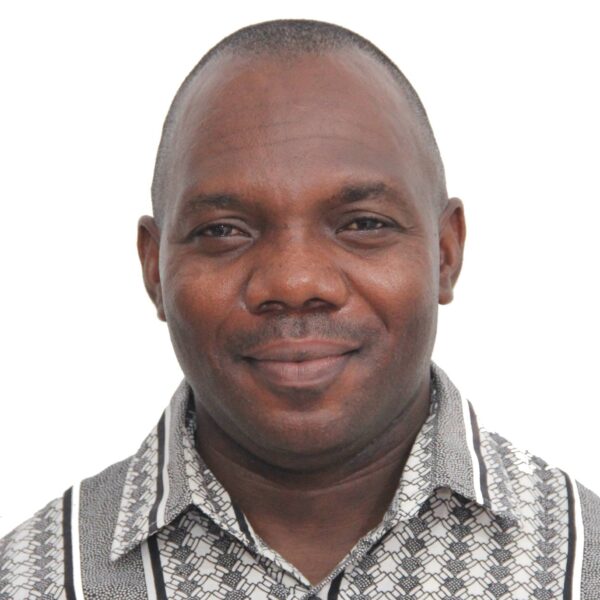
Abdulkadir Salaudeen
salahuddeenabdulkadir@gmail.com

















You must be logged in to post a comment Login