Africa
Matters Arising: Blood Transfusion Service In Nigeria -By Saifullahi Attahir
Factors that prevent people from voluntary donations should be address like establishment of more independent blood donation centres, incentives, availability of storage facilities, and free donation services.
Nigeria should have a centralised registry of people with blood group O rhesus D negative, and such rare blood units should be made available across the country through a systematic sharing arrangement.

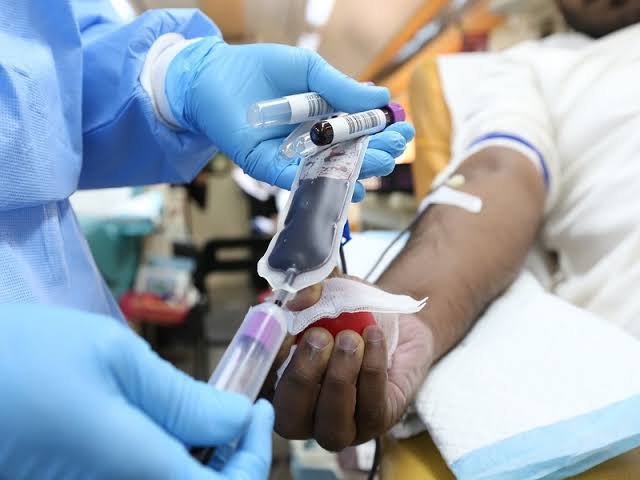
I’m sure once in your life time have experienced or had one of your acquittances received a unit of blood. But have we ever gave a second thought about how this integral part of healthcare system in Nigeria is managed? In this article, I would give the reader a glimpse into this sector due to it’s importance, and some comparison of how it’s manage in other advanced countries.
Blood transfusion was a century old medical practice developed around 1900 by a scientist called Carl landstener, despite several attempts by contemporary scientists before him to devise a means to replace loss of blood encountered by patients either during surgical operations, accidents, or child birth.
Landstener was able to perpect the art of blood transfusion through discovery of major blood groups (ABO, and Rhesus) that played role in matching donor and recipients. Since then, there was continued effort toward safe blood transfusion services across the globe which massively lead to the decline in mortality rate associated with decrease blood supply in the body.
In Nigeria, blood transfusion services was practiced since the colonial-post colonial period mostly starting in Lagos and major Urban centres. The major breakthrough was when the National blood transfusion services was established in 2005 during President Obasanjo. The National Health act of 2014 lead to the passage of National blood service Agency bill in 29th /July/ 2021.
According to the NBSA ( www.nbsc.gov.ng) site, there was 17 voluntary blood donation centers across the 6 geopolitical zones of Nigeria including separate centers in Federal Capital Abuja, and other centers within the Arm Forces/ Military hospitals. National blood donation day is celebrated every 8th of December, and World safe donation day celebrated every 14th, June.
Nigeria has a population of over 200 million people, and without saying, our demand for blood donation was staggering looking at the number of road traffic accidents, obstetrics patients, major surgical procedures, under 5 years malarial and Schistosomial infections. This is apart from anaemic conditions due to malnutrition (Iron deficiency), other tropical diseases, Chronic Kidney Diseases, abnormal menstruation, and burns.
With all the above mention reasons, our data regarding blood transfusion services was reprehensible.
Several factors have lead to that including community neglect, lack of government intervention, lack of standard private practices, cultural influences, poor funding, and the Almighty mismanagement of resources.
About 1,230, 000 (one million, two hundred and thirty thousand) units/pints of blood are collected annually across Nigeria healthcare facilities, but unfortunately about 90% of this donations are paid commercials. Only 25,000 units are donated by volunteers that are made available to 3,400 hospitals urgent request! This simply shows that less than 5% of blood donation in Nigeria is voluntary.
Let me highlight four different forms of donations practiced worldwide;
* There was voluntary donation done by individuals just for the sake of humanity with no ulterior motive.
*There was direct/replacement donation usually done by relatives of a patients that are called in times of emergency. This one is hugely practice in Nigeria to about 75% in public hospitals.
* There was paid commercial donations in which donors give blood and collect money for it. This practice in Nigeria constitute about 25% in public hospitals and about 75% in some private clinics. This practice carried the major risk of transmitting transfusion-transmitted infections like HIV, Hepatitis B, and C.
* There was the autologous transfusion in which individual give his own blood prior to some surgical operations where the blood is stored, and later transfused back to him. This procedure has the least risk of transmitting infection and eliciting blood transfusion reactions.
Among the four blood transfusion methods, the two most widely practiced in Nigeria are the replacement and the paid commercial. People only care to donate blood when they knew their relatives are in need. This practice was commoner in our society from the villages to the urban. You could donate as soon as you know it’s your parents, wife, son, sister, brother or friend. Any other person can go to hell!
The worst form of practice is the commercial one, where people either out of ignorance or artificial poverty volunteer to donate only if they are going to be paid for it. This business triggers every form of atrocities where the donors sometimes donate multiple times within a short period of time ( The standard is at least an interval of 4-6 months, depending on age, gender, and social status).
The paid donors carries the highest risk of transmitting infections and other abnormalities either to themselves or to the recipients. So this practice need to be discourage by the healthcare personnels and the Government.
As an insider, and with my little period of practice, I have come to realized some of the difficulties blood transfusion services encountered in our health care facilities.
Shortage of blood units
There was the problem of blood supply shortage, this is evident from how Doctors/Lab personnel always advised patient relatives to go home and mobilized their kinsmen when a patient was in need of blood. This happens as if it were the standard thing to do. The ideal is for a patient to be transfused blood from the pool of blood bank regardless of bringing replacement or not. But this can only happens if their was enough units stored in the blood bank, and in most cases their was non.
I have personally witnesses several cases where a patient can almost loose his/her life their donors travelling many kilometers only to be rejected due to mismatch. Imagine the money and time wasted!
The blame is not on the healthcare personnel, nor on the government alone, the blame is on the system and our society at large. We are lacking altruism.
This problem can be attributed to the lack of decentralised system of blood banking we operate in Nigeria.
Nigeria has a single National blood donation system. While in places like US, procurement of blood is majorly met by volunteers, they have a pluralistic blood collection programs by ( Red cross, independent community blood centres,and hospitals).
In the US, 15 million units of blood are collected from 10 million donors annually, and only 7% are collected in hospitals, and 93% in regional centres, unlike Nigeria where most of the collection are done in hospitals.
In the US, the blood collection, processing, testing,and preservation are regulated by the FDA. They operated a sharing system where by blood units can be transferred from a region with less demand and higher collection to a region with more demand.
Blood transfusion data
Nigeria has a blood collection data problem, many hospitals especially in the rural areas can not keep the record consistently for a year. This problem can be attributed to the manual (pen and paper) system of health records we are still operating in Nigeria, which is subject to error, missing, or manipulation. Without proper blood collection data it would be difficult to alleviate problem of shortage, and implementation.
Lack of Awareness
A recent data has shown how blood donation is directly proportional to development; in developed countries, 50 units of blood are donated in every 1000 population. In developing countries, 15 units of blood are donated in every 1000 population. While in under developed countries, only 5 units of blood are donated in every 1000 population.
In under developed and developing countries, limited storage facilities, lack of incentives, malnutrition, personal wellbeing,and lack of knowledge can be a contributing factor to low turnout of voluntary blood donation. It’s more likely for a high income University graduate to donate blood voluntarily than a less educated poor labourer. The former might be healthier, more mentally stable, and more aware on the need to donate.
Expertise and Procurement Facilities
The current improvement in blood donation service especially in the tropics can be attributed to the benevolent funding by the US through USAID and President Emergency Plan For AIDS Relief (PEPFAR). Since 2000, there was continued efficiency in transfusion services in Nigeria, thanks to the aforementioned Agencies.
Despite this improvement, there was still problems of procedures, staff proficiency, specific testing,and preparation of separate blood components ( like plasma derivatives, platelets, and white blood cells).
Our screening methods are still qualitative immuno-phenotyping, we are using 4th generation ELISA ( Enzyme linked immunosorbent Assay), and no Nuclear Amplification Technique (NAT ) testing yet.
In 2018, I attended a two weeks training in Abuja organized by the University of Maryland experts under the supervision of Federal Ministry of Health (FMoH). We were trained on the standard serological techniques of Retro viral screening (RVS), Hepatitis, and VDRL. It was in preparation for a six month extensive survey we conducted across Nigeria based on the impact of HIV screening and therapy over the last three decades called Nigeria AIDS INDICATOR AND IMPACT SURVEY (NAIIS 2018). The training was an eye opener for me on the need to standardized our screening methods.
On a way forward, in order to attain the blood transfusion safety target, there is need for more voluntary donations campaign through mass media, schools, Churches, and Mosques.
Factors that prevent people from voluntary donations should be address like establishment of more independent blood donation centres, incentives, availability of storage facilities, and free donation services.
Nigeria should have a centralised registry of people with blood group O rhesus D negative, and such rare blood units should be made available across the country through a systematic sharing arrangement.
There is need for the communities and philanthropies to create more Non governmental organizations (NGOs) to address shortage of blood and to complement government efforts, as the government can not carryout the duty alone.
Saifullahi Attahir, is the President of National Association of Jigawa State Medical Students (NAJIMS) National body.
Wrote this piece from Federal University Dutse.
saifullahiattahir93@gmail.com