Breaking News
Middle East Conflict Puts Africa at Risk Through Military Bases, Trade Routes and Oil Prices
Experts say Africa is “structurally exposed” to the Middle East war as military bases, Red Sea shipping risks and higher fuel prices impact the continent.

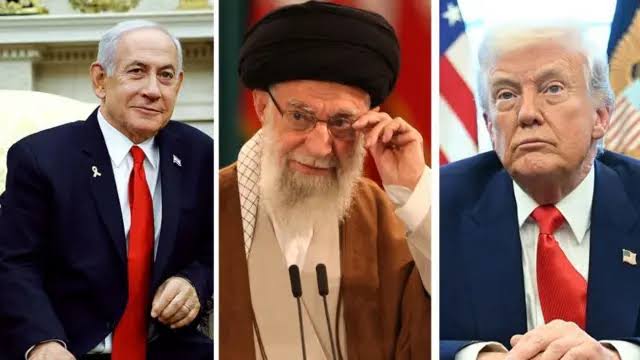
The ongoing war in the Middle East is increasingly affecting Africa, exposing the continent to both security and economic shocks.
Foreign military bases across Africa sit within reach of Iranian-linked forces, while rising oil prices and threats to major shipping routes are already being felt by many African economies.
Hubert Kinkoh, senior researcher at the CARPO think tank, said Africa is “structurally exposed” to the conflict.
“Energy imports, foreign military bases, and its proximity to maritime chokepoints mean the war’s effects reach African shores quickly,” he explained.
Strategic vulnerabilities in East Africa
The Horn of Africa is particularly vulnerable due to its strategic location near the Middle East.
Djibouti hosts Camp Lemonnier, where roughly 4,000 US troops are stationed. The base is located less than 100 miles from Yemen.
In Yemen, Iran-backed Houthi rebels possess ballistic missiles, anti-ship missiles and drones capable of targeting regional infrastructure.
Although the Houthis have not yet entered the current conflict, they previously caused major disruptions to Red Sea shipping during the Israel-Hamas war.
Somaliland may also face potential threats. The territory hosts a major port and military facility at Berbera operated by the United Arab Emirates.
Israel recently recognised Somaliland’s independence from Somalia, and according to a Western diplomat quoted by AFP, Israeli troops could already be present in the territory.
“Berbera is not a confirmed target, but its location (near the southern entrance to the Red Sea) leaves it vulnerable, particularly as Iran-aligned groups widen the range of facilities they view as linked to US or allied operations,” Kinkoh said.
Rising costs and trade disruptions
The conflict is unfolding at a difficult moment for African economies, many of which are heavily indebted and depend on stable global trade flows.
Shipping companies are avoiding the Suez Canal and taking the longer route around the Cape of Good Hope, raising transportation costs and driving up prices for fuel and food worldwide.
Nigeria, despite being Africa’s largest oil producer, has not benefited from the price surge because it locked in export prices through long-term contracts and still imports much of its refined fuel.
Fuel prices in the country have risen by roughly 14 percent this week.
According to Nigeria’s SBM Intelligence, the crisis highlights the government’s “wait-and-see” approach to international affairs, which leaves its “economic interests subject to forces beyond our control.”
Remittances from migrant workers in Gulf countries are also at risk, and past Middle East crises have shown African governments often lack effective evacuation plans or emergency support for their citizens abroad.
Diplomatic challenges
South Africa may face diplomatic consequences as the conflict escalates.
The country previously angered Washington with its criticism of Israel and earlier hosted Iranian warships for naval drills, although officials later stated the military acted without presidential authorisation.
“South Africa will want to reinforce the signalling to the world that it is a non-aligned neutral actor. That is a message it’s going to really struggle to sell, given that Iran was so active in the exercise,” said Timothy Walker from the Institute for Security Studies.
Professor William Gumede of the University of Witwatersrand warned that South Africa’s foreign policy posture could even invite sanctions.
“Our economy is so vulnerable… We do not have a luxury to try to grandstand globally,” he said.
Impact on Africa’s geopolitical landscape
In the longer term, the conflict may influence power dynamics across Africa.
Gulf countries including the United Arab Emirates, Saudi Arabia and Turkey have expanded their influence on the continent through infrastructure projects, military cooperation and energy exploration.
These countries have also been linked to conflicts in Sudan, Ethiopia and Somalia.
However, analysts suggest the war could also reduce external involvement in some African conflicts.
“A UAE forced to concentrate on defending its own airspace and territory may reduce its footprint in African conflicts, creating space for African-led peace processes to function more effectively,” SBM Intelligence said.
Africans Angle News