
National Issues
Nigeria At 66: A Moment Of Joy Or A Time For Sober Reflection? -By Muhammad Sagir Bauchi
Education remains one of the most important investments any country can make, yet Nigeria continues to experience disruptions, prolonged strikes and other setbacks affecting students and institutions. We cannot claim to be developing while young people spend years moving in and out of classrooms over problems that better planning, funding and dialogue could resolve.

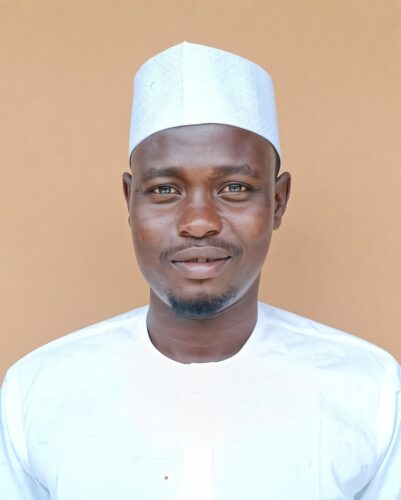
It has been three years since I last put pen to paper for public reading. That last article, published in July 2023, examined the new economic policies of the present administration: subsidy removal, exchange rate unification, and student loans, through the lens of Keynes’ warning that “in the long run, we are all dead.” I argued then that these reforms, though painful, could pay off over time, while cautioning that fairness in how the pain and the palliatives were distributed would determine whether Nigerians trusted the process. Three years on, I return to ask the question those reforms were always going to face: has the long run arrived, and for whom?
Six years ago, I wrote an article titled, “Nigeria At 60: A Moment Of Joy Or A Moment Of Sober Reflection?” In it, I reflected on our journey since independence, the challenges we had faced and the questions surrounding our progress as a country. Six years later, Nigeria is 66, and the question remains almost the same: is this a moment of joy, a moment of sober reflection, or perhaps both?
Since independence, Nigeria has passed through different political administrations, military interventions, democratic transitions, economic reforms and countless attempts at solving the problems confronting it. We have built universities, colleges, hospitals and roads. Millions of Nigerians have acquired education and gone on to make meaningful contributions to the country and the world. There is certainly a lot to celebrate. But while celebrating our achievements, we must also have the courage to ask where we have failed, where we are today, and where we are heading.
A country can record economic growth while millions of its citizens continue to struggle with the cost of living. Economic reforms may be necessary, but that does not mean we should ignore the hardship they create in the short term. Government may point to improving figures, but ordinary Nigerians are equally justified in asking when those improvements will begin to show up in their daily lives. Why celebrate GDP growth or falling inflation on paper while paying little attention to the struggles of the ordinary man whose reality reflects neither? Economic growth should not only be measured by what the figures say; it should be reflected in what people can afford, the jobs they can find, the businesses they can sustain and the quality of life they can provide for their families.
It is no longer news that petrol sells for about ₦1,400 per litre in parts of Lagos and around ₦1,500 in parts of the North. This is no longer a figure in newspapers or a talking point on social media; it is a living reality Nigerians are struggling to adapt to. Today, even people fortunate enough to own a car are becoming careful about where and when they drive. Some now choose the inconvenience of public transport not because they lack a vehicle, but because fuelling it has become too costly. A car that was once a convenience has, for some families, become an expense that must be calculated before every journey.
Since the removal of the petrol subsidy, several policies have been introduced with the stated aim of cushioning the effect of reform. Yet from the perspective of the ordinary citizen, it is difficult to point to a corresponding drop in hardship. Nigerians are not asking for suffering to be eradicated overnight; they are asking for a meaningful reduction in the burden they carry daily. The real question is not whether the reforms were necessary, but whether the people bearing their immediate cost are beginning to see the promised benefits. A reform can be economically necessary and still be socially painful, and when that pain continues without improvement in people’s standard of living, government must expect citizens to ask hard questions.
Since independence, Nigeria has also built numerous institutions of learning, and millions of Nigerians have benefited from them. In an effort to follow the route of developed nations, the concept of education loans was introduced. In an ideal society, this can be a smart move, shifting the burden of financing higher education from parents to government, with students eventually repaying the cost. But what pushed us here in the first place? The same government policies that have left many parents living hand to mouth, with little or nothing to save for their children’s education. What they earn is often barely enough to cover food, shelter and other basics, things people now struggle to afford rather than plan for.
Can we truly celebrate a policy that pushes parents deeper into poverty while leaving them unable to afford their children’s education? More importantly, how many graduates can be certain there will be jobs waiting for them, jobs that let them repay what they borrowed? What happens when a graduate leaves school with a degree and a loan but no employment opportunities? What happens when companies close down because of policies that make it hard to do business, or when entrepreneurs are forced to shut their doors due to low sales and rising costs?
Education loans may provide access to education, but access alone is not enough. There must also be an economy capable of giving graduates decent opportunities to work, earn and repay. Otherwise, are we simply shifting the burden from parents who cannot afford education to graduates who may never find the jobs needed to carry it?
This brings us back to leadership. Six years ago, I argued that one of Nigeria’s major problems was how political leadership was perceived and exercised, a system where public office could become a means of personal advancement rather than service. Six years later, that question remains just as relevant. Leadership is not only about making policy; it is about understanding how policy affects the people who must live with it. The ordinary citizen does not experience an economic reform as a policy document; he experiences it through the price of food, transport, school fees, rent and electricity. Leadership must go beyond celebrating figures and ask whether its policies are producing a society in which ordinary Nigerians can live with dignity.
One issue I raised six years ago was vote buying. It is easy to condemn citizens who accept money during elections, but perhaps we should ask a harder question first. When people who once fought a previous administration on grounds of incompetence are now part of government, defending the very policies that have subjected Nigerians to severe hardship, can we genuinely expect citizens to reject ₦5,000 or ₦10,000 when many of them are struggling to put food on the table? This is not an argument for vote buying; it is a question about the conditions that make it possible. A citizen who cannot afford food, medicine or transport is more vulnerable to financial incentives at the polls. That does not make vote buying right, but it should push us to examine the poverty that allows it to thrive. If we want citizens to make truly independent choices, we must build a society where poverty does not make those choices easier to manipulate.
Corruption remains one of Nigeria’s oldest struggles. We have created institutions, passed laws and established agencies to fight it, yet the perception that public resources are sometimes diverted for personal or political gain continues to shape public trust. What makes this worse is our own double standard: when a politician from the opposing party is accused, we demand accountability; when someone from our own camp faces the same allegation, the conversation quietly changes. We cannot build a strong country by applying different standards to the same behaviour based on political affiliation. Accountability cannot be selective.
Insecurity, too, was already a major concern six years ago, and it remains one today; its nature and location may shift, but the consequences are just as painful. Families are displaced, businesses suffer, farmers cannot operate freely in some areas, and young people grow up with insecurity as part of everyday conversation. A country cannot achieve sustainable development when its citizens are constantly worried about their safety; security is directly tied to agriculture, education, business, investment and general wellbeing.
Nigeria has one of the largest youth populations in Africa, an enormous potential advantage that becomes a burden when the economy cannot provide enough opportunity. Every year, thousands of graduates leave school hoping to find work, and many spend years searching, turning to entrepreneurship, migration or whatever else they can find. The rising desire among young Nigerians to leave the country, popularly called “Japa”, should make us ask why so many feel their future lies elsewhere. It is not enough to tell them to stay and build the country; we must create conditions that make staying a realistic, attractive choice.
Education remains one of the most important investments any country can make, yet Nigeria continues to experience disruptions, prolonged strikes and other setbacks affecting students and institutions. We cannot claim to be developing while young people spend years moving in and out of classrooms over problems that better planning, funding and dialogue could resolve.
So, are we better off than we were at independence? In some areas, certainly. We have more institutions, more educated Nigerians, greater technological access, a larger private sector, and Nigerians making remarkable contributions around the world. But progress should not blind us to what remains broken. Nigeria is not a complete failure, just as it is not a complete success story; our story is more complicated than either label. We have achievements worth celebrating and failures that demand honest reflection. We celebrate the resilience of Nigerians, but we should also ask why they need to be so resilient simply to survive.
Patriotism does not mean defending every government policy, and criticism does not mean hatred for one’s country. Sometimes, asking difficult questions is itself an act of patriotism.
As Nigeria marks 66 years of independence, we should celebrate what we have achieved, remember how far we have come, and, most importantly, have the courage to confront what continues to hold us back. The Nigeria we want will not be built by government alone. It requires responsible leadership, accountable institutions, an active citizenry, and a society that values merit, justice and equal opportunity.
At 66, Nigeria has every reason to celebrate. But it also has every reason to reflect.



















You must be logged in to post a comment Login