Forgotten Dairies
When the Pulpit Meets Power: The Acrobatics of Sycophancy and Patronage -By Abba Dukawa
Both scholars and non-scholars should be able to disagree politically without surrendering their commitment to truth: to uphold what is right without sycophancy, and to condemn what is wrong without injustice. For the dignity of religious authority rests neither in its proximity to power nor in its favour with those who wield it, but in its unwavering fidelity to truth to the realities on the ground, however inconvenient they may be.

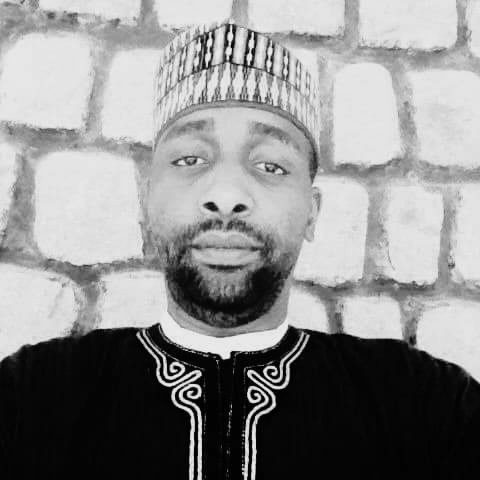
As the 2027 elections draw closer, Nigerians should scrutinise the conduct of religious scholars who enter the political arena under the banner of religion. Islamic scholars have every right to speak on governance, justice, corruption, poverty, insecurity and the moral responsibilities of political leaders. The concern arises when some scholars appear to abandon those principles after allegedly receiving money, appointments, patronage or privileged access to political power. That contradiction is what many Nigerians describe as religious hypocrisy and sycophancy.
Recent events have brought this tension into sharper focus. Ahead of the 2027 elections, the ruling party and its political allies have sought the support of Islamic sect leaders and non-sectarian religious figures through courtesy visits and other engagements. Such outreach is a legitimate part of political mobilisation in a democracy. However, it becomes troubling when religious influence appears to be exchanged for material benefits, political access or personal advantage, thereby compromising the moral independence expected of religious leadership.
The Nigerian Supreme Council for Islamic Affairs (NSCIA) and Jama’atu Nasril Islam (JNI) have cautioned Muslim and Christian clerics against partisanship, misinformation and hate speech ahead of the 2027 elections, while also warning politicians against compromising religious leaders.
Against this background, reports of a cleric publicly praising politicians after receiving a ₦600 million donation have generated considerable public criticism. The issue is not whether a religious institution or scholar may receive a donation. Rather, the question is whether financial gifts should influence a cleric’s judgment or lead to the elevation of politicians beyond legitimate public scrutiny. Religious authority loses credibility when material generosity appears to purchase moral endorsement.
There is another controversy surrounding a gathering of northern Islamic scholars in Jigawa was equally instructive. Sheikh Abdurrahman Abubakar Azzamfari disputed reports that participants had collectively endorsed President Bola Tinubu’s re-election, alleging that the scholars had not been adequately consulted. Whether or not one accepts his account, the episode raises an important principle: political and religious actors should not present religious gatherings as unanimous endorsements when such unanimity has not been clearly established.
Similarly, Sheikh Qaribullah Kabara, leader of the Qadiriyya sect, declared his support for President Tinubu’s administration and his 2027 re-election bid during a visit by the APC Presidential Campaign Council, led by Senator Abdul’aziz Yari, in Kano. Kabara said the sect believed that Tinubu had a “GOOD MISSION FOR NIGERIA. Hilariously informed Campaign Council Yari, has openly supported this House. He is one of us, and whatever he brings forward, we have no option but to support it. He added that the sect would also begin praying for the president, with emphasis on peace, economic recovery, job creation, and an end to insecurity.
Such declarations inevitably invite questions. How should claims about a Government’s “Good Mission” be assessed against the lived experiences of Nigerians facing high unemployment, insecurity, banditry, kidnapping and ransom demands? These realities should form part of any honest and comprehensive assessment of government performance. Supporting a government does not require ignoring its shortcomings, just as criticising a government does not require denying its achievements.
The matter becomes even more sensitive when the pulpit meets power, particularly when religious authority is used to transform political loyalty into a religious obligation. Sheikh Sani Jingir, for instance, has urged Muslims to mobilise their votes while framing the political contest, in part, through the lens of religious identity. Other Islamic leaders, however, have called on Nigerians to place competence, fairness, national development, and national unity above religious affiliation.
This divergence raises a fundamental question: what happens to justice, accountability and the obligation to speak truth to power when the politician standing before the scholar is also the person providing money, platforms, appointments or access?
The most hilarious is like a scholar who condemns corruption when committed by a political opponent but excuses or minimises similar conduct by an ally risks turning religious leadership into political brokerage. Likewise, a cleric who demands accountability from one administration but remains silent about serious allegations involving another undermines the moral consistency expected of anyone speaking in the name of Islamic values.
This criticism should not be directed at all Islamic scholars. Many religious leaders have challenged politicians, rejected partisan manipulation and warned against turning religious institutions into campaign instruments. The issue is neither Islam nor the legitimate participation of Muslims in democratic politics. The real issue is whether religious authority is being used consistently to defend truth and justice or selectively to advance political interests.
It is particularly troubling to hear some scholars praise government policies and suggest that citizens’ lives have substantially improved when many Nigerians continue to report severe economic hardship and insecurity. Scholars are entitled to their political opinions. But religious authority carries an additional responsibility: the courage to speak honestly, especially when the truth is inconvenient to those in power.
Some scholars may become reluctant to speak candidly because they fear losing financial support, access, recognition, appointments or influence. But if proximity to power becomes more important than speaking truth to power, religious conscience loses its independence and respect as we have witnesses now.
A scholar’s duty is neither to please those in authority nor to oppose them automatically. It is to advise sincerely, acknowledge what is right, question what is wrong, defend the vulnerable and remind both rulers and citizens that everyone is ultimately accountable before Allah.
Constructive criticism is not disloyalty, just as acknowledging genuine achievements does not require denying genuine failures. A scholar can commend beneficial policies while speaking firmly about insecurity, poverty, unemployment, corruption and economic hardship. Integrity requires the courage to hold both truths at once.
Islam places profound emphasis on truthfulness, justice, trust and accountability. These principles do not become less important when the subject is a government, political leader, wealthy benefactor or anyone capable of granting privilege.
Religious scholars occupy a position of trust. Their knowledge should make them more independent, not more dependent on worldly power. History demonstrates that religious and intellectual authority is strongest when those who possess it retain sufficient independence to speak honestly to those who govern.
When rulers are praised regardless of circumstances, when political loyalty is presented as religious virtue, or when the suffering of ordinary people is minimised because of political relationships, society loses an important voice of conscience.
A Personal Appeal; As a Muslim, I am deeply troubled by what I perceive as hypocrisy, sycophancy and scholarly political patronage among some Muslim scholars. I say this not out of contempt, but precisely because I respect the sacred responsibility associated with religious knowledge and therefore find such conduct especially painful.
Nigeria does not need scholars who serve as political propagandists, just as it does not need scholars who condemn everything a government does merely because of political hostility. It needs sincerity, wisdom, courage, fairness and an unwavering commitment to truth.
As the election season intensifies, Nigerians should ask every religious and political leader some difficult but necessary questions: What have you said when your preferred politician failed? Have you condemned corruption regardless of who committed it? Have you defended the poor when doing so was politically inconvenient?
Have you demanded evidence before repeating political claims?Would you offer the same advice if the politician belonged to another party? These questions should not be interpreted as an attack on religion or on the right of religious people to participate in democracy. Rather, they are questions about integrity, consistency and moral accountability.
Religion should provide the moral standard by which political power is judged, not a shield behind which political power escapes scrutiny. If religious leaders fear losing the favour of those in power more than they fear failing in their duty before Allah, then we must ask what has happened to their moral independence.
Political leaders will change. Governments will come and go. Appointments will end, privileges will disappear and political alliances will shift. What remains is each person’s responsibility before Allah for the words spoken, the truths concealed, the injustices ignored and the principles compromised.
As Muslims, It is deeply heartbreaking to watch so-called scholars surrender their moral compass for immediate gain mistaking proximity for principle, silence for wisdom, and convenience for integrity. Scholars should illuminate what is hidden, give voice to the overlooked, and confront uncomfortable truths not disguise refusal to see them in sophisticated language.
Ultimately, intellectual brilliance must yield to moral courage. Integrity means standing for what is right when it is inconvenient, costly, or unpopular. The true measure of a scholar is not how elegantly they justify silence, but whether they speak when conscience demands it. The question is not whether you can see the truth, but whether your conscience is strong enough to stand by it when it becomes inconvenient. A pin beneath the water may not know how fiercely the sun burns above it, but its ignorance does not make the heat less real. Truth remains true whether we acknowledge it or retreat into comfort.
Both scholars and non-scholars should be able to disagree politically without surrendering their commitment to truth: to uphold what is right without sycophancy, and to condemn what is wrong without injustice. For the dignity of religious authority rests neither in its proximity to power nor in its favour with those who wield it, but in its unwavering fidelity to truth to the realities on the ground, however inconvenient they may be.
Dukawa writes from Kano and can be reached at abbahydukawa@gmail.com.










![Israeli Prime Minister Benjamin Netanyahu holds a press conference in Tel Aviv , Israel [File: Abir Sultan/Pool via Reuters]](https://www.africansangle.com/wp-content/uploads/2023/10/Israeli-Prime-Minister-Benjamin-Netanyahu.webp)