Forgotten Dairies
Nigeria, Niger Republic And A Company Of Infamy -By Kene Obiezu
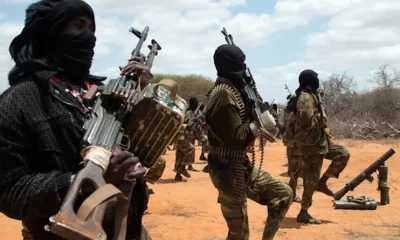
Since Boko Haram grew venomous fangs, which it proceeded to promptly sink into the neck of Nigeria in 2009 using Borno State as its base, Africa’s largest economy and democracy has had its hands full, badly struggling in the face of terrorism’s relentless assault.

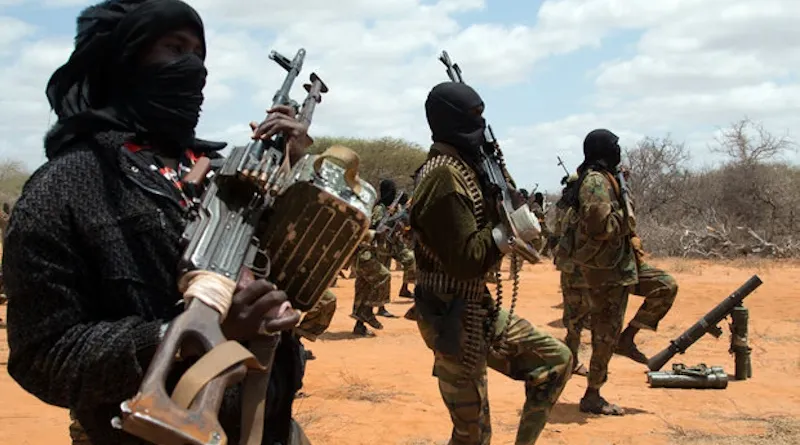
The Global Terrorism Index for 2025 published by Vision of Humanity is out, and Nigeria beat off stiff competition to land in fourth place, just behind hellholes like Pakistan, Burkina Faso, and Niger Republic. Pakistan predictably took home the top honors.
According to the Index, Nigeria recorded the largest increase in terrorism deaths globally in 2025, with fatalities rising by 46%, from 513 in 2024 to 750 in 2025. It is 2026, and the rattling reality for Nigerians, citizens of the self- proclaimed “Giant of Africa”, is that despite all the indexes that measure growth and development around the world, their country has chosen to seek company among the world’s most terrorized countries. Of course, one should also expect a country that has been on a backward slide for so many years now to also feature prominently among the world’s most corrupt countries and among countries where children face the greatest hardships.
In the 2025 Corruption Perception Index (CPI) published by Transparency International, Nigeria landed in 37th place out of 182 countries beating its dear neighbor, Niger Republic, by nineteen places.
Since Boko Haram grew venomous fangs, which it proceeded to promptly sink into the neck of Nigeria in 2009 using Borno State as its base, Africa’s largest economy and democracy has had its hands full, badly struggling in the face of terrorism’s relentless assault.
In the past few weeks, as Muslims observed the holy month of Ramadan and Christians observed Lent, ISWAP, a particularly virulent offshoot of Boko Haram, launched attack after attack in Borno and Plateau states, cutting down civilians and security personnel alike.
Alas, like a plague, terrorism has clouded lives in Nigeria for close to two decades now. Rural communities, especially in the country’s north, have largely been torn apart, with refugee camps swelling in urban areas. Roads have become unsafe; farms have become killing fields. Places of worship have become targets as terrorism has settled like a noxious cloud over the country.
The most distressing thing about Nigeria’s struggles against insecurity and featuring prominently and embarrassingly on the list of the most terrorized countries worldwide is the fact that the government appears to have so little clue about what to do.
With the enormous resources at its disposal, the government should have little issue identifying and dismantling terror networks within the country. Yet, in the face of one harvest of deaths after another, the government appears ominously impotent.
The greatest concern in many quarters is that the government may be complicit in the insecurity cutting through Nigeria with deadly precision. The government is too quick to forgive so-called repentant terrorists and too slow to arrest, prosecute, and incarcerate the sponsors and perpetrators of terror. Many Nigerians believe that those fostering terrorism in the country have strong links to the corridors of power.
There is also something nauseatingly bemusing about seeing Nigeria hug Niger Republic so closely on the Global Terrorism Index. Both countries are neighbors, and their proximity at the top end of the world’s most terrorized countries is a cautionary tale about the folly of leadership failure disguised as national salvation or redemption.
In July 2023, a military coup in the Niger Republic overthrew the country’s democratically elected government, and some misguided Nigerian citizens ill-advisedly and prematurely took to the streets to celebrate. The coup plotters cited the failure of the government to check insecurity as one of the main reasons for the coup. Today, the country’s conspicuous third-place placement on the list of the world’s most terrorized countries indicts the junta, conclusively proving that it has been a catastrophic failure, just like the civilian regime it deposed.
Muhammadu Buhari was Nigeria’s president between 2015 and 2023. While he was in power, he disingenuously abandoned his responsibilities in Nigeria where his government was faltering disastrously for nepotistic and nihilistic distractions in Niger Republic, where he had first cousins. He even went as far as channeling Nigeria’s scant resources to the country. Today, both Nigeria and the Niger Republic have only terrorism to show for a murky and nebulous relationship that has clearly done more harm than good.
Nigeria can and aspires to prominent placements in positive global indexes like the Human Capital Index. The self-styled “Giant of Africa” which has now been left in the dust by many of the tiny neighbours it considered inferior for decades, can no longer afford the global embarrassment that comes with topping terrorism or corruption indexes. It can and should do better.
But as long as government officials continue to show that they are only interested in power as long as it services their greed, Nigeria can be sure of the infamy of the company of veritable hellholes like Pakistan, Burkina Faso, Niger, Mali, Somalia, and Syria.Especially Niger Republic.
Kene Obiezu,
keneobiezu@gmail.com