
Forgotten Dairies
Nigerian Celebrities Refuse to Speak Truth to Power as Economic Hardship and Insecurity Dominate Social Media -By Daniel Nduka Okonkwo
The ongoing debate raises broader questions about responsibility, influence, and the role of public figures in societies facing economic hardship and political uncertainty. As Nigeria continues to confront mounting social and economic challenges, the tension between celebrity influence and public expectation is unlikely to disappear anytime soon.

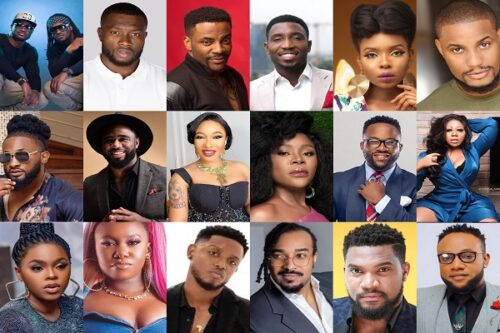
Nigeria is battered daily by insecurity, killings, and grinding economic hardship, it is shameful that many Nigerian-born celebrities remain mute, choosing comfort over conscience. These artists bask in wealth and global recognition, yet refuse to lend their voices to the cries of ordinary Nigerians who, despite hunger and rising costs, still scrape together money to buy data and stream their music. Their silence is not neutrality; it is complicity. At a time when the people need cultural leaders to speak truth to power, too many entertainers prioritize corporate sponsorships, government patronage, and lavish lifestyles over the moral duty of storytelling that once defined Nigerian music. By refusing to confront the realities of insecurity and hardship, they betray the very fans whose loyalty sustains them.
In Nigeria today, amid worsening economic hardship, rising insecurity, unemployment, inflation, and growing public frustration, many citizens have increasingly turned their attention toward the country’s celebrities and music stars, questioning their apparent silence on the national crisis.
The debate has intensified across social media platforms, radio programs, and public discussions. While a handful of Nigerian artists have historically used their influence to confront social injustice and political failures, many of today’s mainstream entertainers remain noticeably cautious when addressing the realities affecting millions of ordinary Nigerians.
The silence appears disappointing. For others, it reflects a complex survival strategy shaped by economics, politics, and the structure of the modern entertainment industry.
One major factor frequently cited is the growing social and geographical distance between top celebrities and the average Nigerian. Many successful Nigerian artists now live abroad or reside in heavily protected luxury estates and exclusive high-security environments within cities such as Lagos and Abuja, as well as overseas locations. As their lifestyles become increasingly detached from the daily struggles of ordinary citizens, public engagement with grassroots hardship often diminishes.
For millions of Nigerians battling rising food prices, fuel costs, unstable electricity, insecurity, and unemployment, the silence of influential entertainers can feel disconnected from the national mood.
Industry observers also point to the powerful influence of money, sponsorship, and political patronage within the entertainment ecosystem. Many celebrities depend heavily on corporate endorsements, government-sponsored events, political alliances, and private elite networks to maintain their wealth and visibility. Taking strong positions on controversial national issues can threaten these financial relationships.
Public figures operating in politically sensitive environments frequently face difficult professional calculations. A single outspoken statement may lead to cancelled performances, loss of sponsorship deals, reduced media support, or exclusion from high-profile events.
In many cases, entertainers rely on state-linked contracts, political endorsements, or influential patrons for large-scale financial backing. Criticising government policies or speaking aggressively against political authorities can result in the immediate withdrawal of such opportunities. As a result, silence often becomes a business strategy rather than merely personal indifference.
The transformation of Nigeria’s music industry has also contributed significantly to the shift away from politically conscious artistry. Earlier generations of Nigerian musicians, inspired by icons such as Fela Kuti, built careers around activism, protest music, and social commentary. Their songs frequently challenged corruption, oppression, and government failures.
In contrast, much of today’s mainstream Afrobeats culture is driven primarily by commercial success, luxury branding, streaming performance, nightlife appeal, and global entertainment markets. Modern audiences are often presented with themes centred on wealth, fashion, luxury lifestyles, romance, and personal success rather than socio-political advocacy. Industry competition, global expansion, and commercial pressures increasingly reward marketability over activism.
This evolution has created a music environment in which conscious political commentary is no longer the dominant commercial formula.
Another major concern for celebrities is the unpredictability of public reaction. In the age of digital media, public figures constantly navigate the risk of alienating portions of their fan base. Taking a strong political or moral stance can quickly trigger online outrage, organised boycott campaigns, public shaming, or intense criticism across platforms such as Facebook, X, Instagram, and TikTok.
Online backlash can also have direct financial consequences. Artists may experience declining bookings, radio blacklisting, event cancellations, or damaged relationships with sponsors seeking to avoid controversy. Brands often distance themselves from polarising public figures to protect their commercial reputation. In highly polarised political climates, even neutral comments may be interpreted as political endorsements or opposition.
For many entertainers, every public statement becomes a calculated balance between personal conviction and career survival.
Despite these pressures, some Nigerian artists and public figures continue to use their platforms to address governance, police brutality, insecurity, corruption, and economic suffering. During moments such as the End SARS protests, several entertainers openly supported calls for accountability and reform despite facing political pressure and public scrutiny.
Their activism demonstrated that celebrity influence can still shape public awareness and national conversations when used intentionally. However, many analysts argue that expecting entertainers alone to carry the burden of national advocacy may overlook the deeper structural failures confronting Nigerian society.
Ultimately, the silence of many Nigerian celebrities reflects more than individual choices. It reveals the intersection of fear, commerce, political influence, survival, and the changing identity of modern entertainment culture.
While some citizens continue to demand stronger public advocacy from influential figures, others believe artists should not be forced into activism at the expense of their careers and personal safety.
The ongoing debate raises broader questions about responsibility, influence, and the role of public figures in societies facing economic hardship and political uncertainty. As Nigeria continues to confront mounting social and economic challenges, the tension between celebrity influence and public expectation is unlikely to disappear anytime soon.
Daniel Nduka Okonkwo is a Nigerian investigative journalist, publisher of Profiles International, a human rights advocate in collaboration with Daniels Entertainment, and a policy analyst whose work focuses on governance, institutional accountability, and political power. He is also a human rights activist and journalist committed to promoting transparency, justice, and democratic principles. His reporting and analysis have been widely published across notable media platforms, including Sahara Reporters, African Defence Forum, Daily Trust, Vanguard, Opinion Nigeria, African Angle, Local Newsbreak, and other international outlets. He writes from Nigeria and can be reached at dan.okonkwo.73@gmail.com.




















You must be logged in to post a comment Login