
Forgotten Dairies
The Centralization of Commodity Power in Prabowo’s Indonesia -By Fransiscus Nanga Roka
It does require a stronger set of policies to manage its own resource wealth context The Indonesian economy has rebounded from the impact of two years ago and acute inflation remains an extreme problem across much by it. It was porous, unequal and too often dependent on external models. Yet a flawed market order by centralized political discretion may not be progress. It can merely hand power from agile oligarchs to a geometric heirs-acting nexus. That is not economic emancipation. It is a reorganization of power.

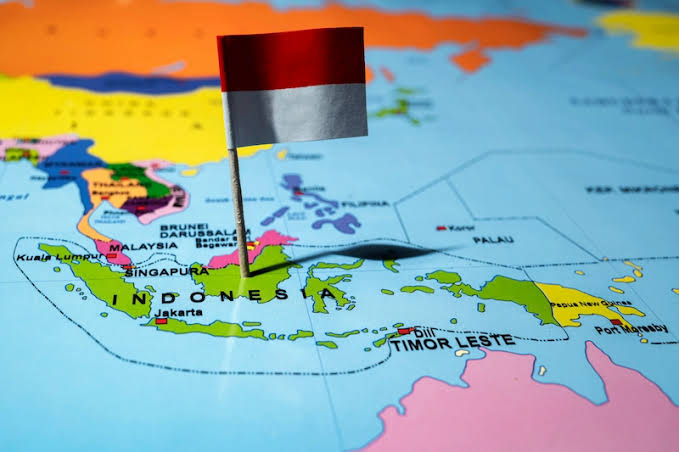
The advent of a more managed order This suggests that Indonesia is entering an era in which resource politics may be less spontaneous. The push by President Prabowo Subianto for a larger state role in regulating the sale of commodities from natural resources is described as economic patriotism: a strong countermeasure to decades of foreign exploitation, poor leverage and lopsided national benefits. But beneath those declaratives is something more. Centralized commodity power is also more than just an economic strategy. Just as importantly, though, this is a way of centralising control over the commanding heights of Indonesia’s political economy.
The rationale is at one level clear. And then, Indonesia commands vast deposits of coal nickel, palm oil bauxite copper and other critical minerals that drive global industries and energy transitions. Jakarta has spent years arguing that the country is exporting too much raw value and earning far less of a profit. A less decentralized model guarantees leverage. With better coordinated licensing, downstream processing and pricing (and on the timing of export & market access), Indonesia may extract an even stronger financial return; induce greater domestic industrialisation; exert more leverage over global supply chains.
Those are not trivial gains. This is precisely the best argument in favor of centralization: it can repair structural fragility. Fragmented commodity governance rarely serves producers, and the empirical work shows how middlemen or politically connected exporters targeting foreign buyers exploit regulatory inconsistency. Greater discipline over the system could help to cut leakages and improve royalty collection, as well as reinforcing exports strategy and ensuring that resource sales are better aligned with national industrial policy. Theoretically, it might pull Indonesia back from the deadly affliction that traps so many resource-rich states: exporting raw materials while importing costly finished products. Should Prabowo exploit the centralization to drive further refining, increased domestic vale-added output and greater technology transfer, then there could be a genuine economic upside.
There is, too, a geopolitical dividend. In a fragmented supply chain environment, nations rich in critical minerals have become more inclined to use key commodities as statecraft tools. Indonesia has already put this logic to the test with its nickel export restrictions and downstream aspirations. Stronger centralized control over commodity sales could also enhance Jakarta’s clout with China, the United States, EU and multinationals starved for stable access to essential inputs under Prabowo. Commodities are no longer merely exports in a world crafted by green-industrial policy and strategic decoupling. They are leverage.
But this is exactly where the trouble starts. The actual effect of what is sold as strategic coordination can be political capture turning into a bigger problem. While commodity policy is grounded in economics, it becomes less so once the executive branch gains broader governance influence over who sells, exports and receives licenses; as well as quotas — or sections of specific commodities allocated to nation-states via state-sculpted channels. It is the currency of patronage it earns. Centralized control over natural resources does not commonly remain neutral in countries with weak transparency and uneven institutional checks. It is the very definition of favoritism, rewarding loyalists while punishing rivals.
In Indonesia, where business and political power have long been intertwined, that risk is particularly acute. As the state has greater control over commodity flows, proximity to state becomes an increasingly useful asset. Market competition can narrow. Independent firms can be sidelined. Predictable rules can also be replaced by regulatory discretion. And as discretion widens, corruption often creeps in camouflaged by the language of sovereignty and national interest. It starts with resource nationalism, which morphs into a full closed loop of politically controlled rents.
On the other side, Prabowo supporters may contend that market liberalism did not produce an equitable pie and must be more firmly controlled. They are not entirely wrong. Indonesia is another commodity rich country where oligarchic networks have consistently benefitted from natural plunder but local communities pay for environmental and social multiple stakes; However, centralization does not bring justice. The state does not become a custodian of the public good in the absence of strong controls, parliamentary scrutiny independent auditing and clear contract publication. Its data become the gatekeeper of extraction.
That distinction matters. Commodity policy can be a tool for national strength, one that the developmental state employs. The morality of liberalism can be rejected, but the institutions and practices that sustain it also strengthen an illiberal state for: among other clear dicta about democracy are that power must be dispersed. The difference lies in institutions. Are rules public or discretionary? Do the same standards apply to state and private actors? Are contracts open to scrutiny? Are revenues traceable? Are environmental obligations enforced? Are local populations compensated fairly? Centralization, without taps on the shoulders where needed turning heads and answering no to this question, will continue to feed the central at all costs whilst effortlessly emptying accountability out.
The potential profits, some sizable, are there for defenders of Prabowo to point out. To start, nationalized commodities would increase state revenues by eliminating underreporting and transfer pricing as well as curbing fragmented export channels. Second, it can prevent a race to the bottom among domestic sellers which would strengthen Indonesia’s hand in negotiations with foreign investors. Another is that it can help with industrial policy by keeping raw materials flowing to domestic processors and manufacturers. Fourth, it has the potential to stabilise supply during periods of price volatility thus giving governments greater scope for more strategic responses in global markets. Fifth, it can help Indonesia gain a bigger geopolitical clout, particularly in the spheres of battery production and other minerals as well energy (fuels), food and industrial inputs.
But each of these advantages has a democratic and economic corollary. Stronger state revenues can turn into off-budget political cash if oversight is loose. Negotiating leverage can shrink to merely custodial breath of life. Industrial policy can become a camouflage for crony allocation. Makes selective curtailment of supply become solid. A geopolitical strength can also turn into a domestic opacity. In short, the same architecture that can deliver developmental gains may also entrench authoritarian economic management.
What this goes to show is that the debate should not be simplistic state vs market. That is too crude. The critical question is whether Indonesia builds a competent public-interest state or centrally controlled strategic branding fed with patronage. Prabowo’s rather maverick commodity agenda may yield short term victories: further centralisation, more raw material power and control greater national resolve. Yet if weakening transparency, sidestepping competition and funneling rents to the executive branch near-exclusively prevails toward those victories, they will be hugely institutionalized losses.
It does require a stronger set of policies to manage its own resource wealth context The Indonesian economy has rebounded from the impact of two years ago and acute inflation remains an extreme problem across much by it. It was porous, unequal and too often dependent on external models. Yet a flawed market order by centralized political discretion may not be progress. It can merely hand power from agile oligarchs to a geometric heirs-acting nexus. That is not economic emancipation. It is a reorganization of power.
The globe ought to take note for the reason that Indonesia’s issues usually are not going nowhere fast in Indonesians. It is one of the most significant commodity powers in the world, and its policy decisions will determine global supply chains, climate transitionsand regional political economy. Prabowo deploying centralization to add a transparent, rules-based developmental capacity may just fit, strengthening the republic. Indonesia would not just be conducting resource extraction if he does so without turning commodity governance into an arm of executive control. It is going to be auctioning institutional restraint.
Fransiscus Nanga Roka
Faculty of Law University 17 August 1945 Surabaya Indonesia
























You must be logged in to post a comment Login