National Issues
Nigerians Question the Credibility of the Terrorism Sponsors List as Terrorists Kill Army Generals and Defenseless Nigerians -By Daniel Nduka Okonkwo
Skepticism has also been influenced by perceptions regarding the absence of certain high-profile individuals. Some commentators have questioned whether the list is comprehensive, while others have speculated about possible selectivity. It is important to note that such claims remain unverified and have not been substantiated by official findings.

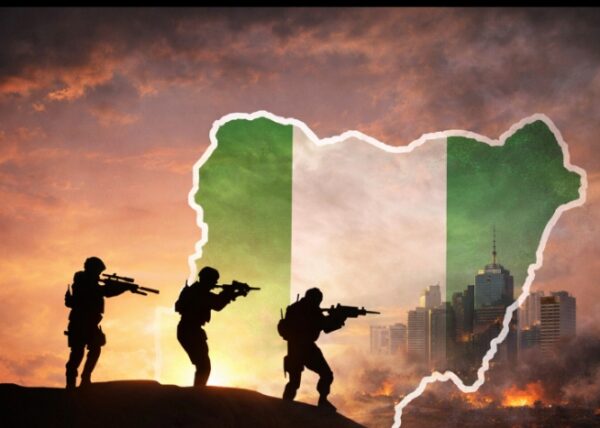
Nigeria stands at a tinderbox where official proclamations clash with public doubt. For years, the government has unveiled lists of alleged terrorism sponsors, presenting them as proof of progress in the fight against terror. Yet to many citizens, these announcements feel more like spectacle than substance, grand declarations without the visible accountability that Nigerians demand. Each new list is heralded as a victory, but skepticism grows louder, are these measures truly dismantling the financial networks behind violence, or are they simply reinforcing a cycle of publicity without transparency? The people’s call is clear, justice must be more than names on paper; it must be prosecutions, convictions, and measurable outcomes
The federal Government of Nigeria has released lists of alleged terrorism sponsors, announcing names to the public while facing criticism over the pace of visible justice. From 2021 to the present, such proclamations have increased, yet concerns persist among citizens that key actors behind terrorism financing may not have been fully brought to justice. Authorities have reported hundreds of convictions, but public perception continues to question whether those who finance terror networks are being held accountable transparently and decisively. Increasingly, Nigerians are expressing skepticism toward official announcements and calling for more tangible outcomes.
This growing frustration has found expression on social media following the Federal Government’s latest publication of individuals and entities allegedly linked to terrorism financing. While officials describe the move as part of a broader crackdown, many Nigerians remain cautious, raising questions about the credibility, completeness, and intent of the list.
At the centre of the discussion is the recent publication by the Nigeria Sanctions Committee (NIGSAC), which named 48 individuals and corporate entities. The list, published on April 12, 2026, contains exactly 48 names in connection with alleged terrorism financing. According to publicly available reports, the list includes Bureau De Change operators, individuals alleged to have links with insurgent groups such as Boko Haram and ISWAP, and persons associated with separatist movements. Some widely reported names include Tukur Mamu, a Kaduna-based Islamic scholar and the alleged Abuja–Kaduna train kidnapping negotiator, who is currently facing a 10-count terrorism charge before the Federal High Court in Abuja in connection with the March 28, 2022, Abuja–Kaduna train attack, and Simon Ekpa, a Finland-based individual who was convicted and sentenced to six years in prison by the Päijät-Häme District Court in Finland on September 1, 2025, for terrorism-related offences, including inciting terrorist acts and participating in the activities of a terrorist organisation. Several organisations have also been mentioned, including IPOB, Ansarul Muslimina Fi Biladissudan (ANSARU), and ISWAP.
Government officials have maintained that the publication forms part of Nigeria’s broader efforts to combat terrorism financing under the Terrorism (Prevention and Prohibition) Act, 2022, which established the Nigeria Sanctions Committee as the national body responsible for implementing United Nations Security Council Resolutions on targeted financial sanctions. It has also been presented as a step toward strengthening compliance with international financial regulations and improving oversight within the financial system. This approach reflects the growing intersection between national security priorities and global regulatory expectations.
However, public reaction has remained mixed. Some Nigerians argue that the release of names without corresponding arrests, prosecutions, or clearly communicated enforcement actions may weaken public confidence in the process. Questions have been raised on public platforms regarding verification, identification details, and the availability of supporting information.
Skepticism has also been influenced by perceptions regarding the absence of certain high-profile individuals. Some commentators have questioned whether the list is comprehensive, while others have speculated about possible selectivity. It is important to note that such claims remain unverified and have not been substantiated by official findings.
The debate has also revived earlier developments. In 2021, authorities indicated that investigations had identified multiple individuals and entities linked to terrorism financing, and in 2022, the Nigerian Financial Intelligence Unit (NFIU) announced the identification of 96 suspected terrorism financiers, 424 associates, 123 companies, and 33 Bureau De Change operators linked to Boko Haram and ISWAP. In May 2025, NIGSAC had already designated 17 individuals and organisations over alleged terrorism financing, making the April 2026 list the latest in a series of designations. Additionally, prior international disclosures, including actions by authorities in the United Arab Emirates involving alleged financiers of Boko Haram, increased calls for transparency and coordinated enforcement. Despite these developments, public opinion in some quarters continues to emphasize the need for more visible outcomes.
Subsequent announcements have followed similar patterns. Significantly, the publication of the April 2026 NIGSAC list came less than 24 hours after the conclusion of the ninth phase of mass terrorism trials, in which the Federal Government brought 508 cases before 10 judges of the Federal High Court in Abuja over four days and secured 386 convictions, with sentences ranging from life imprisonment to rehabilitation orders. Between late 2025 and early 2026, additional names and entities were reportedly published, accompanied by statements referencing ongoing investigations, prosecutions, and financial restrictions. Authorities have cited convictions related to terrorism offences; however, some citizens continue to question whether these actions adequately address concerns about those allegedly responsible for financing such activities.
Public commentary reflects a broader trust gap. While some citizens view the publications as a necessary step, others argue that greater transparency and clearer communication of enforcement actions would strengthen credibility. There have also been calls for more detailed and verifiable information to support public understanding.
Beyond immediate criticisms, the issue highlights a broader institutional challenge. Addressing terrorism financing requires not only intelligence gathering and financial monitoring but also consistent legal processes and sustained public trust in state institutions. Without visible and verifiable outcomes, even well-intentioned measures risk being perceived as insufficient.
As public attention continues to grow, many Nigerians are calling for a stronger emphasis on measurable results. For many observers, the focus is shifting from the number of names published to the extent of confirmed prosecutions and demonstrable accountability.
The central question remains whether these latest disclosures will lead to sustained legal outcomes in Nigeria’s efforts to combat terrorism financing, or whether they will reinforce ongoing concerns about implementation and transparency.
Daniel Nduka Okonkwo is a Nigerian investigative journalist, publisher of Profiles International Human Rights Advocate, and policy analyst whose work focuses on governance, institutional accountability, and political power. He is also a human rights activist, human rights advocate, and human rights journalist. His reporting and analysis have appeared in Sahara Reporters, African Defence Forum, Daily Intel Newspapers, Opinion Nigeria, African Angle, and other international media platforms. He writes from Nigeria and can be reached at dan.okonkwo.73@gmail.com.