Africa
Nigeria’s Healthcare Meltdown: When the Sick Are Left to Suffer -By Maryam Muhammed Maibe
In the end, the healthcare crisis in Nigeria is not just about hospitals, medicines or doctors—it’s about how a nation values and protects its people. If the current trajectory continues, the gulf between rhetoric and reality will widen, with catastrophic consequences. But with courageous leadership and sustained commitment, the system can be rescued—and Nigerians deserve nothing less.

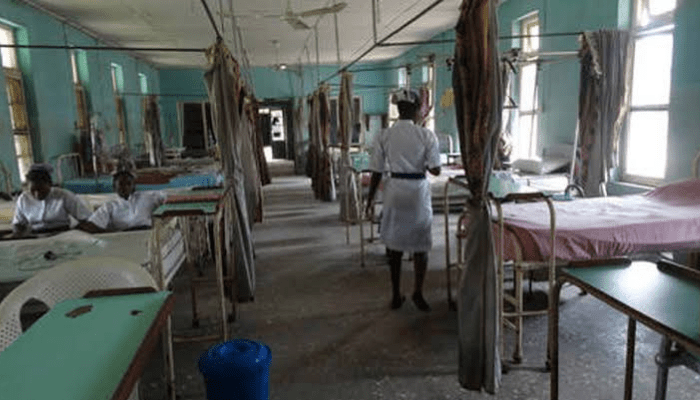
Across Nigeria, an alarming crisis is unfolding in the nation’s healthcare system—one that threatens the wellbeing of millions and challenges the very capacity of the state to provide basic care. Though much of the public discussion is dominated by economic and security issues, the deterioration of health services quietly commands urgent attention. The exodus of health professionals, faltering infrastructure and recurring disease outbreaks are all signals of a system on the brink of failure.
One of the most stark symptoms is the mass “japa” (exit) of doctors, nurses and other critical health workers. In recent years, over 16,000 doctors have left the country, and tens of thousands of nurses have followed suit in search of better remuneration and safer working conditions abroad. For many facilities, especially in rural or underserved areas, this means that wards are understaffed, surgeries delayed, and diagnostics either scarce or non-existent. The remaining staff are stretched to breaking point.
Compounding the workforce shrinkage is a chronic lack of investment in infrastructure and primary healthcare delivery. Although the country pledged, through the World Health Organization-backed Abuja Declaration decades ago, to devote at least 15% of national budgets to health, actual allocations often fall far below that threshold. Many clinics lack running water, reliable power supply, functional equipment, or even basic sanitation. This under-development means that even treatable conditions can become lethal.
The consequences for public health are stark and measurable. Nigeria continues to battle frequent disease outbreaks—such as cholera, diphtheria, and Lassa fever—despite years of reform. The weak link: inadequate vaccination coverage, poor water/sanitation infrastructure, and a health delivery system unable to respond rapidly. These outbreaks not only cost lives directly; they also erode trust in the system and impose heavy economic burdens on vulnerable families.
Access to care has become deeply unequal. In many rural communities, patients must travel long distances to reach functional clinics. Where they arrive, they may find no specialist available, equipment out of order, or essential medicines unaffordable. Reports indicate that many Nigerians now delay or forego medical treatment simply because the cost is prohibitive or the facility is unreliable. For many, the choice becomes: pay for medicine or feed your children.
The optics themselves reveal a painful irony. While ordinary citizens struggle, many political leaders and elites seek medical treatment abroad, underscoring a system that is failing those who remain. This not only highlights inequity but also signals a lack of confidence in the national healthcare infrastructure—a lack of confidence that rarely inspires trust.
Politically and socially, the healthcare crisis is a ticking time-bomb. Poor health outcomes weaken human capital, reduce productivity, heighten vulnerability to shocks, and can lead to public frustration or unrest. The inability to respond to a major epidemic or a disaster would amplify these risks far beyond the health domain. Nigeria cannot afford to treat this as a peripheral issue.
What must change? At the very least, the strategy must shift from rhetorical reform to actionable commitments. This includes significantly increasing health sector funding, improving working conditions and pay for health professionals to stem the brain-drain, upgrading clinic infrastructure (especially in underserved areas), and strengthening preventive health measures (vaccines, sanitation, WASH programmes). The focus has to be on reaching the many, not just the few.
There is also a need for accountability and local empowerment: giving communities real voice in how healthcare is delivered, ensuring transparency in budgeting, and promoting public-private partnerships that genuinely expand access. Without this, even increased budgets may be swallowed by inefficiencies or misdirected spending.
Finally, the crisis must be framed as both a health and national security issue. When healthcare fails, the cost is paid not only in lives but in lost economic opportunity, reduced social cohesion and increased vulnerability to internal instability. The time to act is now.
In the end, the healthcare crisis in Nigeria is not just about hospitals, medicines or doctors—it’s about how a nation values and protects its people. If the current trajectory continues, the gulf between rhetoric and reality will widen, with catastrophic consequences. But with courageous leadership and sustained commitment, the system can be rescued—and Nigerians deserve nothing less.
MARYAM MUHAMMED MAIBE student of mass communication Kashim Ibrahim University, Maiduguri.