
Africa
The Silent War Against Nigeria’s Forest -By Nerisa Naason
Deforestation is not just an environmental issue—it’s a national emergency. Nigeria’s forests, once symbols of natural wealth, are vanishing rapidly. Unless urgent steps are taken to protect them, the country risks losing not only its ecological balance but also a vital part of its cultural and economic heritage.

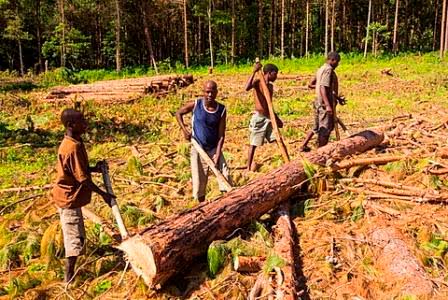
Across Nigeria, a silent environmental war is unfolding — one that threatens not only the nation’s biodiversity but also the livelihood of millions. Illegal logging, deforestation for agriculture, and uncontrolled urban expansion are stripping the country of its green cover at an alarming rate. Forests that once served as sanctuaries for wildlife and carbon sinks for the atmosphere are disappearing before our eyes. According to the Food and Agriculture Organization (FAO), Nigeria loses about 350,000 to 400,000 hectares of forest annually — one of the highest deforestation rates in the world.
In states like Cross River, Ogun, and Taraba, trees fall daily to meet the insatiable demand for timber and farmland. The destruction goes beyond lost trees; it disrupts entire ecosystems, alters rainfall patterns, and accelerates desertification. Communities that once depended on forest resources for food, medicine, and shelter are now facing displacement and poverty. Environmentalists warn that if deforestation continues unchecked, the country could lose all its primary forests within a few decades.
One of the major drivers of this crisis is the dependence on wood as a source of energy. With over 70 percent of Nigerians relying on firewood and charcoal for cooking, deforestation has become both a survival strategy and a slow-motion disaster. Rural households, lacking access to affordable electricity or gas, have no choice but to turn to the forests. This vicious cycle reinforces poverty while degrading the environment.
Illegal logging cartels further worsen the situation. In many areas, forest guards lack the resources and authority to challenge armed loggers. Corruption within forestry departments allows these activities to persist unchecked. Timber worth billions of naira is smuggled yearly through Nigeria’s porous borders, often ending up in foreign markets while local communities are left with barren lands and drying streams.
The implications are dire. Forests act as natural buffers against flooding, soil erosion, and climate extremes. Their destruction has made floods and droughts more frequent across the country. In 2022 alone, Nigeria witnessed devastating floods that displaced over 1.4 million people — a tragedy partly linked to poor land management and deforestation.
Beyond the environment, the economic impact is severe. Forest depletion undermines Nigeria’s potential to harness eco-tourism and sustainable timber industries. It also reduces agricultural productivity, as topsoil erosion leaves farmlands infertile. For a country battling food insecurity, losing its forests is equivalent to losing a lifeline.
Several non-governmental organizations and community-based groups have taken steps to restore lost forests through tree planting and conservation projects. However, these efforts face enormous challenges due to limited funding and lack of government enforcement. While policies like the National Forest Policy (2020) exist on paper, implementation remains weak.
Experts advocate for renewable energy adoption as a long-term solution. Expanding access to clean cooking technologies, such as biogas and solar stoves, could drastically reduce dependence on firewood. In addition, promoting reforestation through incentives and community participation can help reverse the damage.
Deforestation is not just an environmental issue—it’s a national emergency. Nigeria’s forests, once symbols of natural wealth, are vanishing rapidly. Unless urgent steps are taken to protect them, the country risks losing not only its ecological balance but also a vital part of its cultural and economic heritage.
Nerisa Naason is a 300 Level student from the Department of Mass Communication, University of Maiduguri.






















You must be logged in to post a comment Login