
Africa
State Creation In Nigeria: A Dream For Development Or A Tool For Division -By Aisha Kachalla
Economic viability remains one of the strongest arguments against further state creation. A 2024 report by the National Bureau of Statistics revealed that over 25 states in Nigeria cannot generate even 20 percent of their annual budgets internally. Yet, the call for new states persists. Agitations for entities like the “Savannah State,” “Ijebu State,” and “Katagum State” have resurfaced in recent years, with proponents insisting that more states will bring fairness and representation.

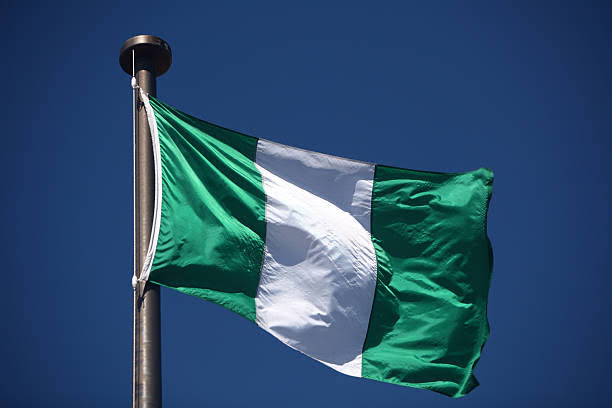
Few topics in Nigeria’s political history have sparked as much debate and passion as the issue of state creation. Since independence in 1960, Nigeria has undergone several phases of restructuring — from three regions at birth to the current 36 states and the Federal Capital Territory. Each wave of creation has been driven by a combination of political pressure, ethnic agitation, and promises of fairness and development. Yet, more than six decades later, Nigerians are still asking: has state creation truly brought growth and unity, or has it deepened division and competition for power?
The story of state creation In Nigeria is one rooted in the country’s struggle to balance diversity and equity. In 1963, the Mid-Western Region was carved out of the Western Region, becoming the first post-independence state. But the real turning point came in 1967, when General Yakubu Gowon dissolved the old regions and created 12 states, largely to weaken the secessionist bid of Biafra and to give ethnic minorities a sense of belonging. That move reshaped Nigeria’s political structure and set a precedent for future demands. From 12, the number rose to 19 under General Murtala Mohammed in 1976, then to 21 under General Babangida in 1987, 30 in 1991, and finally 36 under General Sani Abacha in 1996.
Each phase of creation was celebrated as a step toward inclusivity. For ethnic minorities long overshadowed by dominant groups, statehood symbolized recognition and autonomy. For local politicians, it meant greater access to resources and power. For citizens, it promised proximity to governance — that government would finally be “closer to the people.” In theory, these were noble goals. But in practice, state creation has often produced mixed results, revealing both progress and pitfalls in Nigeria’s quest for federal balance.
On one hand, new states have indeed expanded representation. They have allowed previously marginalized groups to have governors, senators, and local assemblies of their own. The creation of states like Bayelsa (for the Ijaw people), Ebonyi (for minority groups in the old Anambra/Abia area), and Taraba (for ethnic minorities in the old Gongola) has brought a sense of political visibility and cultural pride. New capitals have been built, roads opened, and administrative structures established. For millions of Nigerians, especially those from minority ethnic groups, state creation has been a form of liberation.
However, the other side of the story is less inspiring. Rather than promoting unity, successive state creations have often deepened ethnic fragmentation and fostered unhealthy rivalry. Many states struggle to survive financially, depending almost entirely on federal allocations. The proliferation of bureaucracies — with each state replicating ministries, agencies, and parastatals — has led to wasteful spending and inefficiency. Instead of driving development, some states have become political fiefdoms controlled by powerful elites who use state resources for personal gain.
Economic viability remains one of the strongest arguments against further state creation. A 2024 report by the National Bureau of Statistics revealed that over 25 states in Nigeria cannot generate even 20 percent of their annual budgets internally. Yet, the call for new states persists. Agitations for entities like the “Savannah State,” “Ijebu State,” and “Katagum State” have resurfaced in recent years, with proponents insisting that more states will bring fairness and representation. Critics, however, argue that multiplying states without strengthening their capacity for self-reliance only worsens the burden on the federation.
The emotional appeal for statehood is also tied to Nigeria’s identity politics. Many groups feel excluded or dominated by others, and they see state creation as a solution. But experts caution that unless governance itself improves — with transparency, inclusivity, and fairness — the cycle of agitation will continue. “State creation cannot fix injustice; good leadership can,” says Dr. Ibrahim Lawan, a political scientist at the University of Maiduguri. “You can divide a bad system into 100 parts, but without integrity, accountability, and competence, the problems will remain the same.”
Another concern is that constant agitation for more states distracts from more pressing reforms. True federalism, resource control, and local government autonomy — issues that could strengthen grassroots development — often take a backseat to ethnic demands for new borders. Many analysts believe that Nigeria’s existing 36 states can work effectively if properly managed, with each leveraging its resources, developing infrastructure, and empowering local industries. “What we need is not more states but better governance in the ones we already have,” notes Abuja-based economist Chidinma Eze.
Yet, the emotion surrounding state creation cannot be dismissed entirely. For many Nigerians, especially those from historically neglected regions, the demand for new states is about recognition, not just revenue. It reflects a yearning for equality — the desire to be seen, heard, and represented in a nation that sometimes feels too large and unequal.
Ultimately, state creation remains a double-edged sword: it has given Nigeria administrative depth but also political fragmentation. While it has brought governance closer to the people in some areas, it has also fueled endless competition for identity-based entitlement. As new calls emerge in the National Assembly for additional states, Nigeria must pause to reflect. Will more states heal old wounds or open new ones? Will they bring jobs, peace, and development — or simply more politicians, more bureaucracy, and more dependence on Abuja?
Until the nation confronts these questions with honesty and courage, the debate over state creation will continue — a mirror of Nigeria’s broader struggle to balance unity and diversity, ambition and reality.
Aisha Kachalla is a 300 Level student from the Department of Mass Communication, University of Maiduguri.

















You must be logged in to post a comment Login