
Africa
Between Hope and Ashes: The Lives Rebuilt After the Fire in Maiduguri Market -By Hafsat Arzika Isa
And rise they did. Within months, the ruins began to hum again with the sounds of reconstruction. The Borno State Government, in partnership with local associations and donors, began the rebuilding of stalls, the distribution of relief materials, and the provision of soft loans to traders. Governor Zulum, widely praised for his integrity, ensured that donations reached the hands they were meant for — restoring not just livelihoods, but trust in governance.

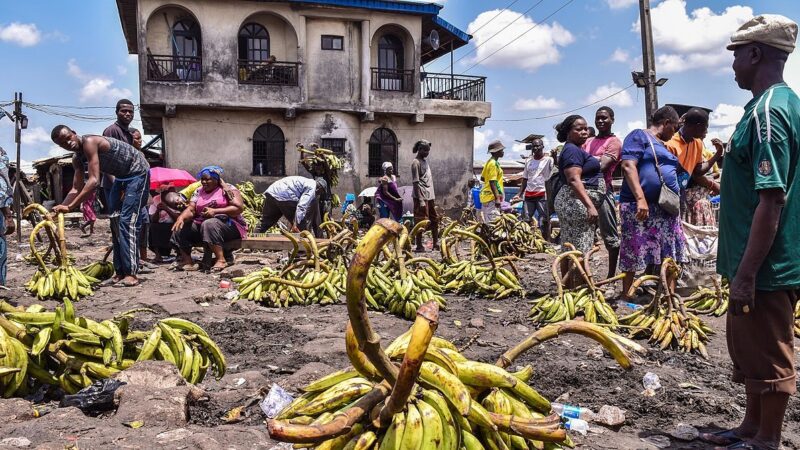
When dawn broke over Maiduguri that morning, the city smelled not of spice or trade, but of smoke and sorrow. The Monday Market — the economic heart of Borno and pride of the Northeast — had turned overnight into a field of ashes. What was once a symphony of haggling voices and shuffling feet had fallen silent, replaced by the hiss of burnt zinc and the quiet sobs of men counting losses that words could not measure.
For decades, Maiduguri’s Monday Market stood as a symbol of resilience — a place where farmers, traders, artisans, and travelers met under one roof to weave the fabric of daily life. But that fabric was torn apart by the inferno that consumed hundreds of shops, millions of naira in goods, and countless dreams.
“I watched my life’s work disappear before my eyes,” recalled Alhaji Mustapha A. A., a maize dealer who has traded in the market for over twenty years. “Everything I owned was in that shop. The fire started deep in the night — around 2 a.m. — and by the time we got there, nothing was left but ashes.”
He paused, his face marked by the memory, then continued with quiet gratitude:
“Alhamdulillah, we survived. And I must thank the people — especially the vulnerable ones who had little, yet contributed to help us stand again. And our Governor, Professor Babagana Umara Zulum — may Allah reward him — he handled every donation with fairness and justice. He made sure every victim, big or small, received help without favoritism.”
It was a statement that echoed across many hearts in Maiduguri. In a region long scarred by insurgency and displacement, the fire felt like another cruel test — but the response of the people proved that compassion can burn brighter than flames.
For Alhaji Ba’ana Bukar, a yard seller, the experience remains one of the hardest moments of his life.
“That night, I thought the world had ended,” he said, his voice trembling slightly. “We woke up to see fire devouring everything. It started around 2:00 a.m., when everyone was asleep. We couldn’t save a single item.”
He looked away, then added with faith that seemed carved from patience:
“Alhamdulillah, we have recovered. Allah tested us with fire, and later with flood. The flood was not as bad, but it took away some of what we had just rebuilt. Yet, we thank Allah — because the fire came suddenly, but the flood warned us in drops.”
The resilience of Maiduguri’s traders is not merely economic — it is spiritual, cultural, and communal. They rebuild not just with bricks and cash, but with belief.
In the words of Muhammad Abubakar Ka’jima, a perfume and incense dealer known across the market for his calm disposition:
“Fire may burn the shop, but not the spirit. I returned because my customers are like family. I rebuild because life must continue. That’s the story of Maiduguri — no matter what happens, we rise.”
And rise they did. Within months, the ruins began to hum again with the sounds of reconstruction. The Borno State Government, in partnership with local associations and donors, began the rebuilding of stalls, the distribution of relief materials, and the provision of soft loans to traders. Governor Zulum, widely praised for his integrity, ensured that donations reached the hands they were meant for — restoring not just livelihoods, but trust in governance.
Today, when you walk through the Monday Market, the scent of burned metal has been replaced by that of maize, perfume, and fresh hope. The traders speak with the ease of survivors who have faced loss and learned endurance.
But behind every rebuilt stall lies a story — of men who once wept in the dark, of women who prayed under falling embers, of children who grew up too soon amid the ruins.
The Maiduguri fire was not the end of a market. It was the beginning of a new chapter — one written in courage, cooperation, and faith.
And as the sun sets over the city, casting a golden hue over the newly roofed stalls, one truth becomes clear:
You can burn a market, but you cannot burn a people’s will to begin again.
Hafsat Arzika Isa is a 300-Level Mass Communication student at Kashim Ibrahim University, Maiduguri.




















You must be logged in to post a comment Login