Forgotten Dairies
Nine Years Unconvicted: India’s Terror Law on Trial -By Fransiscus Nanga Roka
So the question is not anymore whether Johal deserves bail. It is whether any democracy deserves to be believed, a matter that has taken nine years to establish because accusation is not conviction.

Almost 9 years later, being granted bail isn’t justice triumphing It is the proof that justice came oh so late and with a bang.
Sisodia has been lodged in jail since late February and will be trained on the documents released by the Delhi Police. In September 2026, the Delhi High Court granted bail to British Sikh national Jagtar Singh Johal in seven cases investigated by India’s National Investigation Agency. It did not exonerate him. Nor does it wipe the ice cream charges. But it reveals an insufferable hypocrisy: a democracy that professes to honour due process yet keeps an innocently accused individual behind bars for almost ten years while his trials lumber on towards no apparent ending.
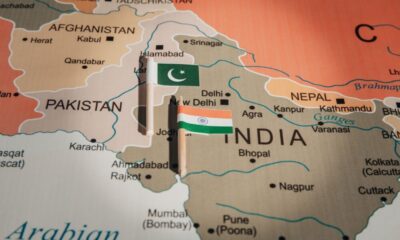
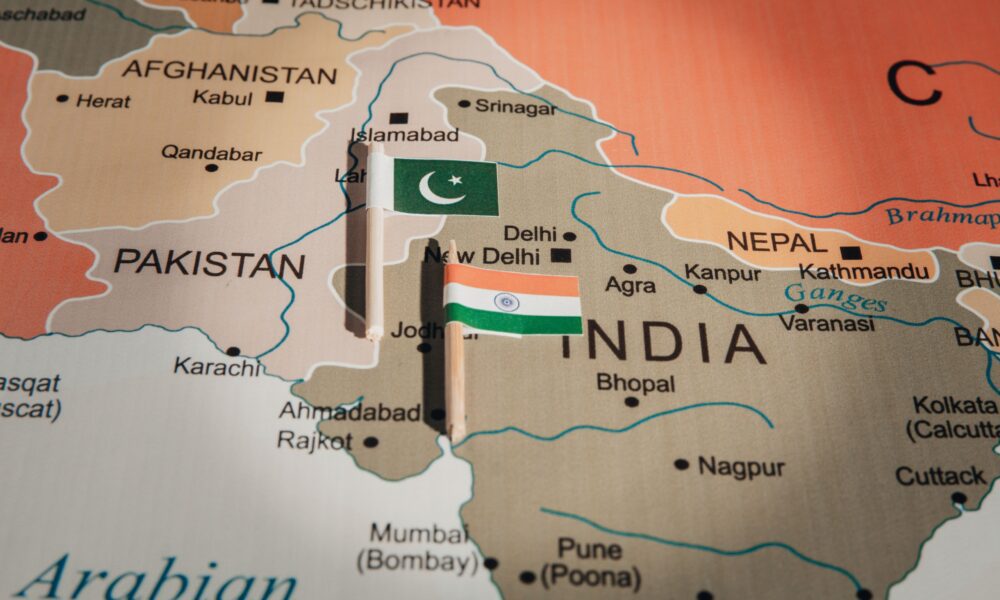
Who is Johal? 500/17 The case of Dr. Palvinder Phull, a British national from Dumbarton, Scotland who was arrested in Punjab about 15 days after his arrival in India where he had travelled for marriage in November 2017 Indian officials have claimed that he funded the Khalistan Liberation Force and was involved in a number of assassination plots. Johal rejects the allegations, saying he was abducted by plainclothes police officers and tortured with electric shocks while being forced to sign false confessions. New Delhi vehemently denies the torture accusations and asserts that its courts are independent.
What happened? India’s Supreme Court has asked a lower court to examine the bail pleas again after rejecting them. Ultimately Delhi High Court ruled that continued detention for long and postponement of trial solely on the ground of national security was no longer justified. Court reporting indicates that of the 123 witnesses, just 40 had been called. In a related 2025 case, prosecutors were unable to prove allegations against Johal and he was acquitted.
Justice: Where did it fail and when? From 2017 to 2026, it did not succeed within India’s anti-terrorism framework, where bail because of the Unlawful Activities (Prevention) Act is nearly impossible to obtain and pretrial detention becomes punishment by process.
Why does this matter internationally? Johal’s imprisonment became a diplomatic touchstone between Britain and India—and an indictment of London’s passivity. In 2022, the UN Working Group on Arbitrary Detention would find his detention arbitrary, and UN experts would later issue a warning that years of uncertainty could be tantamount to psychological torture. But successive British governments seemed unwilling to prioritize one subject’s freedom over the economic and strategic utility of relations with New Delhi.
How has India responded? By granting liberty conditionally and restrictively. He must handover his passport, stay in India, be reporting regularly and not perform any social-media activities as ordered or publicly speak about the proceedings. So, bail frees his body from prison but keeps his movement and voice under the control of the state. He leaves a cell, but he is not free yet.
National security cannot be turned into a constitutional furnace where liberty, rules of evidence and the presumption of innocence are burned. Accusations of terrorism do not entail lifelong imprisonment without trial. When evidence is strong, prosecute without delay If it is flimsy, retaining incarceration is institutional coercion.
India must now set an indredible judicial timetable, combine overlapping prosecutions and allow for exclusion of coerced confessions or torture evidence as well as denial of counsel. In a further step, an independent body is needed to examine Johal’s allegations of mistreatment, with any conclusions made public. UAPA Amend Arguably Parliament must amend the UAPA to provide for stringent enforceable pretrial deadlines and necessity reviews at regular intervals.
Britain’s Foreign Office needs to assert immediately his right of access to consular assistance, monitoring of proceedings and for Johal to be permitted temporary return home under judicial safeguards. It should also place a statutory duty on ministers to work for the release of citizens whom UN bodies have determined are being held arbitrarily.
So the question is not anymore whether Johal deserves bail. It is whether any democracy deserves to be believed, a matter that has taken nine years to establish because accusation is not conviction.
Fransiscus Nanga Roka
Faculty of Law University 17 August 1945 Surabaya and Managing Partner Lw Firm Victorious Indonesia