Forgotten Dairies
On The Unbecoming Obsession Of Kenneth Okonkwo With Peter Obi -By Isaac Asabor
It is time for Kenneth Okonkwo to retire his campaign of calumny. If he truly believes in a new Nigeria, he would do well to remember that building the future requires a certain measure of grace and restraint, qualities conspicuously absent from his current approach. Nigerian politics is in desperate need of constructive opposition, rigorous policy debate, and principled disagreement. What it does not need is the spectacle of a man so consumed by bitterness that he cannot see the damage he inflicts on his own credibility, let alone the broader cause of democratic accountability.

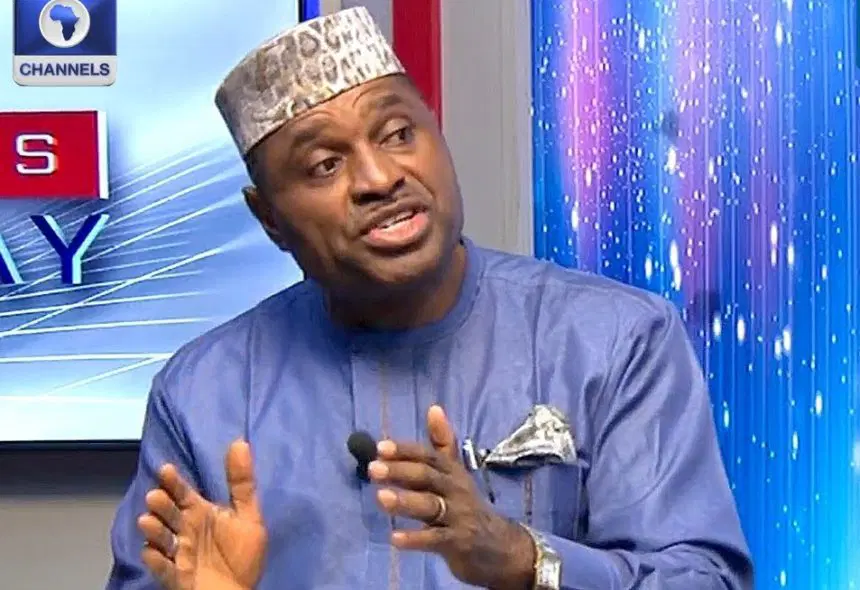
In Nigeria’s ever-evolving political theatre, the line between principled disagreement and malicious calumny is often blurred by individuals who mistake slander for statesmanship. One such figure is Kenneth Okonkwo, the Nollywood actor and lawyer who served as spokesperson for Peter Obi’s 2023 presidential campaign. Since parting ways with the Labour Party (LP), Okonkwo has embarked on a persistent, almost obsessive campaign of vilification against the man he once proudly stood beside. What began as a plausible divergence of political opinion has metastasized into an unrelenting crusade of character assassination, driven by bitterness rather than conviction.
Okonkwo’s falling-out with Obi is now well-documented. He resigned from the LP in June 2024, citing frustrations with the party’s leadership crisis. Shortly thereafter, he joined the African Democratic Congress, taking what many considered a sharp political turn. But the split was not merely about party affiliation, it quickly escalated into a barrage of personal attacks that have only grown more vitriolic with time.
Within months of his departure, Okonkwo had labelled Obi a “politician of convenience,” claimed that Obi “lacks the traits of a team player and an effective manager,” and insisted that the former Anambra governor was committing “political suicide”, all delivered in the language of someone nursing a grudge rather than engaging in constructive political discourse. The accusation of betrayal, of which Okonkwo is particularly enamored, is telling: “If there is anybody that betrayed the other,” he declared dramatically, “I can say it emphatically that Peter Obi betrayed me”.
What makes Okonkwo’s conduct particularly unbecoming is the sheer volume and frequency of his attacks. Hardly a month passes without his face appearing on television or or a news headline anchoring a reportage on his attack against Obi, always offering yet another critique of Obi. He has questioned Obi’s courage, calling him a leader who “refused to revive Labour Party” and claiming that he follows “men of valor, not men of victim mentality”. He has accused Obi of being afraid of competitive primary elections, asserting that the former presidential candidate “has never been in one, and he will not be in one until he finishes his political career”.
Most recently, Okonkwo has turned his fire on Obi’s public image, accusing the former governor of seeking to portray himself as the only credible presidential candidate in the opposition. “You want to project that it’s only you that can be President,” Okonkwo fumed. “Who are you?” The question, laden with contempt, perfectly encapsulates the tenor of his campaign: not to refute, but to ridicule; not to critique, but to characterize.
The most troubling dimension of Okonkwo’s behaviour is his tendency to cross from political critique into outright calumny. At various points, he has described Obi’s supporters as “street urchins” and “low-class” individuals, a stunning insult directed at the millions of young Nigerians who powered the Obidient movement. He has claimed, often without corroboration, that Obi was misled by party executives or acted in bad faith in internal Labour Party disputes. The pattern is unmistakable: attack the man, malign his followers, and frame every disagreement as a personal betrayal.
The Sokoto State chapter of the Obidient Movement rightly condemned Okonkwo’s remarks as “anti-democratic, divisive, and strategically flawed,” describing his claim that only a northern candidate can win in 2027 as “a dangerous myth”. Such pushback has done little to deter Okonkwo, who seems to relish his role as Obi’s most relentless prosecutor.
Perhaps the most instructive response to Okonkwo’s tirades came from Obi’s key allies, who dismissed his allegations as “a politically motivated misrepresentation of facts”. Nana Sani Kazaure, a former spokesperson of the Obi-Datti campaign team, pointedly reminded Okonkwo of Obi’s magnanimity, noting that Obi had described his former spokesperson as a “beloved brother and a trusted ally” after Okonkwo left the party. Obi himself, in a display of grace that contrasts sharply with Okonkwo’s rancour, had advised his supporters not to attack Okonkwo for his differing opinions, insisting that “Kenneth Okonkwo’s differing opinion does not make him an enemy, but rather a strong voice and friend”.
The disparity in behaviour is stark. One man resorts to invective and denigration at every opportunity; the other remains focused on building a political future rather than settling personal scores. In that contrast, Nigerians can judge for themselves who has acted with integrity and who has allowed ambition to curdle into animosity.
Beyond the personal dimension, Okonkwo’s obsessive attacks on Obi serve a more troubling purpose: they distract from the substantive issues that truly matter. At a time when Nigeria is grappling with unprecedented economic hardship, insecurity, and institutional decay, the energy expended on airing grievances against a former political ally is nothing short of irresponsible. The opposition space in Nigeria is fragmented and struggling to articulate a coherent alternative to the ruling party; the last thing it needs is prominent figures turning their fire inward in a display of petty score-settling.
The Obidient movement, for all its imperfections, represents a genuine groundswell of youth-led demand for accountability, good governance, and a break from the old political order. By persistently vilifying its standard-bearer, Okonkwo is not engaging in constructive critique, he is lending ammunition to those who would prefer to see the opposition divided and discredited. Whether he intends this outcome or not, the effect is the same.
Kenneth Okonkwo must confront an uncomfortable question: what exactly does he hope to achieve with this unceasing campaign against Peter Obi? If his goal is to advance a different political vision, he has ample opportunity to articulate it without resorting to personal attacks and belittling rhetoric. If his goal is to position himself as a viable alternative, his constant negativity does little to inspire confidence in his own leadership capacity. And if his goal is simply to remain relevant in a crowded political field, then the strategy of tearing down others to elevate oneself is not only cynical but ultimately self-defeating.
The great Nigerian writer Chinua Achebe once observed that “until the lions have their own historians, the history of the hunt will always glorify the hunter.” In the current drama, Okonkwo seems determined to write his own version of history, one in which he is the wronged protagonist and Obi the villain. But the reading public is not obliged to accept this narrative. We have seen the facts, we have heard the tone, and we have witnessed the transformation of a once-respected spokesperson into a perpetual critic whose words carry more heat than light.
It is time for Kenneth Okonkwo to retire his campaign of calumny. If he truly believes in a new Nigeria, he would do well to remember that building the future requires a certain measure of grace and restraint, qualities conspicuously absent from his current approach. Nigerian politics is in desperate need of constructive opposition, rigorous policy debate, and principled disagreement. What it does not need is the spectacle of a man so consumed by bitterness that he cannot see the damage he inflicts on his own credibility, let alone the broader cause of democratic accountability.
Let the debate be about ideas, platforms, and the future of the nation, not about the wounded pride of one man who cannot move on.