Africa
Otedola-Kara Axis On Lagos-Ibadan Expressway: Spiritual Black Spot Or Construction Flaw? Nigerians Demand Answers -By Isaac Asabor
Government must act decisively, not with press statements or blame games, but with real action. The time to commission committees and conduct “inspections” is over. What is needed now is full intervention backed by funding, enforcement, and genuine commitment to saving lives.

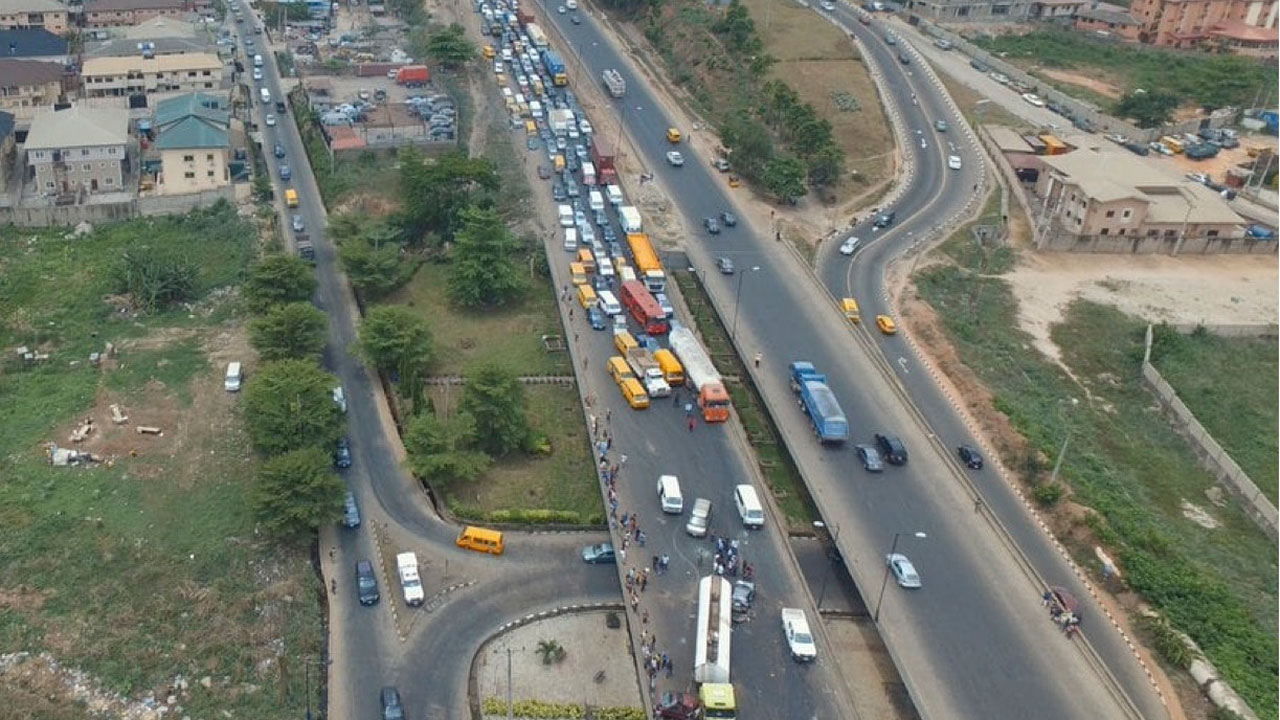
There is no denying the fact that the stretch of road between Otedola Bridge and Kara Bridge on the Lagos-Ibadan Expressway has for the umpteenth time being claiming lives, leaving mangled vehicles, grieving families, and countless questions in its wake. From minor collisions to fatal crashes, this corridor has earned a dark reputation that seems to worsen by the day. Hardly does a month pass without reports of ghastly accidents occurring on that stretch. What is happening? Is there a spiritual undertone to this recurring tragedy? Or are the causes purely physical, stemming from poor construction, road design flaws, or traffic mismanagement?
The frequency of accidents on this axis has led many Lagosians and Nigerians at large to refer to it as a “death zone.” From commuters and transporters to roadside traders and security personnel, everyone has an opinion, though no one seems to have the solution.
“I have plied this road for over 12 years as a commercial driver, and I can tell you, there is something wrong with that stretch,” said Saka Lawal, a Danfo driver who operates the Ojota-Berger route. “Sometimes it is like the road just swallows vehicles. Trailers lose control. Cars just spin out. Even when there is no rain, accidents happen.”
Bisi Araromi, a trader at the Kara cattle market, echoes the sentiment. “We always pray before crossing the express. Just last week, a truck failed brake and killed two hawkers. Government has not done anything to stop it.”
Similarly, Mrs. Margaret Chukwuma, a teacher who lives in Arepo and commutes to Ikeja daily, expressed fear. “That stretch gives me anxiety. I have seen so many accidents there, especially early in the morning or during rush hour.”
Even law enforcement agencies are not left out. A traffic officer attached to the Federal Road Safety Corps (FRSC), who pleaded anonymity, said, “We record at least two to three accidents weekly. Some are minor, others fatal. The causes range from brake failure to over-speeding, to loss of control due to road design. There is something inherently wrong with that road.”
With the benefit of hindsight, the Otedola bridge area first gained nationwide notoriety in 2018 when a petrol-laden tanker exploded, killing nine people and burning 54 vehicles. The tragedy sent shockwaves across the country and should have been a wake-up call for authorities. But seven years down the line, the road still poses an ominous threat to life and property.
The psychological scars from past accidents have not healed. Motorists slow down, not out of caution alone, but out of fear, almost like passing through a haunted passage. The constant sirens of emergency vehicles, the recurring blood stains on the road, and the burnt marks from past explosions all contribute to the myth that this stretch is cursed.
While some believe there could be spiritual elements attached to the spot, possibly linked to the many lives lost there, experts argue otherwise. “There’s nothing mystical about the road,” said Engr. Temitope Ogunbanwo, a civil engineer and road safety consultant. “The gradient, lack of proper signage, worn-out road markings, absence of speed-calming infrastructure, and inconsistent road maintenance are enough to make that stretch dangerous.”
Many point accusing fingers at the construction companies that handled the expansion and rehabilitation of the Lagos-Ibadan Expressway. Although the reconstruction project was commissioned with fanfare, its execution has raised eyebrows. While some segments of the expressway look modern and smooth, the notorious stretch between Otedola and Kara remains chaotic, narrow lanes, bottlenecks, poor drainage, and minimal illumination at night.
“The road looks like it was patched by a hurried mason,” lamented Akin Adebayo, a civil society advocate and urban planner. “The entire project lacks proper drainage, and when it rains, water stagnates and weakens the road. Add to that the reckless driving culture, and you have a recipe for disaster.”
Observers have also questioned whether the road passed integrity tests before being declared open to the public. “There is a culture of cutting corners when it comes to road construction in Nigeria. Projects are often not completed to standard before contractors disappear or hand over,” said Adetutu Awolowo, a construction quality analyst. “There needs to be accountability.”
It is clear that whatever the cause, this issue demands immediate government attention. The Federal Ministry of Works, the Lagos State Government, the Federal Road Safety Corps, and construction firms involved in the expressway’s design and rehabilitation must come together to diagnose and fix the problem.
Against the foregoing backdrop, it is expedient to suggest in this context that short-term recommendations should include installation of speed breakers or rumble strips, deployment of more FRSC officials to monitor traffic on that stretch of Lagos/Ibadan Expressway, construction of proper drainage systems to prevent water retention, and erection of reflective road signs and improved lighting as well as installations of speed cameras and implementation of stiffer penalties for reckless drivers.
In the long term, a full audit of the construction quality on this stretch should be conducted by independent engineers. If design flaws are detected, reconstruction must follow, without cutting corners. Also, contractors found wanting in the original construction or maintenance of the road must be blacklisted and prosecuted.
Let’s not forget the role of the human factor in road safety. From tanker drivers driving under the influence of alcohol to commercial buses that overload passengers and speed uncontrollably, Nigerians themselves are also complicit.
“The government must regulate driver licensing more strictly,” said Dr. Osahon Imasuen, a public health expert. “We can’t continue to have untrained or semi-literate drivers handling heavy-duty vehicles. Road safety begins with discipline and education.”
Moreover, the poor road culture in Nigeria is alarming. Lane indiscipline, impatient overtaking, use of mobile phones while driving, and lack of adherence to speed limits are all factors that contribute to the frequent mishaps.
Insurance companies also have a role to play. By insisting on certain safety requirements before issuing policies, they can incentivize responsible behavior among fleet owners and drivers.
Every accident comes with its own tragic tale. Behind the statistics are real people, children orphaned, families plunged into sudden poverty, and dreams cut short. A recent accident involved a family of five returning from a wedding; only one child survived. These are not just news headlines, they are painful reminders of our collective failure to protect one another.
Residents, religious leaders, NGOs, and safety advocates have all cried out. Candlelight vigils have been held. Social media campaigns have trended. Yet, the silence from those in authority remains deafening.
The Otedola-Kara axis is no longer just a road, it has become a national disgrace and a symbol of the collective failure to safeguard human life. Whether spiritual or structural, lives are being lost, families are being broken, and businesses are suffering. There is an urgent need to find a lasting solution.
Government must act decisively, not with press statements or blame games, but with real action. The time to commission committees and conduct “inspections” is over. What is needed now is full intervention backed by funding, enforcement, and genuine commitment to saving lives.
Until then, every trip on that stretch remains a game of chance, and for many Nigerians, survival feels like a miracle.
And the question remains: How many more lives must be lost before action is taken?