
Africa
Nigeria’s Auto Industry is in Need of Government Support -By Babatunde Yusuf
Enclosing this, with the tech evolution overtaking every industry, it high time the FG and state governments hearken to their responsibilities lest we risk missing out on the shift to electric vehicles (EVs). The country has lithium reserves and could play a role in the global EV supply chain. But that would require planning, investment, and infrastructure which are all currently missing.

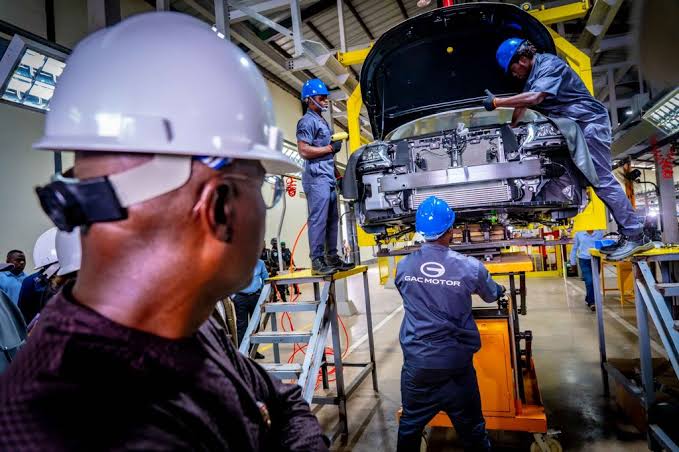
Nigeria’s automotive sector which was once seen as a path to industrial growth and job creation is now arguably stalled. This indeed calls for concern as it reflects deeper national problems. Despite being Africa’s biggest economy with over 220 million people, it’s saddening that we still depend heavily on imported vehicles. In 2023 alone,more than 400,000 vehicles were imported, while local production was under 10,000. The gap is not encouraging for the local automotive industry but the the question that keeps begging for answer is: why hasn’t the country built a stronger local auto industry? The main reasons are poor infrastructure, inconsistent policy, and weak government commitment. Plans like the National Automotive Industry Development Plan (NAIDP), introduced in 2013, never gained real traction. They lacked follow-through hence their failure.
Local assemblers such as Innoson Vehicle Manufacturing, PAN Nigeria, and Stallion Group are trying to stay in business, but then, they face high production costs, unreliable electricity, import-dependent parts, and limited access to government grants and credit. Innoson Motors once even said it operates at less than 30% of capacity because of these constraints.
Building cars in Nigeria costs far more than importing them. The Nigerian Bureau of Statistics reports that assembling a vehicle locally costs 20 to 30 percent more than importing a used car, even with tariffs. Most Nigerians can’t afford new vehicles given financial constraints, so they turn to used imports, often referred to as ‘tokunbo’. Import tariffs were also supposed to make local assembly more attractive. But without reliable infrastructure and policy enforcement, they’ve only raised prices for consumers while doing little to help manufacturers.
Road and logistics challenges also add to the cost. Distributing vehicles is expensive due to poor road networks. Nigeria ranked 112th out of 139 countries in the World Bank’s 2023 Logistics Performance Index. This, unarguably, hurts competitiveness and scares off investors. The industry also suffers from limited scale because vehicle production is quite expensive and needs high volume to reduce costs. But fewer than 10% of the annual vehicle sales in Nigeria are for new cars. Without big institutional buyers or government procurement, local assemblers can’t grow.
Other countries (including African countries) show what’s possible. Morocco, for instance, exported over 700,000 cars in 2023. Its government created industrial zones, offered tax breaks, and stayed consistent with policy. Companies like Renault and Stellantis responded by setting up shop. Nigeria could take a similar path, if out government at the state and national level is ready to make a change.
There’s also a strong case for jobs. The International Labour Organization says the auto industry creates up to 12 indirect jobs for every direct one. With youth unemployment above 30%, the sector could absorb thousands into meaningful work and no doubt this will cut down the rate of unemployment throughout the country.
Enclosing this, with the tech evolution overtaking every industry, it high time the FG and state governments hearken to their responsibilities lest we risk missing out on the shift to electric vehicles (EVs). The country has lithium reserves and could play a role in the global EV supply chain. But that would require planning, investment, and infrastructure which are all currently missing.
Babatunde Yusuf is the CEO of Mapleby Autos and can be reached via maplebyautos@gmail.com




























You must be logged in to post a comment Login