Africa
Presidential Pardon: Between Mercy, Politics, And Justice -By Genesis Dansule
Many Nigerians see President Tinubu’s recent decision as another episode in that long-standing pattern. Critics argue that such actions weaken public trust in the justice system and embolden corruption among political elites. “When people in positions of power are convicted and later pardoned, it sends a message that corruption has no real consequences in Nigeria,” said a legal analyst in Abuja who requested anonymity.

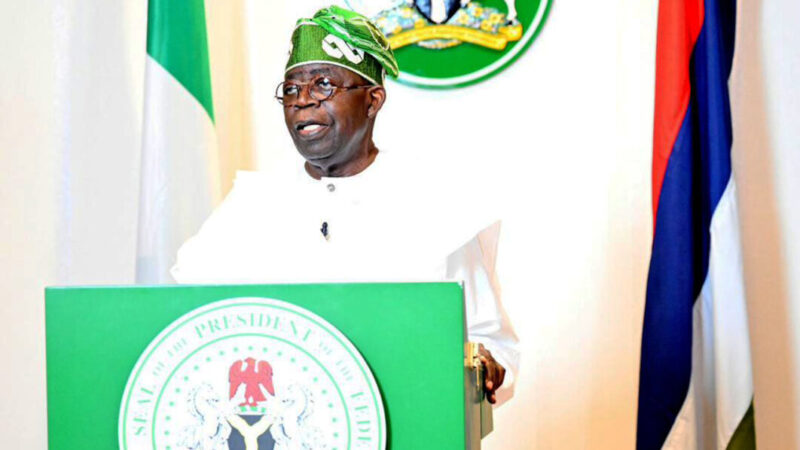
The recent presidential pardon announced by President Bola Ahmed Tinubu has set off a wave of reactions across the country. Nigerians from different walks of life have taken to social media, radio talk shows, and public gatherings to express mixed feelings about the decision. While some see it as a humane gesture consistent with constitutional powers, others view it as a blow to the fight against corruption and justice in Nigeria.
The Presidency, through the Ministry of Justice, confirmed last week that several inmates — including some politically exposed persons convicted for corruption — were granted clemency. The statement explained that the decision was made on humanitarian grounds, emphasizing that the President acted within the powers granted under Section 175 of the 1999 Constitution. However, the announcement has left the nation divided, with many questioning the motives and implications behind such an act.
Historically, presidential pardons in Nigeria have been controversial. From the days of President Olusegun Obasanjo to Muhammadu Buhari, nearly every administration has exercised this constitutional privilege. In many cases, it has been justified by appeals to old age, ill health, or national reconciliation. Yet, these acts of clemency have often been met with public criticism — especially when they involve individuals convicted of corruption or abuse of office.
A clear example that lingers in public memory is former President Goodluck Jonathan’s 2013 pardon of Diepreye Alamieyeseigha, the former Bayelsa State governor convicted of money laundering. That decision attracted widespread condemnation from civil society and anti-corruption advocates. Similarly, in 2022, the administration of President Muhammadu Buhari stirred public anger when it pardoned former governors Joshua Dariye and Jolly Nyame, both convicted for misappropriation of public funds.
Many Nigerians see President Tinubu’s recent decision as another episode in that long-standing pattern. Critics argue that such actions weaken public trust in the justice system and embolden corruption among political elites. “When people in positions of power are convicted and later pardoned, it sends a message that corruption has no real consequences in Nigeria,” said a legal analyst in Abuja who requested anonymity.
However, supporters of the decision argue that the presidential pardon is not necessarily a betrayal of justice but an extension of compassion. They point out that clemency serves a rehabilitative and reconciliatory purpose in democratic societies. “Justice must also have a human face,” noted Dr. Ogechi Nwosu, a political analyst at the University of Lagos. “If someone has served a significant portion of their sentence, shown remorse, and reformed, granting mercy can promote national healing rather than division.”
Despite such defenses, the moral and legal implications remain complex. Prominent human rights lawyer Femi Falana (SAN) questioned the rationale behind pardoning individuals who had been found guilty of betraying public trust. According to him, “The Constitution gives the President this power, but it should be used sparingly and transparently, not in a manner that appears to favor the politically connected.”
Public reaction has been swift and emotional. On social media platforms such as X (formerly Twitter), hashtags like #PresidentialPardon and #JusticeForAll dominated national discourse. Many Nigerians asked why mercy seems easily extended to the powerful while petty offenders continue to rot in overcrowded prisons. The contrast between elite privilege and ordinary suffering remains a sore point in the nation’s collective conscience.
At Ojuelegba motor park in Lagos, a commercial driver named Musa Ibrahim expressed his frustration. “My cousin has been in prison for stealing a phone worth ₦40,000,” he said. “Nobody has come to pardon him. But these people who stole billions are being set free. Is that justice?” His voice echoes a sentiment shared by many who feel that Nigeria’s justice system favors the rich and punishes the poor.
Beyond public anger, political observers suggest that the timing of the pardon may not be coincidental. With the 2027 general elections slowly approaching, some analysts believe that the decision might be politically motivated. They argue that such gestures can be used to rebuild alliances, appease political allies, or project an image of forgiveness and unity.
Others see it as part of a broader strategy to ease growing social tension. With the country facing economic hardship, inflation, and insecurity, the administration might be seeking to portray itself as compassionate and responsive to the public mood. “It could be an attempt to humanize leadership at a time when people feel disconnected from government,” said Professor Hassan Gidado, a political scientist at Bayero University, Kano.
Nonetheless, the debate continues to highlight the contradictions in Nigeria’s governance system — where justice, mercy, and politics often intersect in uncomfortable ways. While the President’s supporters emphasize constitutional legality, the public demands moral accountability and transparency in exercising state power.
As the controversy lingers, one thing remains clear: the issue of presidential pardon goes beyond law and politics. It touches on the soul of a nation struggling to define fairness and equality before the law. Whether history will judge this particular pardon as an act of mercy or a misstep of politics depends on how the administration justifies its intentions — and whether Nigerians can still believe that justice is truly blind.
Genesis Dansule is a 300 Level Student From Mass Communication Department University Of Maiduguri.