
Africa
ASUU Strike – A Symptom Of A Nation’s Broken Promises -By Genesis Dansule
The latest strike should not surprise anyone who has watched the slow erosion of public universities over time. Many campuses are underfunded, with decaying infrastructure and overcrowded lecture halls. Research funding is minimal, while brain drain continues to rob the country of its best minds. When a professor earns barely enough to survive, while politicians earn millions for part-time work, it becomes clear why morale in the university system is at an all-time low.

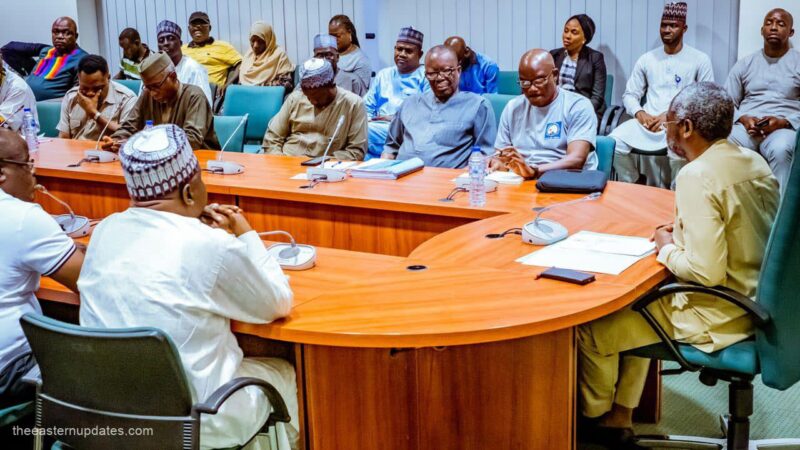
Once again, the Academic Staff Union of Universities (ASUU) has declared another strike — a two-week warning action that could easily snowball into a full-blown shutdown of public universities if not urgently addressed. For many Nigerians, this is a familiar and frustrating story: the same accusations, the same promises, and the same cycle of disappointment that has come to define the country’s public education system.
At this point, one cannot help but ask — how did we get here again? For over two decades, ASUU has battled successive governments over issues that should have been long resolved. The union’s grievances are well-known: revitalisation of public universities, payment of earned academic allowances, completion of the renegotiated 2009 ASUU-FG agreement, withheld salaries, and the implementation of better welfare conditions for lecturers. These are not new demands; they are recurring issues that successive administrations have pledged to fix but never truly do.
The current government, like its predecessors, Insists that it has met most of ASUU’s demands. Officials cite payments of earned allowances, improved funding, and new welfare packages as evidence of progress. Yet, ASUU maintains that such claims are half-truths — pointing to the slow, inconsistent, and selective implementation of these promises. The union accuses the government of playing politics with education and ignoring the long-term decay eating away at Nigerian universities.
This tug-of-war has become a tragic routine — one that punishes the very group least responsible for the crisis: the students. Every new strike halts academic progress, disrupts graduation timelines, and pushes young people into idleness, frustration, and even crime. For parents, it means wasted money and shattered hopes. For lecturers, it means more resentment and uncertainty. And for the government, it means another dent in its credibility.
What makes this situation particularly shameful is that it is entirely avoidable. Nigeria is not short of policies, reports, or committees on education. What the country lacks is sincerity and consistency. Governments sign agreements with unions only to abandon them once the tension eases. The result is a recurring storm — every few years, the same issues resurface because no one truly follows through.
The latest strike should not surprise anyone who has watched the slow erosion of public universities over time. Many campuses are underfunded, with decaying infrastructure and overcrowded lecture halls. Research funding is minimal, while brain drain continues to rob the country of its best minds. When a professor earns barely enough to survive, while politicians earn millions for part-time work, it becomes clear why morale in the university system is at an all-time low.
It is easy to blame ASUU for being “too rigid” or “too confrontational,” but doing so ignores the root causes of their grievances. Industrial action is not the problem — it is a symptom of government neglect. When dialogue produces only empty promises, strikes become the only language that gets attention. The union’s methods may be disruptive, but their frustration is understandable in a system that consistently fails to honour its word.
That said, ASUU must also reflect on its strategy. While strikes draw attention, they also erode public sympathy over time. Ordinary Nigerians, especially students and parents, are now weary of endless shutdowns. The union should complement its agitation with creative alternatives — sustained public advocacy, collaboration with civil society, and transparent communication that shows Nigerians the full picture of its struggle.
The government, on Its part, must finally rise above token gestures and half measures. A lasting solution requires more than press releases and committee meetings. It requires honesty — to admit the extent of decay — and commitment, to invest in real reform. Education is not charity; it is the foundation of national development. Every delay in addressing these issues is a delay in Nigeria’s progress.
The ongoing strike is not just about salaries or allowances; it is about the value a nation places on knowledge. It is about whether Nigeria truly believes that education can transform its future. Until the government stops treating university education as a seasonal problem and begins to see it as a national priority, the ASUU strikes will continue — and with each one, another generation of students will pay the price for the failures of leadership.
In the end, the ASUU strike is not merely an industrial dispute; it is a mirror reflecting Nigeria’s broken promises. And until we fix the system that produces these crises, our universities — and our future — will remain trapped in an endless loop of negotiation and neglect.
Genesis Dansule is a 300 Level Student From Mass Communication Department University Of Maiduguri.


























You must be logged in to post a comment Login