Forgotten Dairies
Soft Diplomacy: President Tinubu’s state visit to the UK -By John Kokome
In framing this engagement through the lens of soft diplomacy, one sees not just a meeting of leaders, but a convergence of interests, identities, and ambitions. It is a reminder that in today’s world, the politics of diplomacy is as much about how nations are perceived as it is about what they achieve.

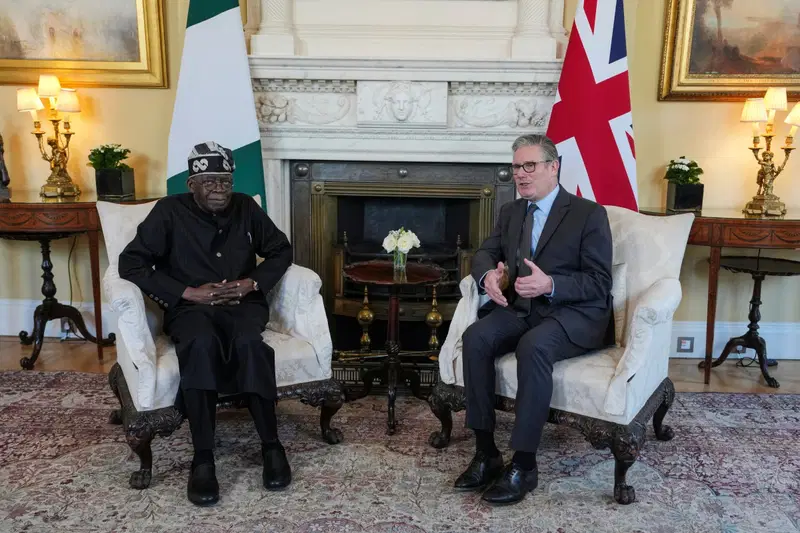
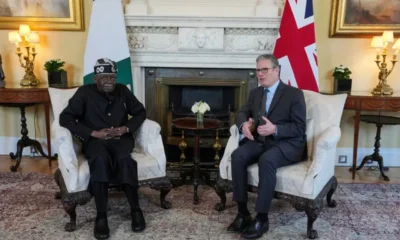
In an era where global influence is no longer defined solely by military strength or economic dominance, soft diplomacy has emerged as a powerful currency in international relations. The recent state visit of President Bola Tinubu to King Charles III underscores this evolving dynamic, one where symbolism, shared history, and strategic dialogue converge to shape the future of nations.
State visits are often mistaken for ceremonial rituals, grand receptions, official banquets, and photo opportunities. Yet, in reality, they are carefully orchestrated political instruments. They communicate intent, signal alignment, and subtly negotiate power. In the case of Nigeria and the United Kingdom, the visit is layered with historical context, economic ambition, and geopolitical recalibration.
The Nigeria–UK relationship is deeply rooted in a shared past shaped by colonial history. However, the politics of today’s engagement is not about revisiting that past but redefining its implications. Nigeria approaches this relationship with renewed assertiveness, seeking partnerships that reflect mutual respect and tangible benefit rather than inherited obligation. This shift is central to understanding the political undertones of the visit.
For President Tinubu, the visit is both external and internal in its political messaging. Internationally, it projects Nigeria as stable, engaged, and open for business. Domestically, it reinforces an image of active leadership, one that is visible on the global stage and capable of attracting opportunities. In a country where public perception is closely tied to leadership legitimacy, such diplomatic outings carry weight beyond foreign policy.
On the British side, the politics of the visit is equally strategic. The United Kingdom, navigating its post-Brexit reality, is actively strengthening bilateral relationships across the Commonwealth and beyond. Nigeria, with its economic potential and demographic strength, is a natural partner. Engaging Nigeria at the highest level signals Britain’s intent to maintain relevance and influence in Africa.
Soft diplomacy, in this context, becomes a two-way street. It allows both nations to pursue their interests without the rigidity of formal agreements. Through dialogue, cultural exchange, and public engagement, each country builds goodwill while subtly advancing its agenda. This is the essence of soft power, achieving outcomes through attraction and persuasion rather than coercion.
A critical yet often understated dimension of this diplomatic engagement is the Nigerian diaspora in the United Kingdom. This community represents a living bridge between both nations, economically vibrant, culturally influential, and politically aware. Their presence adds depth to the visit, transforming it from a purely governmental affair into a broader societal connection. In many ways, they embody the success of soft diplomacy in action.
However, the politics of state visits also involves managing expectations. While the optics may suggest immediate breakthroughs, the real impact often unfolds over time. Trade agreements, investment flows, and institutional collaborations require sustained effort beyond the visit itself. Without this continuity, even the most successful diplomatic engagements risk fading into symbolic footnotes.
There is also a broader geopolitical layer to consider. As global power dynamics shift, countries like Nigeria are increasingly asserting their agency in choosing partners and shaping alliances. The engagement with the United Kingdom is not an isolated event but part of a wider strategy to position Nigeria within a network of beneficial relationships. This reflects a more pragmatic and interest-driven approach to foreign policy.
Critically, the politics of such visits must also contend with public scrutiny. In an age of instant information, citizens are more aware and more demanding of tangible outcomes. Diplomatic engagements are no longer judged solely by their intent but by their impact. This places a responsibility on leaders to ensure that the benefits of such visits are communicated clearly and delivered effectively.
Ultimately, the state visit between Nigeria and the United Kingdom illustrates the intricate balance between symbolism and strategy in modern diplomacy. It highlights how nations use soft power to navigate complex relationships, manage historical legacies, and pursue future opportunities.
In framing this engagement through the lens of soft diplomacy, one sees not just a meeting of leaders, but a convergence of interests, identities, and ambitions. It is a reminder that in today’s world, the politics of diplomacy is as much about how nations are perceived as it is about what they achieve.
And in that delicate interplay, soft diplomacy remains one of the most powerful tools at a nation’s disposal.
John Kokome
A Communications Strategist and Public Affairs Analyst writes from Lagos
kokomejohn@yahoo.com