Africa
Sokoto’s Bombshells and the Political Implications -By Ariwoola Samuel Akinwale
The U.S. coordination was predictable. During the Buhari presidency, American troops reportedly left in frustration, believing the Nigerian Army was compromised. This sentiment remains among Western allies and sits at the heart of Trump’s “Christian genocide” claims.

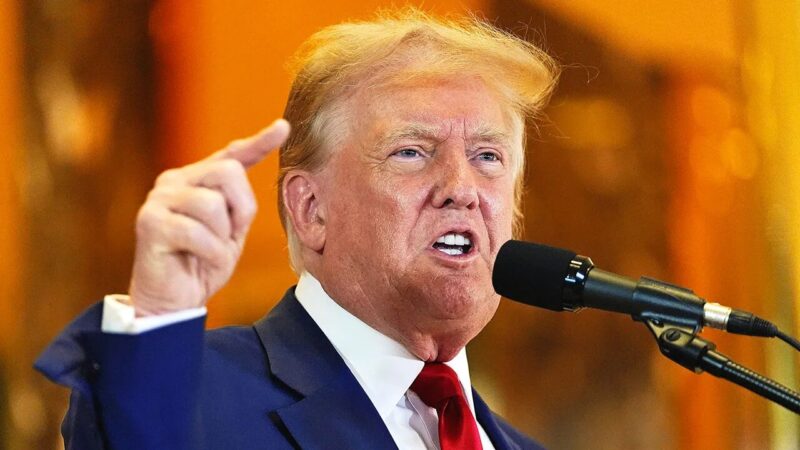
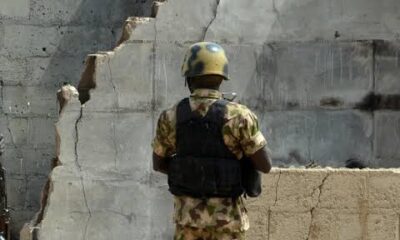
The December 25 bombing of terrorist camps in Sokoto State by a U.S.-led joint attack has sparked widespread reactions across Nigeria. On the streets, interpretations are layered and heavily shaped by ethnic and religious identities.
This incident stirs suspicions along our fragile religious fault lines. A “Kaffir” (unbeliever) attacking the Caliphate is considered unacceptable—an haram act among certain Northern Muslim circles.
Sokoto holds a symbolic religious status in many minds; hence, some have asked: why was Sokoto singled out despite the existence of more established terrorist abodes in Borno, Niger, Gombe, and Zamfara States? The city’s status as a Caliphate became a focal point of the conversation as a direct fallout of that question.
Sokoto holds both historical and political status as the seat of the 19th-century Jihad inspired by Usman dan Fodio. It serves as the “Northern Compass” for many Nigerian Muslims. Nigerian Sunni Muslims look to Sokoto for the yearly declaration of Eid-el-Maulud, the timing of Ramadan, and other pivotal Islamic programmes. Consequently, in the complex religious rivalry between Islam and Christianity, the involvement of a distrusted party like U.S. President Donald Trump—whose association with Christianity is unapologetically obvious—raises significant questions of intent.
Why Sokoto? The Benue-Plateau Trough (comprising Taraba, Benue, Kaduna, Nasarawa, and Plateau states) is a known hotbed of attacks against what Trump perceives as a “Christian genocide” population. Why strike Sokoto’s Muslim-dominated landscape instead? While keen examination suggests military intelligence may have informed this—considering the Benue-Plateau plains harbor fewer geographical hideouts than the rugged areas around Sokoto.
Also, the timing cannot be ignored. Many claim that a Christmas Day strike was far from coincidental or random.
Sociologists often discuss the explicit and implicit meanings of such events. The explicit meaning is the observable attempt to address terrorism and eliminate bandits. The implicit interpretation involves the underlying meanings attached by the public. For instance, some Northern circles perceive this as a threat to Nigerian sovereignty. This school of thought feels the Nigerian government is merely shadowing Trump’s “Christian genocide” narrative and acting according to an imperialist script.
The National Security Adviser, Nuhu Ribadu, and the Foreign Minister, Yusuf Tuggar, are both Northern Muslims. In fact, Ribadu claimed coordination while Tuggar confirmed the joint nature of the operations. Ordinarily, this should allay conspiracy theories, yet this is not the case. In Nigerian identity politics, “reality”—whether imagined or factual—is true to its beholder.
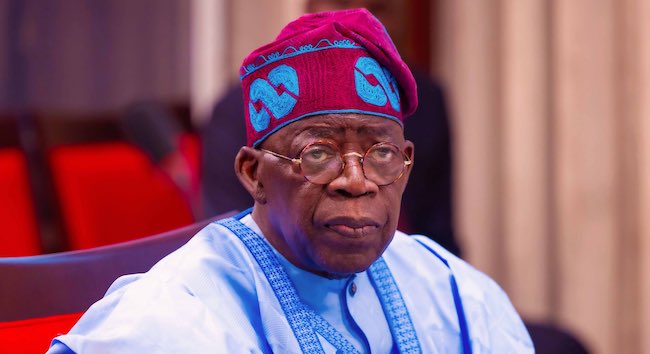
Frankly, Trump’s reputation in the North is largely informed by his role in the ongoing Israel-Palestine crisis. That distrust among educated Northern Muslims further complicates his involvement. Moreover, the North’s trust in President Bola Tinubu’s administration is complex. He does not enjoy the same standing as the late President Muhammadu Buhari, nor is he viewed as a “less tolerable” Southern Christian like former President Jonathan. As a Southern Muslim who ran on a “Muslim-Muslim” ticket, Tinubu occupies a unique and delicate religious anchor. This allows for varied readings of his actions; while his ticket sparked suspicion among Christians, there remains a gap in the eyes of Northern Muslims that a Southern Muslim cannot easily fill.
This incident mirrors the difficult situation President Jonathan faced pre-2015 when he outsourced military operations to South African mercenaries. Northern leaders at the time, including Buhari, vehemently opposed that decision as an attack on the region. Contrast these Northern reactions with those of Southern Christians, where there has been open support, though some still find it unjustifiable. The latter group reads political-economic motives into American intervention. Like Pastor Tunde Bakare, this anti-imperialist group believes Trump is interested in Nigeria’s oil resources and views the rise of Aliko Dangote in the oil industry as a threat to American interests.
Our identity politics—often religious and ethnic—are the “elephants in the room” during critical national decisions. They determine how appointments are shared and how resources are allocated. Even the delimitation of political constituencies and the conduct of the census follow these parameters.
Identities often breed suspicion and an inability to articulate a common stand against shared enemies. We find sympathizers for anti-social causes because of ethnic affiliations, which often manifest as a conflict of interest for our leaders. This is the dilemma faced by figures like Sheikh Gumi and other Northern leaders who may not openly identify with terror groups but appear to indulge them.
It is a paradox that segments of the Northern elite want both peace and the indulgence of terrorists. None exemplified this more than the late President Buhari, whose “kid-glove” approach to Boko Haram astounded many. In 2013, before assuming office, Buhari even called on the military to stop killing Boko Haram members. Both he and Gumi were retired Northern military officers, highlighting the dilemma identity politics creates in leadership.
Another layer emerged from the Sokoto bombing: some sympathizers of the Indigenous People of Biafra (IPOB) have requested that their leader be relocated from Sokoto’s correctional facilities to a safer location. Without an elite consensus—coming to terms with our differences rather than just setting them aside—we will continue to “circle with amputated feet.”
The political implications for Tinubu’s 2027 prospects in the North are predictable; as with Jonathan, there will be consequences.
While President Trump claimed a unilateral operation, the Nigerian government insisted it was joint. This admission of U.S. support differs from the recent quashing of the Benin coup, where the French government claimed more credit than Nigeria admitted. Both incidents suggest a weakened state of Nigerian security and hollow military intelligence.
The U.S. coordination was predictable. During the Buhari presidency, American troops reportedly left in frustration, believing the Nigerian Army was compromised. This sentiment remains among Western allies and sits at the heart of Trump’s “Christian genocide” claims.
As Senator Shehu Sani rightly noted, the Nigerian government cannot continue to contract out its responsibility to secure lives and property—it is simply unsustainable.
Ariwoola Samuel Akinwale wrote this piece from Lagos.
He can be contacted via ariwoolaakinwale@gmail.com