Africa
Struggle For Survival: The Rise Of Street Hawking Children In Nigeria -By Moses Ringnan Timkat
Without immediate intervention, these children—who are meant to be the leaders of tomorrow—may be pushed into cycles of poverty, crime, and social instability. Therefore, addressing this crisis requires strict enforcement of child protection laws, increased investment in free and accessible education, poverty alleviation programs, and sustained public awareness campaigns.

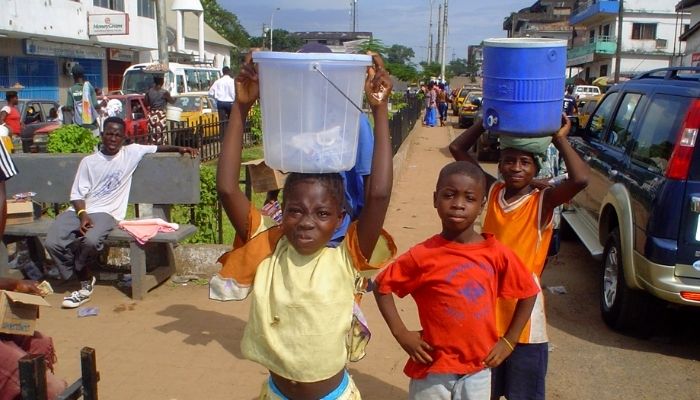
Across Nigeria’s bustling streets, a silent crisis unfolds every day. In recent years, millions of children—some as young as five years old—have been pushed into street hawking as a means of survival. At the heart of this crisis are poverty, parental pressure, and the desperate need to support household income. As a result, highways have replaced classrooms, while street corners have become places of labor, robbing children of their right to education and a safe, joyful childhood.
Typically, a child street hawker begins the day before sunrise, often waking as early as 5 a.m. to help prepare goods for sale. From that moment on, the day becomes a test of endurance. For hours, these children walk long distances in harsh weather, dodging speeding vehicles and enduring hunger, exhaustion, and verbal abuse from motorists. Of even greater concern, road accidents remain one of the most serious threats they face. Consequently, there is little or no time for school, rest, or play, as responsibility and fear replace the innocence of childhood.
Alarmingly, the scale of this problem continues to grow. According to UNICEF, over 22 million children under the age of 15 were engaged in street hawking across Nigeria as of 2017. Similarly, a 2022 report by the National Bureau of Statistics revealed that 46.5% of children aged 5–14 were involved in child labor, with street hawking being one of the most common forms. Studies further reveal that the primary reasons include extreme poverty, parental influence, and the need to augment family income—reported by over 81% of affected households. Together, these figures highlight not just economic hardship, but a deep systemic failure.
Most troubling is the fact that education suffers the greatest blow. In many cases, children involved in street hawking are not enrolled in school, while those who attempt to combine schooling with hawking experience irregular attendance, fatigue, poor academic performance, and low self-esteem. Beyond education, these children face severe physical and psychological dangers, including exposure to harsh weather, emotional distress, and physical exhaustion. Even more heartbreaking, female child hawkers—who make up about 61.5% of street hawkers, particularly in Northern Nigeria—are highly vulnerable to sexual harassment, abuse, and exploitation. In some instances, children are recruited into criminal activities or exposed to drug abuse, further endangering their future.
In light of these realities, this issue can no longer be viewed as merely a family struggle. Rather, it has become a national emergency that demands urgent attention. A society that allows its children to grow up on the streets, unprotected and uneducated, risks undermining its own future. Without immediate intervention, these children—who are meant to be the leaders of tomorrow—may be pushed into cycles of poverty, crime, and social instability. Therefore, addressing this crisis requires strict enforcement of child protection laws, increased investment in free and accessible education, poverty alleviation programs, and sustained public awareness campaigns.
In conclusion, street hawking among children in Nigeria is a growing problem rooted in poverty and neglect. It robs children of education, exposes them to danger, and threatens the country’s future. Addressing this issue requires collective effort from government, parents, and society through strict enforcement of child-protection laws and improved access to education. Every child deserves safety, dignity, and a chance to dream. Nigeria must act now!