Africa
Supporting the EFCC’s Anti-Corruption Drive: A Call to Action for Nigerians, by John Egbeazien Oshodi

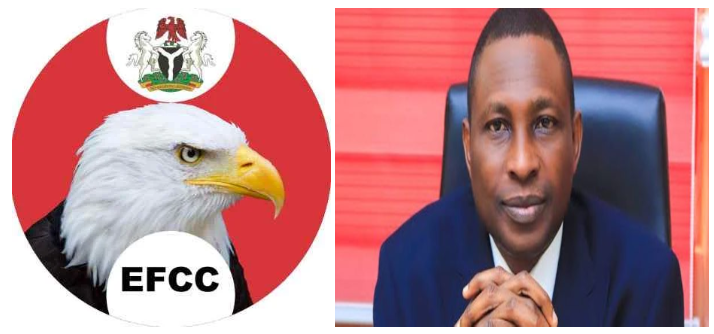
The recent dismissal and subsequent investigations involving 27 officers of the Economic and Financial Crimes Commission (EFCC) have sent a strong message about the agency’s commitment to transparency, integrity, and accountability. Under the leadership of Chairman Ola Olukoyede, the EFCC has taken decisive action to rid the commission of individuals who compromised its mission. These efforts represent a new era in Nigeria’s anti-corruption drive, but they require the active participation of all Nigerians to achieve lasting success.
A Turning Point in the Fight Against Corruption
The EFCC’s recent actions demonstrate that no one is above the law, not even those entrusted with enforcing it. By taking swift and necessary measures to address misconduct within its ranks, the EFCC has reaffirmed its commitment to justice and accountability. This bold move reflects the determination of the current leadership to restore public trust in the agency and strengthen its capacity to combat financial crimes.
Chairman Ola Olukoyede’s leadership in this matter has been commendable. His zero-tolerance approach to corruption within the EFCC itself sends a clear signal that the agency is serious about its mandate to protect Nigeria’s financial systems and uphold the rule of law. Nigerians must recognize the importance of these efforts and support the commission’s work in every way possible.
The Role of Citizens in Combating Corruption
While the EFCC is at the forefront of Nigeria’s anti-corruption efforts, the battle cannot be won by the agency alone. Corruption is a societal issue that requires the active involvement of all citizens. Nigerians must play their part by reporting suspicious activities and ensuring that they do not become complicit in corrupt practices.
The principle of “See Something, Say Something” is crucial in this fight. If you observe unusual financial activities, fraudulent schemes, or any form of misconduct, it is your duty to report it to the relevant authorities. The EFCC has made it easier for citizens to file reports through its various channels, including phone hotlines, emails, and physical visits to their offices. Your vigilance can help prevent financial crimes and hold perpetrators accountable
The Need for Vigilance in Our Communities
Communities play a critical role in identifying and reporting corruption. Many financial crimes go unnoticed because people are unwilling to speak out. This silence allows corrupt individuals to operate with impunity, undermining the nation’s progress. It is time for Nigerians to change this narrative by fostering a culture of accountability and transparency.
Community leaders, religious institutions, and civil society organizations must also join the fight against corruption. They have a responsibility to educate their members about the dangers of corruption and encourage them to report suspicious activities. By working together, we can create a safer and more accountable society.
The Role of Lawyers, Journalists, and Media Outlets
Lawyers, journalists, and media outlets are key stakeholders in the fight against corruption. Their roles are essential in ensuring that justice is served, and the public remains informed about the progress of anti-corruption efforts.
Lawyers
Legal professionals must uphold the highest standards of integrity in their practice. They have a responsibility to ensure that the rule of law is maintained and that those accused of corruption are held accountable. Lawyers should actively collaborate with the EFCC by providing legal guidance and ensuring that whistleblowers and witnesses are protected from retaliation. Furthermore, legal practitioners must resist defending corrupt practices that undermine Nigeria’s progress.
Journalists and Media Outlets
The media has a vital role to play in promoting anti-corruption efforts. By highlighting the achievements of the EFCC and raising awareness about ongoing investigations, the media can help change public perception and inspire confidence in the agency’s work. Journalists must remain objective and committed to the truth, ensuring that their reporting supports the fight against corruption rather than undermining it.
Media outlets should also create platforms for public discussions on corruption, providing a space where citizens can share concerns and receive updates on anti-corruption initiatives. Responsible reporting is critical to ensuring that the public remains engaged and informed.
Recognizing the EFCC’s Efforts Despite Challenges
It is important to acknowledge that while the EFCC is making significant progress in combating corruption, it is not immune to mistakes. The agency operates in a complex environment, dealing with high-profile cases, sensitive information, and societal pressures. However, the recent actions taken to dismiss corrupt officers show a willingness to confront internal issues and ensure the agency remains effective in its mission.
The EFCC’s commitment to cleaning up its internal ranks is a testament to its dedication to restoring public trust. These efforts are not just about punishing misconduct but also about reinforcing the agency’s integrity and ensuring that good officers are empowered to carry out their duties effectively. The EFCC is working to rebuild Nigeria’s image by demonstrating that corruption will not be tolerated, even within its own ranks.
The Need for Public Support and Cooperation
For the EFCC to succeed in its mission, it needs the full cooperation of the public. Citizens must trust that the agency is working in their best interests and must support its efforts by reporting financial crimes and providing information that can aid investigations.
Public support is crucial in changing the perception of Nigeria as a nation plagued by corruption. By supporting the EFCC’s anti-corruption drive, citizens can contribute to creating a more transparent, accountable, and just society. It is essential to remember that the fight against corruption is not solely the responsibility of government agencies—it is a collective effort that requires the participation of every Nigerian.
Protecting Whistleblowers
One of the biggest concerns for Nigerians is the fear of retaliation when reporting corruption. The EFCC and other relevant agencies must continue to strengthen their whistleblower protection programs to ensure that those who report misconduct are not victimized. Citizens must be assured that their safety and security are prioritized when they take a stand against corruption.
A Message to Public Officials
Public officials at all levels must understand that they are held to the highest standards of integrity and accountability. The EFCC’s actions serve as a warning that misconduct will not be tolerated, regardless of one’s position or influence. Officials must lead by example and ensure that their actions align with the values of transparency and justice.
Conclusion: A Collective Responsibility
The fight against corruption is a collective responsibility that requires the active participation of the government, citizens, lawyers, media, and civil society. The recent actions of the EFCC under Chairman Ola Olukoyede’s leadership mark a significant step in Nigeria’s anti-corruption journey, but there is still much work to be done.
Nigerians must remain vigilant, report suspicious activities, and support the EFCC’s efforts to create a corruption-free society. Together, we can build a stronger, more transparent Nigeria where justice and accountability prevail.
As citizens, remember: when you see something, say something. Your voice can make a difference in the fight against corruption.

Professor John Egbeazien Oshodi, born in Uromi, Edo State, Nigeria, is a Nigerian-American psychologist, educator, and author renowned for his expertise in cross-cultural psychology, forensic/clinical psychology, law enforcement/corrections psychology, legal psychology, public policy psychology, African-centered psychology, and social justice. He has authored numerous publications and presentations. His academic appointments include Assistant Professor of Psychology at Broward College, Associate Professor of Psychology at Nasarawa State University, and Contributing Adjunct Psychology Professor at Nova Southeastern University. With a significant role in introducing state-of-the-art forensic psychology to Nigeria through the National Universities Commission (N.U.C.) and Nasarawa State University, he also served as Secretary-General of the Nigeria Psychological Association.
Currently, he practices as a clinical and forensic psychologist and consults for various government entities in the United States. He also holds virtual faculty roles at Walden University and serves as Virtual Professor of Behavioural/Social Sciences, Leadership, and Management at ISCOM University and Weldios University. Notably, he is the founder of Psychoafricalysis theory in psychology, a groundbreaking contribution to the field.