Forgotten Dairies
The Dilemma of Inter-State Cooperation -By Tomy Michael
Referring to the humanization of international law, regulation ultimately follows agreements resulting from cooperation. Regulation, as used here, involves the creation of public authoritative obligations on private parties to act or refrain from acting in certain ways, or the establishment or facilitation of authoritative actions to enforce those obligations. The idea is to control or influence individual behavior (and, more broadly, societal behavior) through the creation of legal norms.

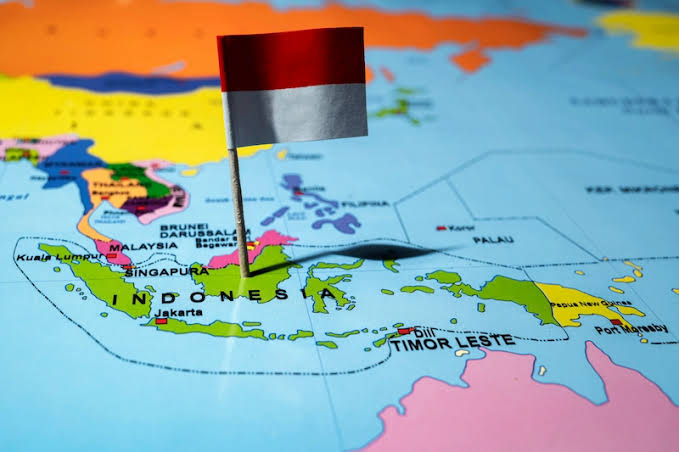
Indonesia has been collaborating with Nigeria since 1965, when the embassy was opened in Lagos. Then, in 1976, Nigeria opened an embassy in Jakarta. Cooperation is a crucial part of national life because it has numerous impacts for both countries. One source of international law is treaties, where treaties play a crucial role and are based on a country’s inability to address its own problems. This means that relationships based on inability can then yield positive outcomes. In recent developments, the definition of treaties between countries has evolved to become multilateral, giving rise to numerous aspects for discussion.
For example, a country’s security needs are no longer stipulated in a single treaty, but rather a single treaty encompassing multiple aspects. This supports national sovereignty, as maintaining sovereignty requires the influence of other countries. If a country cannot preserve its environment due to technological inadequacies, cooperation can lead to technology transfer. Cooperation leads to desired outcomes, but ultimately has legal implications. For example, when a country enters into an agreement, it considers many factors. Sometimes, cooperation is undertaken because one country lacks the power to refuse, while the cooperation merely serves as a binding measure to grant flexibility to other countries.
Referring to Article 10 of Law of the Republic of Indonesia Number 24 of 2000 concerning International Treaties, ratification of international treaties is carried out by law if it concerns political issues, peace, defense, and national security; changes to the territory or the establishment of territorial boundaries of the Republic of Indonesia; sovereignty or sovereign rights of the state; human rights and the environment; the establishment of new legal norms; and foreign loans and/or grants. This indicates that there are limitations to the authority of each region, meaning that not all forms of cooperation can be implemented. However, for example, cooperation that improves community businesses in a city will require support from the central government. The concept of an international treaty in Indonesia is defined as an agreement, in a specific form and name, regulated by written international law and creating rights and obligations in the field of public law. The essence of public law is that all matters have legal implications for maintaining the integrity of the state.
Referring to the humanization of international law, regulation ultimately follows agreements resulting from cooperation. Regulation, as used here, involves the creation of public authoritative obligations on private parties to act or refrain from acting in certain ways, or the establishment or facilitation of authoritative actions to enforce those obligations. The idea is to control or influence individual behavior (and, more broadly, societal behavior) through the creation of legal norms. This is because international law is a multi-level system, with decisions made at the international, national, and subnational levels. Therefore, cooperation between states will impact the sovereignty of the states involved and also bring about changes for states outside the parties. States outside the agreement may experience isolation due to their perceived inability to establish relationships. Meanwhile, states that refuse to cooperate must be prepared to accept the risks, as cooperation is an obligation in the modern concept of the state. Cooperation is a primary need because legal norms within a state will follow its development. However, when an agreement is in place, it seems as if things already done domestically are being pushed aside. While a state can resolve its environmental problems, when cooperation is implemented, oversight will be at the whim of another state. In the end, agreements and cooperation in a modern state can be a wise solution.
Tomy Michael is a lecturer at Faculty of Law Universitas 17 Agustus 1945 Surabaya