Forgotten Dairies
The Growing Culture of Social Clubs Among the Igbos: A Tradition of Brotherhood, Development and Collective Progress -By Onyejaka Alexander Arinzechukwu
Indeed, the continued growth of these associations is not merely a social trend—it is a testament to the resilience, generosity and communal spirit that remain at the heart of Igbo civilization.If you’d like, I can also produce a more opinionated newspaper version (about 2,000–2,500 words) with references to well-known Igbo clubs and notable examples of their community projects.

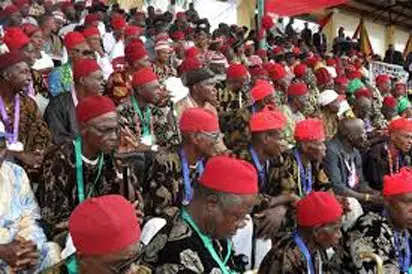
In every generation, societies evolve by adapting old traditions to contemporary realities. Among the Igbo people of southeastern Nigeria, one institution that has continued to flourish despite modernization is the social club. What began as informal gatherings of friends, age grades, and kinsmen has grown into structured organizations that now play significant economic, social, cultural, and philanthropic roles within communities at home and in the diaspora.
Today, whether in Lagos, Abuja, Port Harcourt, London, Johannesburg, Houston or Guangzhou, one is likely to encounter vibrant Igbo social clubs bringing together professionals, traders, artisans, academics, entrepreneurs and young people united by a common purpose. These associations have become more than recreational groups; they have evolved into engines of community development, financial support, social welfare and cultural preservation.
Their growing influence demonstrates one of the enduring strengths of Igbo society—the belief that collective effort produces greater results than individual struggle.
Historical Origins of Igbo Social Clubs
The idea of organized social associations is not entirely new among the Igbo. Long before the arrival of colonial administration, communities were organized around age grades, title societies, village unions, women’s associations, youth organizations and cooperative labour groups.
These traditional institutions served various purposes. They built roads and village squares, settled disputes, maintained security, organized festivals, assisted widows and orphans, and supported families during periods of hardship.
With urbanization during the colonial period and after Nigeria’s independence, many Igbos migrated to different parts of the country and later across the world. Living away from home created a need for new support structures. Friends, neighbours and people from the same hometown began meeting regularly to recreate the communal spirit they had left behind.
By the 1950s and 1960s, prominent organizations such as town unions, improvement associations and elite clubs had become established across Nigeria. Following the Nigerian Civil War, these organizations became even more important as communities struggled to rebuild destroyed homes, schools, roads and healthcare facilities.
The late twentieth century witnessed the emergence of numerous registered social clubs with constitutions, elected executives, trustees, bank accounts and clearly defined objectives. Today, these clubs operate as legally recognized organizations governed by constitutions that regulate membership, discipline and financial accountability.
The Philosophy Behind Igbo Social Clubs
The guiding philosophy of most Igbo social clubs can be summarized in one principle: strength through unity.
This philosophy reflects the famous Igbo saying that a single broomstick breaks easily, but a bundle of broomsticks cannot easily be broken.
Members believe that individual success becomes more meaningful when shared with others. Consequently, clubs encourage cooperation instead of unhealthy competition, mutual respect instead of jealousy, and collective responsibility instead of isolation.
Many clubs also adopt mottos emphasizing peace, brotherhood, integrity, progress, love, service and development. These values influence both their internal administration and external activities.
Rather than existing merely for entertainment, successful clubs emphasize discipline, accountability, transparency and commitment to one another’s welfare.
Membership and Registration
Modern Igbo social clubs are no longer informal gatherings. Most operate under carefully prepared constitutions that spell out eligibility requirements, membership obligations and leadership structures.
Prospective members are usually nominated by existing members and undergo a screening process designed to evaluate character, integrity and willingness to contribute positively to the organization.
Some clubs admit only men, others are exclusively for women, while many are open to both genders. Membership may be based on friendship, profession, hometown, age group or shared interests.
Registration often requires:
– Completion of membership forms.
– Payment of registration fees.
– Acceptance of the club’s constitution.
– Attendance at meetings over a probationary period.
– Formal induction into the association.
Registered clubs generally elect presidents, vice presidents, secretaries, treasurers, financial secretaries, provosts and trustees who oversee administration according to democratic principles.
Resource Pooling and Financial Cooperation
Perhaps the greatest strength of Igbo social clubs lies in their ability to pool financial resources for collective benefit.
Members contribute monthly dues, levies, project funds and welfare contributions. These resources create financial stability that allows clubs to respond quickly whenever members or communities need assistance.
Some organizations maintain savings schemes, cooperative societies and investment funds from which members can obtain soft loans at favourable terms.
Others finance business start-ups, provide emergency financial assistance, or help members overcome temporary economic difficulties.
This culture of collective financing reflects the Igbo tradition of Igwe bu ike—there is strength in numbers.
Instead of relying solely on commercial banks with high interest rates, members often access support from trusted friends who understand their circumstances.
Supporting Members During Life’s Important Events
One of the defining characteristics of Igbo social clubs is their unwavering support for members during significant milestones.
Whether joyful or sorrowful, members rarely face life’s major events alone.
During weddings, clubs contribute financially, attend ceremonies in uniform attire, provide logistical support and celebrate with the families involved.
Housewarming ceremonies receive similar attention, with members offering gifts, financial donations and moral encouragement.
Child dedication ceremonies often attract collective support as clubs rejoice with new parents and present valuable gifts for the newborn.
Birthdays and anniversaries provide opportunities to celebrate friendship while strengthening relationships among members.
The greatest demonstration of solidarity, however, often occurs during bereavement.
When a member loses a spouse, parent, sibling or child, the club mobilizes immediately.
Members contribute financially, visit the bereaved family, participate in funeral planning committees, attend wake-keeping ceremonies, travel to hometowns for burial ceremonies and continue offering emotional support even after the funeral.
This practical expression of brotherhood eases both the emotional and financial burdens associated with funerals in Igbo society.
Philanthropic Activities Beyond Membership
Although social clubs primarily exist to support members, many have expanded their activities to include wider humanitarian services.
Across various communities, clubs regularly donate to orphanages, hospitals, schools, correctional centres and internally displaced persons.
Scholarships have become common projects, enabling children from disadvantaged families to pursue education.
Medical outreaches organized by some clubs provide free consultations, surgeries, eye examinations and medications for rural communities.
Others sponsor blood donation campaigns, environmental sanitation exercises, tree planting initiatives and community health awareness programmes.
Food distribution during festive periods has become another notable activity, particularly for widows, elderly persons and vulnerable households.
Such interventions demonstrate that these organizations increasingly recognize their responsibilities beyond their membership.
Community Development Initiatives
Few institutions contribute to grassroots development quite like organized Igbo associations.
Through voluntary donations and fundraising activities, social clubs have financed numerous development projects including:
Construction of classroom blocks.
Provision of scholarships.
Building of community halls.
Installation of boreholes.
Electrification projects.
Renovation of health centres.
Construction of access roads.
Youth empowerment programmes.
Support for traditional festivals.
Sports competitions and talent development.
Many clubs collaborate with traditional rulers, town unions and local governments to execute projects that improve living conditions within their communities.
For communities receiving limited government attention, these associations often bridge important developmental gaps.
Promoting Unity in the Diaspora
Among Igbos living outside Nigeria, social clubs perform another invaluable function.
They provide a sense of belonging in unfamiliar environments.
New immigrants receive guidance on accommodation, employment opportunities, legal requirements and cultural adaptation.
Experienced members mentor younger professionals and entrepreneurs, helping them integrate successfully into their host countries.
Children born abroad are introduced to Igbo language, customs and traditions through cultural events organized by these associations.
Annual family picnics, cultural festivals and educational programmes help preserve identity across generations.
In this way, social clubs become ambassadors of Igbo heritage beyond Nigeria’s borders.
Challenges Facing Modern Social Clubs
Despite their achievements, Igbo social clubs face several challenges.
Economic hardship has made it increasingly difficult for some members to meet financial obligations.
Generational differences sometimes create disagreements regarding leadership styles and organizational priorities.
Personality conflicts, political affiliations and financial mismanagement have occasionally led to internal crises.
In some cases, excessive emphasis on lavish celebrations risks overshadowing the original objectives of mutual support and community service.
There is also the need to attract younger members who increasingly have demanding careers and different social interests.
To remain relevant, clubs must continue embracing transparency, accountability, digital innovation and inclusive leadership.
Looking Ahead
The future of Igbo social clubs appears promising.
As globalization increases migration and urbanization, the need for trusted support networks will only become greater.
Technology now enables members across continents to participate in meetings virtually, contribute financially online and coordinate projects efficiently.
Many organizations are already embracing digital payment systems, virtual conferences and electronic record keeping.
If properly managed, these clubs can become even stronger platforms for entrepreneurship, mentorship, investment, youth development and community transformation.
Conclusion
The growing culture of social clubs among the Igbos represents far more than organized recreation. It reflects a timeless philosophy of solidarity, compassion and shared responsibility that has sustained Igbo society for generations.
Their commitment to supporting members during weddings, burials, birthdays, child dedications and housewarming ceremonies reinforces the enduring values of brotherhood and communal living. Their financial cooperation empowers individuals. Their philanthropic programmes uplift vulnerable populations. Their development projects improve communities. Their cultural activities preserve identity.
At a time when individualism increasingly defines modern society, Igbo social clubs remind us that genuine progress is rarely achieved alone.
They embody the wisdom of the ancestors: when people stand together, they can overcome challenges that would defeat them individually.
Indeed, the continued growth of these associations is not merely a social trend—it is a testament to the resilience, generosity and communal spirit that remain at the heart of Igbo civilization.If you’d like, I can also produce a more opinionated newspaper version (about 2,000–2,500 words) with references to well-known Igbo clubs and notable examples of their community projects.