Politics
A Brother Called Judas: Is Charles Soludo Cain? -By Festus Adedayo
My concluding question to Charles Soludo will then be — is this newfound “Et tu, Brute?” spirit of his, which propelled the stabbing of his Nwanne — a result of an ambition to be president of Nigeria after his Anambra tenure, or, is Charles naturally a grumpy Cain and a betrayer Judas, who sold his predecessor for 30 pieces of shekels?


On September 22, 1828, the reality of the above dawned on the Zulu of present day South Africa. Afflicted by a strange psychosis that struck him after the death of Nandi, his mother, King Shaka Zulu went berserk. He ordered a year-long mourning of Nandi, forbade planting of new crops, banned milk from the kingdom and ordered the execution of pregnant women, as well as their husbands.
How does the kingdom handle this? Shaka’s half-brothers, Dingane and Mhlangana, as well as his induna, (chief advisor/attendant) Mbopha, had immediate answers. As Shaka’s army embarked on a military expedition northwards, the conspirators saw a loophole. While Shaka slept at his royal kraal in kwaDukuza, the trio caught him off guard, stabbing him fatally with their spears. As he lay dead, Dingane seized the reign of the Zulu Kingdom.
If that example is too alien, lost in the bowel of two centuries, let’s come home, to a contemporary example on the African continent. Thomas Sankara and Blaise Compaoré were what Yoruba call Kòrí-kòsùn — bosom, intimate and inseparable soulmates who shared an extremely close, deep bond. That bond was to later become one of the most famous real-life political fratricides on the continent. While Sankara was Head of State of Burkina Faso, he and Compaoré were not just ideological allies; they referred to each other as “brothers in arms.” In 1987, Compaoré orchestrated the fatal coup that got Sankara executed. He then took over power, while systematically legitimizing his regime by deconstructing Sankara’s revolutionary legacy.
West African Mali empire epic griot recall themes of betrayal similar to the above. The epic goes thus: At the death of King Naré Maghan, his first wife, Sassouma Bereté and her son, Dankaran Touman, conspired against Sundiata Keita, Dankaran’s crippled half-brother. They did this out of envy and fear of Sundiata’s fame. An earlier prophecy had predicted Sundiata’s greatness. Both mother and son mocked Sundiata’s cripple state and then tried to eliminate him. The late King Maghan had in fact left a testament that the young, disabled Sundiata should take over the reign of the kingdom but Dankaran, who now usurped the throne, forced his crippled brother into exile.
Balla Fasseké, Sundiata’s devoted griot and advisor, took sides with Sundiata, leading to his exile, too, by Dankaran. In exile, Sundiata waxed stronger while, on the throne, Dankaran appeared to the people as a weakling. Then, when Soumaoro Kanté, Dankaran’s sorcerer, invaded Mande, out of fear, Dankaran fled. The void of a vacant monarchy led the Mande to send emissaries to Sundiata who, in a triumphant return, eventually became the king.
In both ancient and contemporary times, there is a huge literature of brothers stabbing brothers. From the biblical Cain killing his brother, Abel, out of jealousy of divine prosperity; to Julius Caesar being stabbed by his friend, Brutus, the literature drips of blood. Among the Igbo, there is a recurring motif of two brothers hunting or traveling together. One, the less-acclaimed/jealous brother plots to kill the other, so as to claim the crown or inheritance. Also in Igbo cosmology, extracting personal gains from one’s kinsman (Nwanne) at the expense of his life or well being, for personal gain, is considered a severe cultural transgression. Chinua Achebe’s literature is filled with such thematic warnings. He built a cultural archetype about fratricide as capable of breaking the fabric of Igbo community.
Again, traditional Igbo sees any attempt at breaking Umunna (kinship) values as cultural transgression. It questions the morality of exposing and externalizing home-front disputes as tantamount to handing over one’s kinsman to external political adversaries.
From whichever lens you may look at it, though framed as fiscal transparency and Anambra State governor, Prof Charles Soludo, claimed he was “setting the records straight” by releasing his Anambra brother, Peter Obi’s alleged debt claims, what he did was actually Brutus stabbing Caesar, simplicita. It is fratricide disguised as governance audit. After he stabbed Caesar, Brutus’ defence, too, just like Soludo’s, was that it was done out of duty to the Roman state.
The above stab is also a replica of what happened between joint Roman Emperors and biological brothers, Caracalla and Geta. It is one of Roman antiquity’s most brutal accounts of sibling rivalry. It is dubbed the story of political fratricide and paranoia. Both brothers were born only eleven months apart. Their parents were Emperor Septimius Severus and Empress Julia Domna. Both brothers grew up in the palace with mutual childhood hatred, up until their adulthood.
A contemporary historian, Cassius Dio, recorded that both men serially clashed over sports, music, and social circles. Their father, in his bid to stabilize his dynasty, made them co-emperors. History recorded that while Caracalla was emperor in 198 AD, Geta was in 209 AD. In 211 AD, as he lay dying on his deathbed in Eboracum, modern York, Severus’ famous advice to his sons was, “Be harmonious, enrich the soldiers, and scorn all other men.”
On the throne, however, the hostility of the brothers paralyzed Roman governance. They then mutually divided the imperial palace into two. To avoid being poisoned, they fortified their doors with bodyguards and employed food-tasters. They even attempted to divide the Roman empire into two, a plan that was thwarted by their mother who tearfully asked if they wanted to divide her body, too. In December 211 AD, Caracalla decided to eliminate his brother. He arranged a fake reconciliation for their mother’s apartment, a place that would raise no suspicion and make Geta feel safe. There, Caracalla’s guards pounced on Geta and, as he fled to their mother’s bosom, clinging to her neck, he was stabbed to death nevertheless.
After killing him, Caracalla ordered what was called condemnation memory – a damnatio memoriae – which removed his brother’s name from every inscription in Rome, including his images. Any contrary effort, he decreed, was an offence against the Roman State. He also executed about 20,000 of Geta’s palace staff, supporters, friends, and political allies all over Rome.
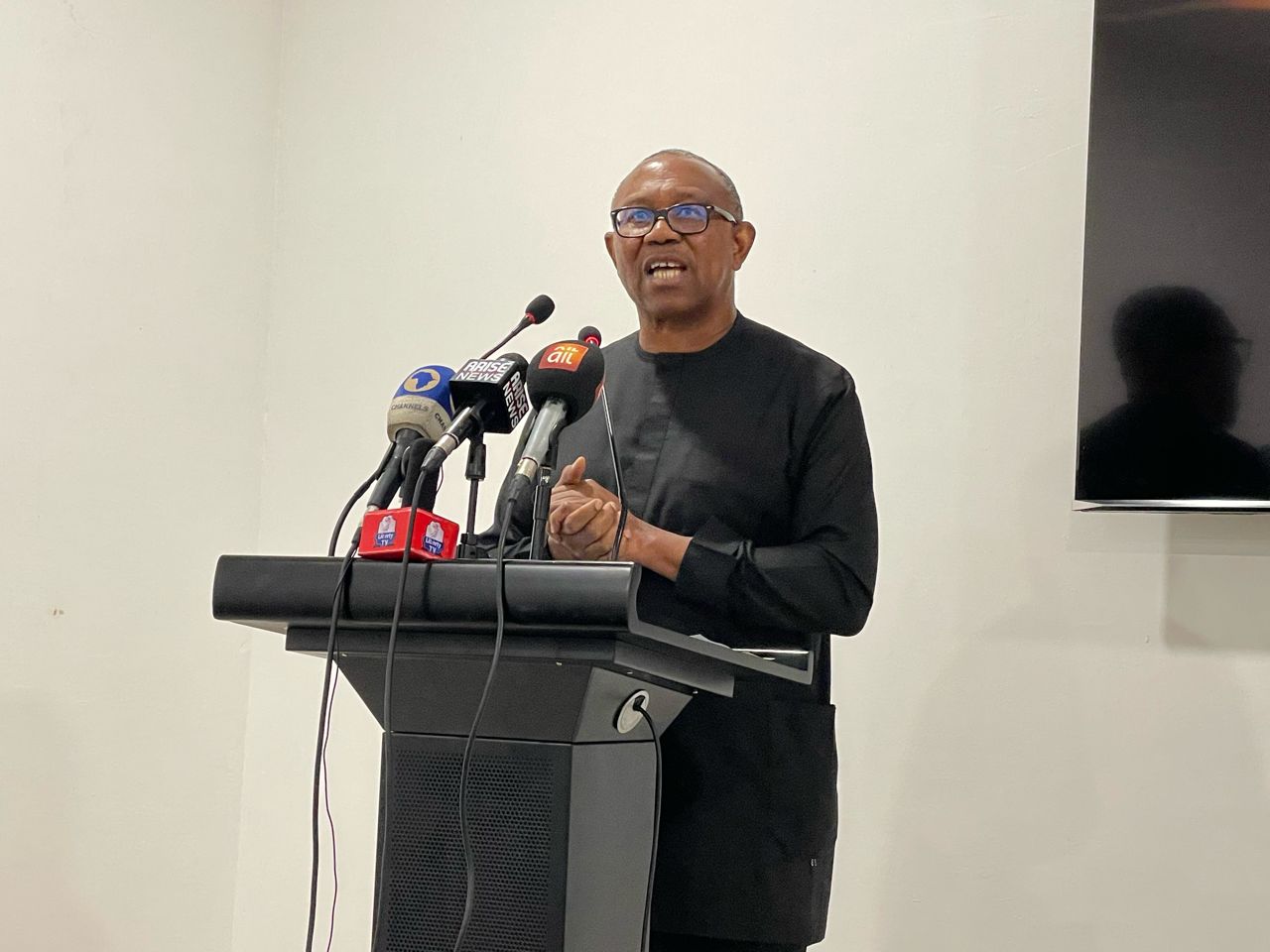
What Soludo did last week in Anambra State is comparable to damnatio memoriae. Just as Brutus stabbed Caesar under the guise of “doing it for the republic” and administrative duty, on the on-going loan brouhaha, Soludo is Brutus and Caracalla rolled into one. Through Dr Law Mefor, his Commissioner for Information, Soludo disclaimed Obi’s self portrayal as loans-repellant during his time as Anambra State governor. Mefor, in a statement, said Obi left unpaid loans from eight different external borrowings, the total balance of which, at the official exchange rate, stood at N127.4 billion.
To me, the veracity or otherwise of both men’s claims on the loans is secondary. My questions to Soludo are: Since the man he claimed is his “good friend” — for whose sake he is stabbing his Nwanne — left office in 2007, has Soludo ever heard a word of the humongous broad daylight theft done on that friend’s behalf in his home turf? Has Soludo ever since then heard successors of his “good friend” talk about the loans he took while in office? Does he know that putting a shroud on his “friend’s” dirty linen was done in the spirit of their own brand of Umunna?
My concluding question to Charles Soludo will then be — is this newfound “Et tu, Brute?” spirit of his, which propelled the stabbing of his Nwanne — a result of an ambition to be president of Nigeria after his Anambra tenure, or, is Charles naturally a grumpy Cain and a betrayer Judas, who sold his predecessor for 30 pieces of shekels?