Forgotten Dairies
The Impact of the US-China Trade War on Indonesia’s Policy Sovereignty -By Ignatius Roy Soputro, Bintang Ramadhan Putra Subagyo, Nur Ivan Ma’arif, Kartika Nisaul Qur’ani, and Regita permata
The condition of the US-China trade war clearly shows that Indonesia’s sovereignty no longer stands alone. External pressures, global interdependence, and international legal constraints force the government to adjust domestic policies. This dynamic affirms that every national decision must consider the realities of the global economic geopolitical landscape, proving that the era of absolute sovereignty has ended in the modern world.

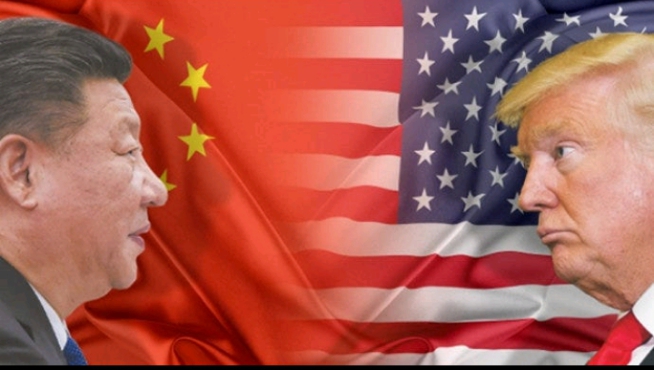
The tariff war waged by the United States and China has fundamentally changed the global economic landscape. The feud between these two countries is no longer merely a bilateral issue, but a large wave whose impact is felt by other countries. For Indonesia, this dynamic creates uncertainty while also posing a real challenge to national economic stability.
The implications for Indonesia are two-sided and must be considered. On one hand, there is a serious threat to the smooth functioning of the supply chain as well as a decline in export demand to traditional markets. However, on the other hand, there are also opportunities to attract industrial relocation and capture new market shares. This situation requires the government to formulate adaptive and strategic policies.
In today’s era of globalization, the concept of state sovereignty is no longer absolute. Indonesia, like other countries, is now connected in a network of complex interrelations. This phenomenon brings several important consequences for national policy, namely, first, the Impact of Global Policies taken by major economic powers, such as the tariff war between the United States and China, directly affects the economic and political stability of other countries. This proves that the sovereignty of a country is now interconnected with global dynamics. Second, Restrictions by International Reality: the tariff war is a concrete example of how a country’s sovereignty is limited by global realities. Although the United States and China have full authority to regulate their domestic trade, these actions are still bound by the rules of international organizations such as the WTO, as well as the risk of retaliation from other countries. Third, Formulation of Adaptive Policies: this fact shows that domestic policies can no longer be designed in a ‘vacuum.’ Every national decision must consider international reactions and the broader impacts that may arise on the global stage.
For Indonesia, this phenomenon underscores that every domestic policy formulation must consider external dynamics. Sovereignty is no longer only about internal authority but also about the ability to adapt and maneuver on the global stage. The government must be capable of navigating national interests amid the pressures and opportunities arising from increasingly intense and mutually influential interactions between nations.
The pressure of the global economy, trade wars between major economic powers create ripple effects that reach the domestic level. Rising prices of goods, slowing investment, and the threat of layoffs are real impacts of the current global turmoil. The constitutional mandate to prosper the people becomes more difficult to achieve when domestic economic stability is heavily influenced by the conflict of the US-China trade war. To protect the welfare of the community, the government is forced to take reactive policy measures. Adjustment of import policies, search for alternative export markets, and monetary intervention are direct responses to mitigate external shocks. This proves that domestic policy can no longer be formulated in isolation, but must continue to adapt to global economic dynamics that cannot be completely controlled. In the end, this pressure forced Indonesia to reevaluate its long-term development strategy in order to maintain stability. Plans to achieve self-sufficiency or build strategic industries are becoming increasingly relevant as a bastion of economic defense. Thus, global economic conflicts indirectly dictate domestic policy priorities and directions, limiting sovereignty in designing economic futures independently.
International law as a limit to National Policy causes state sovereignty to no longer be absolute because of the existence of such law. As part of the global environment, Indonesia is bound by various trade agreements, especially the rules within the World Trade Organization (WTO). Consequently, the government cannot make tariff or non-tariff policies arbitrarily without considering applicable international commitments, as this could trigger sanctions or trade disputes. The US-China tariff war is a real manifestation to test international law. These two giant countries often take actions that are in a gray area or even violate WTO principles. This situation forces Indonesia to be more cautious, and the Government must design smart protective policies that can safeguard the domestic market without openly breaking global rules. Practically, every domestic legal product must be aligned with international norms. The formulation of ministerial regulations related to imports and exports must be designed to avoid allegations of illegal trade barriers. National policy sovereignty becomes limited because it must always consider the potential for lawsuits from other countries in international trade forums.
Traditionally, administrative and constitutional law were seen merely as tools that regulate internal affairs. However, the phenomenon of tariff wars has fundamentally changed this paradigm. Policy formulation, such as export-import regulations, is no longer merely an instrument of domestic governance but has transformed into a tool of economic diplomacy to strengthen Indonesia’s bargaining position in an uncertain global community. The paradigm shift towards more adaptive and responsive regulation requires the government to abandon rigid and static patterns of rule-making. In this context, legal instruments such as Ministerial Regulations or Presidential Regulations become extremely vital. These instruments allow the bureaucracy to move more agilely in responding to the dynamics of trade wars quickly to mitigate the impact on national interests. Furthermore, this phenomenon redefines the urgency of ‘national interest’ within the framework of constitutional law. National interest now is not limited to territorial sovereignty, but also includes supply chain resilience and investment competitiveness. Therefore, the emergence of legal products oriented towards bureaucratic simplification becomes a strategic necessity to seize opportunities from the shift in global investment flows.
The US-China trade war has impacted investment policies, creating opportunities for industrial relocation and forcing Indonesia to improve itself. The government has become more aggressive in reforming the investment climate to remain competitive with neighboring countries like Vietnam. Deregulation policies and the provision of tax incentives have become the main instruments to attract global companies wishing to move their production bases from China to Southeast Asia. In response to this trade war, the government enacted breakthrough regulations such as the Job Creation Law. The aim is to simplify complicated licensing and provide legal certainty for investors. This is concrete evidence of how external pressure from the trade war directly drives fundamental changes in the national legal framework, which is designed to enhance the country’s investment appeal. However, the push to attract investment brings with it a complex policy dilemma, namely the presence of policies that weaken environmental or labor standards to accommodate foreign investor demands. This illustrates the tug-of-war between the urgent need for foreign capital and the country’s sovereignty in maintaining regulations to protect long-term domestic interests. This situation poses its own challenges for the government in maintaining a balance between protection and growth.
The escalation of the tariff war has triggered structural disruptions to the stability of the global supply chain. This phenomenon puts real pressure on Indonesia, given the national economy’s dependence on the smooth flow of international trade. Many manufacturing industries in Indonesia, such as electronics and textiles, rely on imported raw materials from China. When supply is disrupted, production costs surge and production schedules become uncertain, threatening the stability of domestic industries and highlighting the vulnerability of the national economy. In response to this situation, the government is driven to formulate policies that strengthen economic resilience, such as import substitution programs and mass campaigns promoting the use of domestic products. This is a concrete step to reduce dependence on a single supplier, and is an effort to assert the sovereignty of industrial policy so that it is not easily shaken by the economic conflicts of other countries. Furthermore, disruptions in this supply chain force Indonesia to reevaluate its long-term development strategy. One crucial step taken is the effort to diversify trade partners in order to obtain alternative raw material sources from various countries. This policy is not only designed as a tactical solution to address the current crisis, but also aims to build a more resilient economic foundation and reduce excessive dependence on a particular trade partner.
The trade war opens a window of opportunity and challenges for Indonesia that must not be wasted. When the US and China impose tariffs on each other, Indonesian products such as furniture, textiles, and footwear have the potential to fill the market gaps in both countries. This is a strategic momentum to expand exports and enter the global supply chain, reducing dependence on traditional markets that have existed so far. This opportunity is not easy, as the main challenge lies in product competitiveness and the capacity of the national industry. Indonesia must compete fiercely with other countries such as Vietnam and Mexico, which are also moving quickly. Increasing production efficiency, improving logistics infrastructure, and ensuring quality are absolute requirements if it wants to win in this global competition. Another challenge is at the level of trade policy and diplomacy. Market diversification requires complex and time-consuming trade agreement negotiations. This pushes the government to be more proactive in opening access to new markets and simplifying domestic export regulations, so that business actors can take full advantage of these opportunities quickly before the momentum is lost.
The trade war triggered global uncertainty that pressured the Rupiah exchange rate. Bank Indonesia was forced to intervene to maintain currency stability. Policies to raise or hold the benchmark interest rate are often no longer based solely on domestic inflation conditions, but rather as a direct response to capital outflows triggered by global market sentiment. From a fiscal perspective, the slowdown in the global economy due to the trade war pressured state revenues, especially from export and import taxes. As a result, the government had to revise the State Budget. The policy of budget reallocation or providing tax incentives for affected industries becomes a difficult choice to maintain domestic economic growth momentum amid uncertainty. Coordination between monetary and fiscal policies becomes very crucial in facing this situation. Bank Indonesia and the Ministry of Finance must work together to formulate the right policy mix, aimed at balancing efforts to maintain Rupiah exchange rate stability with the need for economic stimulus so that the wheels of domestic growth continue to run amid the global storm.
The condition of the US-China trade war clearly shows that Indonesia’s sovereignty no longer stands alone. External pressures, global interdependence, and international legal constraints force the government to adjust domestic policies. This dynamic affirms that every national decision must consider the realities of the global economic geopolitical landscape, proving that the era of absolute sovereignty has ended in the modern world. Facing this challenge, Indonesia must not remain passive and must continue to actively adapt. The government must reform investment regulations to capture industrial relocation opportunities, strengthen supply chain resilience, and seek new export markets. Adjustments to monetary and fiscal policies are also carried out carefully to mitigate external shocks, showing a shift from merely surviving to being more proactive. In the coming period, Indonesia’s policy sovereignty will increasingly be determined by its ability to adapt intelligently. Amid these geopolitical currents, the ability to navigate between national interests and global realities becomes the key. Adaptive, responsive, and strategic governance is the only way to ensure that Indonesia remains sovereign and prosperous.