
Forgotten Dairies
The Complaining Nigerian -By Leonard Karshima Shilgba
Nigeria will not become great because we have found perfect leaders. No nation ever has. It will become great when Nigerians—ordinary Nigerians—decide to match their complaints with commitment, their criticism with contribution, and their frustration with responsibility.

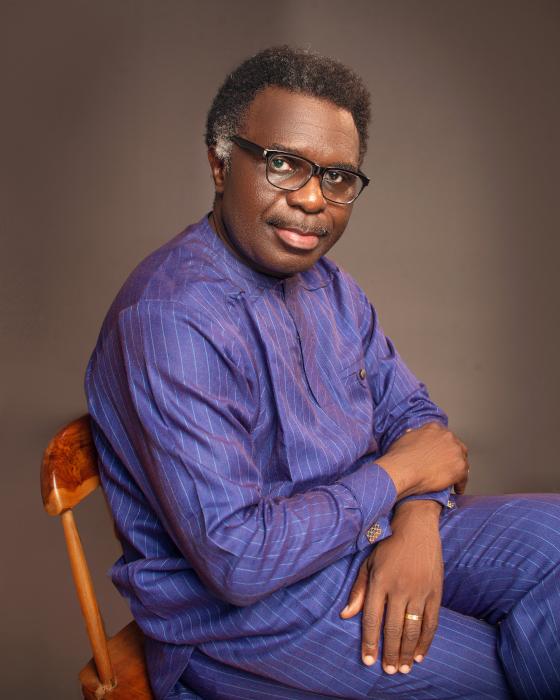
There is a Nigerian we all know. In fact, if we are honest, we may occasionally recognize him in ourselves. He is passionate, expressive, and always ready with a diagnosis of everything wrong with the nation. His voice is loud, his grievances many, and his patriotism—well—often loudly declared but quietly contradicted.
Let us listen to him.
“Things are hard,” he begins, without invitation. “No money, no food, expensive groceries, unaffordable fuel, high cost of medicine, high school fees, poor electricity, bad roads, poorly funded universities, insecurity, poor healthcare, corruption—everything is wrong!”
I nod. Many of these concerns are valid. They are not imaginary. They are real, and they are painful.
“So,” I ask gently, “what should the government do?”
“Government must change those corrupt leaders!” he fires back. “They only care about themselves.”
“That is a strong point,” I reply. “But this particular government is less than three years old. Are there any steps you can commend—any policies or actions that could address some of these problems?”
He looks at me as though I have committed a moral crime.
“My friend,” he says, with finality, “there is nothing good about this government. Ours is a failed state—a big-for-nothing country! I am only waiting for the next opportunity to ‘japa.’”
I pause.
“Do you pay taxes?” I ask.
He laughs—loudly.
“Why should I pay taxes so that corrupt people will have more to steal?”
“But how,” I press on, “do you expect the government to solve the problems you have mentioned if citizens like you do not contribute?”
“Who told you the government lacks money?” he retorts. “If it does, it is because officials have stolen everything. Can’t you see how they waste money on SUVs and jets?”
I let that pass—for now.
“How many children do you have?” I ask.
He hesitates, then answers, “Seven—from two wives. But what has that got to do with anything?”
“Are they in school?”
“Four have dropped out,” he says, almost defensively. “Government has not helped me with school fees. Two are learning to become mechanics, and my first daughter is married. She married at 18. But why are you asking these questions?”
I look at him—not with judgment, but with concern.
“My friend,” I say quietly, “you have also contributed to Nigeria’s problems. Why bring into the world more children than you can responsibly care for? Do you not see that some of our insecurity is fueled by unmanaged population growth—by citizens who, without adequate means, expand responsibilities they cannot meet?”
He is unmoved.
“But the government is there to help us,” he insists.
“Yes,” I reply, “government exists to serve society. But it is not a mystical being. It is an organized expression of the people. What you feed into it—through taxes, discipline, civic responsibility, and values—is what it reflects back to you.”
He shakes his head.
“I disagree. Nigeria’s problem is bad leadership.”
“I won’t argue,” I say. “But tell me—when did Nigerians not complain about their government? 2023, 2019, 2015, 2011, 2007, 2003, 1999… name the year.”
He is silent.
This Nigerian is not entirely wrong. Leadership matters. Indeed, it matters profoundly. Bad leadership can cripple a nation, distort priorities, and deepen suffering. But there is something deeper and more troubling than bad leadership: a culture of unrestrained complaint without corresponding responsibility.
We have, as a people, perfected the art of lamentation while neglecting the discipline of contribution.
We demarket our own country with reckless abandon. We speak of Nigeria as though it were an enemy rather than a shared inheritance. We export cynicism, amplify failure, and celebrate departure. “I just want to leave this country,” has become both anthem and aspiration.
Yet nations are not built by those who curse them from a distance—nor even by those who curse them from within.
They are built by citizens who, while fully aware of their country’s flaws, choose restraint in speech, responsibility in action, and hope in disposition.
Patriotism is not blind praise of government. No. It is the refusal to abandon one’s civic duty even when leadership disappoints. It is the discipline to criticize constructively, not destructively. It is the wisdom to recognize that governance is a partnership between the leaders and the led.
A citizen who evades taxes, neglects education, disregards civic order, and expands personal obligations irresponsibly cannot, with moral clarity, place the entire burden of national failure on government.
Yes, let us demand accountability. Yes, let us insist on transparency. Yes, let us call out corruption wherever it exists.
But let us also examine ourselves.
Let us ask:
What am I contributing to the Nigeria I complain about?
Am I building or merely blaming?
Am I part of the solution, or simply a professional critic?
The tragedy of the complaining Nigerian is not that he sees problems—it is that he absolves himself of all responsibility for them.
A nation rises when its citizens rise in character.
Nigeria will not become great because we have found perfect leaders. No nation ever has. It will become great when Nigerians—ordinary Nigerians—decide to match their complaints with commitment, their criticism with contribution, and their frustration with responsibility.
Until then, the complaining Nigerian will continue his monologue—loud, passionate, and ultimately unproductive—while the nation he laments waits patiently for citizens who will do more than complain.
Let us be those citizens.
© Shilgba




















You must be logged in to post a comment Login