Forgotten Dairies
Seeing The Gang Up Against Otti Through The Eyes Of 1 Samuel 18:7 -By Isaac Asabor
In the end, the lesson from 1 Samuel 18:7 is not just about jealousy, it is about how leaders respond to comparison. Saul chose insecurity. David chose consistency. For Otti and his opponents alike, that choice remains on the table. And for the people of Abia State, the song is still being written, and sang loudly on the streets of Umuahia, and in adjoining and far-flung rural areas; even as far as beyond Abia State.

There is a curious rhythm to power, performance, and public perception. It is a rhythm that transcends time, geography, and even systems of governance. From ancient monarchies to modern democracies, one theme remains stubbornly constant: when a new figure rises and begins to outperform expectations, those who once held sway often respond not with introspection, but with resistance. This pattern is neither new nor uniquely Nigerian. It is as old as the biblical tension captured in 1 Samuel 18:7, “Saul has slain his thousands, and David his ten thousands.”
That single line, sung innocently by women celebrating victory, became the spark that lit a fire of jealousy in King Saul. It was not merely a song; it was a comparison. And in that comparison, Saul heard something deeper than praise, he heard displacement.
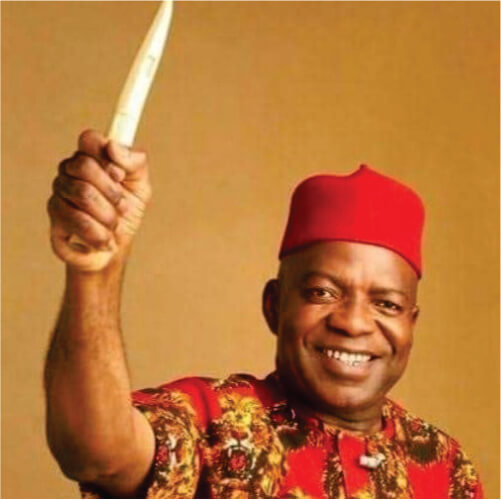
Today, in Abia State, many observers and supporters of Governor Alex Otti argue that a similar dynamic is unfolding. The growing opposition against him, particularly from political figures who dominated the state’s leadership between 1999 and 2023, is being interpreted through a familiar lens: the discomfort of being outshined.
At the heart of the matter lies performance. By most accounts, Otti’s administration has been visibly active, rolling out over 140 road projects, revitalizing more than 200 health centers, and advancing energy initiatives such as the Aba Independent Power Project. Whether one agrees with the scale or impact of these projects, the perception of momentum is undeniable. And in politics, perception is often as powerful as reality. This is where the comparison begins to echo the biblical narrative.
In 1 Samuel 18, the women who sang did not intend to provoke a crisis. They were celebrating victory. Saul remained king; his authority was intact. Yet the suggestion that David’s accomplishments outpaced his own struck a nerve. It was not about losing power, it was about losing prominence.
Similarly, the argument from Otti’s supporters is that his rapid pace of development has unintentionally exposed the shortcomings of previous administrations. The comparison is not always explicitly stated, but it hangs in the air: if so much can be achieved in two years, what happened in the previous twenty-four? This question, fair or not, creates pressure. And pressure, when combined with political ambition, often produces opposition.
Supporters describe this opposition as an “accord of envy, selfishness, and jealousy.” That may sound harsh, but it reflects a broader sentiment, that the resistance is less about governance and more about ego. The idea is simple: those who once controlled the narrative are now struggling to accept a new standard.
The “if not us, let no one else do it” mentality frequently cited by Otti’s backers fits neatly into this framework. It suggests a reluctance to see another succeed where one may have fallen short. In the biblical story, Saul’s reaction was not to improve his leadership or celebrate David’s contributions; instead, he began to watch David with suspicion, eventually seeking to undermine him.
In Abia’s political space, critics argue that a similar watchfulness has emerged. Former power brokers, once dominant, are now regrouping, strategizing, and positioning themselves for a return, particularly with an eye on the 2027 elections. But to dismiss the opposition entirely as jealousy would be overly simplistic, and perhaps even dangerous.
Politics, unlike biblical monarchy, is built on contestation. Opposition is not only expected; it is necessary. Figures like Senator Orji Uzor Kalu and others in the opposition camp frame their actions not as envy, but as legitimate political engagement. Their goal, they say, is to return Abia State to their party and offer an alternative vision for governance.
From this perspective, what supporters call a “gang-up” is simply the normal machinery of democracy grinding into motion.
Moreover, critics have raised substantive concerns that cannot be waved away as mere bitterness. Allegations of inflated project costs, questions about transparency in financial management, and claims of media exaggeration deserve scrutiny. The accusation of “mass hypnotism” through strategic communication, while dramatic, points to a real issue in modern governance: the power of narrative.
In today’s world, visibility can sometimes overshadow verifiability. A road project, no matter how well publicized, must still stand the test of quality and sustainability. A healthcare center, no matter how numerous, must deliver actual care. If the opposition is raising these questions in good faith, then they are performing a vital democratic function. This is where the analogy with 1 Samuel 18 becomes more nuanced.
Saul’s failure was not merely that he felt threatened, it was that he allowed that feeling to define his actions. Instead of rising to the challenge, he descended into paranoia. Instead of strengthening his leadership, he focused on undermining David.
The lesson, therefore, is not that opposition is wrong, but that the motivation behind it matters.
If the current resistance against Otti is driven primarily by a desire to reclaim lost influence without offering a better alternative, then it risks mirroring Saul’s insecurity. But if it is rooted in genuine concerns about governance, accountability, and the future of Abia State, then it stands on legitimate ground.
Governor Otti himself has dismissed the opposition as “meaningless political distractions” from “unsuccessful politicians.” That is a strong statement, and one that may resonate with his supporters. However, it also carries a risk. Dismissing all criticism as envy can create blind spots. Even David, in his rise, faced real challenges that required wisdom, not just confidence.
The people of Abia State, much like the women in the biblical narrative, are ultimately the ones whose voices shape perception. Their “song”, whether expressed through praise, criticism, or the ballot box. will determine how this story unfolds.
If they continue to see tangible improvements in their daily lives, the narrative of “ten thousands” will grow stronger. But if gaps begin to appear between promise and performance, the tone of that song could change.
What makes the Abia situation particularly compelling is that it sits at the intersection of two powerful forces: performance and perception. Otti’s administration has clearly captured attention. The opposition, in turn, is attempting to recalibrate the narrative. This is not unusual. It is, in many ways, the essence of politics.
But the deeper question remains: is this a battle for the soul of governance in Abia, or simply a struggle for control? The answer likely lies somewhere in between.
There is no doubt that Otti’s rise has disrupted the status quo. Disruption, by its very nature, creates friction. Those who were comfortable with the old order may resist the new, not always out of malice, but often out of self-preservation.
At the same time, disruption must be matched with discipline. Delivering results is one thing; sustaining them is another. The real test of Otti’s leadership will not be in the number of projects initiated, but in their long-term impact.
In 1 Samuel 18, the song marked a turning point. It was the moment when public perception began to shift decisively from Saul to David. But it was not the end of the story. What followed was a prolonged period of tension, conflict, and eventual transition. Abia State may be at a similar turning point.
The “gang-up,” whether real or perceived, is part of a larger narrative about change, resistance, and the struggle for relevance. It reflects both the promise of new leadership and the anxiety of those who feel left behind.
In the end, the lesson from 1 Samuel 18:7 is not just about jealousy, it is about how leaders respond to comparison. Saul chose insecurity. David chose consistency. For Otti and his opponents alike, that choice remains on the table. And for the people of Abia State, the song is still being written, and sang loudly on the streets of Umuahia, and in adjoining and far-flung rural areas; even as far as beyond Abia State.