
Africa
Oyo 2027: Will the Persistent Blackouts Haunt Adelabu’s Dreams? -By Oluwafemi Popoola
Until those tough decisions are made, Nigeria may continue to circle the same electricity crisis it has battled for decades. And for ordinary Nigerians like me, the question remains painfully simple: when will the lights finally stay on?


Adebayo Adelabu, a former Deputy Governor (Operations) of the Central Bank of Nigeria, was appointed Minister of Power by President Bola Tinubu in 2023. At the time, his appointment generated immediate reactions from industry stakeholders who questioned whether someone without deep technical experience could successfully manage one of Nigeria’s most complicated and dysfunctional sectors. Adelabu himself responded calmly to the criticism, saying he was appointed to reform the sector, and not to function as an engineer or technician. It was a clever answer. In fact, it was the kind of answer that sounds very good on television. Unfortunately, Nigeria’s electricity sector has a habit of humiliating clever answers. It also has a way of humbling even the most confident reformers.
To understand the difficulty of Adelabu’s assignment, one must look back at the long and troubled history of electricity management in Nigeria. The truth is far more complicated, and frankly more embarrassing for the Nigerian state. Long before Adelabu arrived, the sector had already developed a reputation as the Bermuda Triangle of Nigerian governance.
The story often begins with the controversial $16 billion reportedly spent during the administration of former President Olusegun Obasanjo. That figure has become almost mythical in Nigerian political discourse. Many Nigerians still ask what exactly the country gained from such an enormous investment when power supply today remains erratic and unreliable. The amount spent then could have built power systems in several smaller countries, but that’s not the case. Nigeria still struggles to keep the national grid alive.
Successive ministers inherited that broken system and, truth be told, none has been able to fundamentally change its trajectory. From policy somersaults to incomplete privatization reforms, the sector has often moved in circles. The 2013 privatization of the Power Holding Company of Nigeria was supposed to usher in efficiency and investment, but the expected miracles never came.
When the former Lagos governor, Babatunde Fashola was appointed the power minister (alongside other ministries), in November 2015, there was optimism in the air. Few public officials in Nigeria have enjoyed the kind of intellectual admiration that followed him during his years in Lagos. He was widely seen as the poster child of technocratic governance. He was articulate, methodical, and seemingly allergic to mediocrity.
I remember very clearly the period when he was still in opposition politics. Like many critics of the federal government at the time, Fashola spoke with bold certainty about the electricity crisis. At one point, he famously suggested that a serious government could significantly fix Nigeria’s power problems within six months. It was the kind of statement that electrified public imagination. Nigerians were tired of darkness, and here was a man who sounded like he had the manual for turning the lights back on.
Then fate, as it sometimes mischievously does in Nigerian politics, handed him the opportunity to test that confidence. Under the administration of Muhammadu Buhari, Fashola was appointed Minister of Power, Works and Housing — later focusing solely on the power ministry. The man who once diagnosed the illness from the outside was now inside the operating theatre.
What followed was a sobering lesson in the complexity of Nigeria’s electricity ecosystem.
Despite his administrative discipline and policy efforts, the sector refused to yield easily. The structural problems proved far deeper than political speeches could solve. Liquidity crises worsened and generation companies complained of unpaid debts. Distribution companies struggled with losses, and the federal government found itself repeatedly injecting bailout funds just to keep the system from collapsing entirely. If a technocrat of Fashola’s reputation could not easily tame the beast, it says something profound about the monster itself.
Every minister who walked into the power ministry discovered quickly that the problem was deeper than policy speeches. The sector is burdened by weak infrastructure, huge debts, regulatory confusion, and tariffs that cannot attract serious investment. In such a complex environment, even the most brilliant technocrat would struggle.
This is why I consider the appointment of Bayo Adelabu a misstep, though not necessarily because not as if another individual would have fared dramatically better under the same conditions. The reality is far more fundamental. Nigeria’s electricity sector is plagued by deep structural flaws. Until the issue of subsidies is decisively addressed and phased out in a manner that restores investor confidence, the liquidity needed to keep the industry afloat will remain out of reach. Investors are understandably wary of a system where tariffs are dictated by politics while operational costs continue their relentless climb.
Still, politics rarely cares for such nuance. In the public eye, the minister is the face of the sector, and when the lights go out, someone must carry the blame. Unfortunately for Adelabu, the lights have gone out rather dramatically.
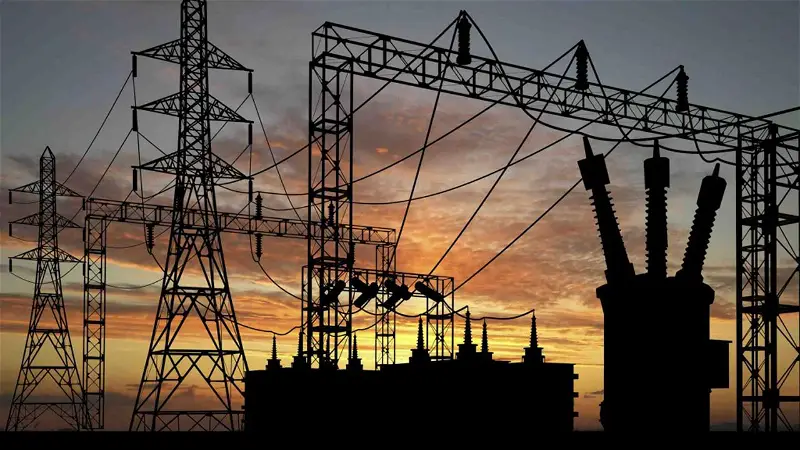
The national grid has collapsed several times this year alone. Distribution companies have also cited a shortage of gas supply to power plants as a major reason for the widespread blackout affecting many parts of the country. Across several cities, electricity supply has been painfully inconsistent for weeks. In Lagos, frustration recently boiled over into protests when residents marched through the Fadeyi area carrying placards and chanting slogans against what they described as “epileptic” power supply.
I watched the viral videos of that protest and could not help but sympathize with them. After all, the experience is not unique to Lagos. Where I live, electricity has practically disappeared from our street for the past three weeks. Three weeks. At this point, our neighborhood generator has become the unofficial mayor of the street. Small businesses that depend on electricity are bleeding money daily. Barbers are charging more, frozen food sellers are praying over their refrigerators, and students now read under rechargeable lamps like characters from a historical novel.
For many Nigerians, this is not just inconvenience, it is economic sabotage. When electricity disappears, productivity collapses. Factories slow down, hospitals struggle, and households spend ridiculous amounts on fuel just to keep basic appliances running.
Industry stakeholders have already warned that the situation may worsen if urgent interventions are not implemented. The grid remains fragile, gas supply remains uncertain, and the distribution companies continue to struggle with massive technical and commercial losses.
Against this backdrop, Adelabu’s political ambitions introduce another layer of drama. His expected resignation ahead of the 2027 governorship race in Oyo State has triggered quiet lobbying among individuals interested in replacing him as Minister of Power.
Stakeholders are urging President Tinubu to appoint a technocrat. Someone who understands the technical, financial, and regulatory complexities of the sector.
I agree with that sentiment, but I would go even further. Whoever the president nominates next must demonstrate a clear understanding of the sector before appointment, not after entering office. The learning curve in the power ministry is too steep for experimentation.
Ironically, the ministerial appointment has now become Adelabu’s major Achilles’ heel going into the Oyo governorship race. What was supposed to strengthen his national profile may have become a dent on his political career. In many ways, the president’s appointment has unintentionally helped Adelabu’s political opponents drag him to political Golgotha.
When the 2027 campaign season begins, Adelabu will have many explanations to give. Election campaigns are usually about promising what you will do if elected or showcasing your achievements. But Adelabu may find himself defending the performance of a sector that has frustrated millions of Nigerians. This is not the most comfortable campaign message.
How does he convince voters in Oyo that he can govern better than the incumbent governor when many people across the country associate his name with persistent power outages? What will he say happened? What will be the talking points of his campaigners when critics remind voters about national grid collapses and nationwide blackouts?
This is not the right political moment for him. It will take strategic messaging and perhaps a bit of political magic.
And the challenge becomes even tougher considering that Governor Seyi Makinde, whom Adelabu hopes to succeed, has maintained a strong political presence in the state. After years of relatively visible governance, Makinde’s political machinery remains formidable. Whoever emerges as Makinde’s preferred successor will not be an easy opponent.
For Penkelemesi, this could be the political fight of his life.
Meanwhile, President Tinubu must also think carefully about Adelabu’s successor. Personally, I believe the Ministry of Power should temporarily be given to a political figure who has little to lose politically. The sector requires difficult decisions—tariff adjustments, subsidy removal, and structural reforms that may not be immediately popular.
Someone must be willing to absorb the political heat while those reforms are implemented.
Until those tough decisions are made, Nigeria may continue to circle the same electricity crisis it has battled for decades. And for ordinary Nigerians like me, the question remains painfully simple: when will the lights finally stay on?
Oluwafemi Popoola is a Nigerian journalist, media strategist, and columnist. He can be reached via bromeo2013@gmail.com









You must be logged in to post a comment Login