Forgotten Dairies
The Law Did Not Fail: Why Justice Ayo Salami Is Wrong on Peter Obi -By Jeff Okoroafor
Peter Obi contested the 2023 election because the Constitution permitted it, the electoral body accepted it, and the courts did not invalidate it. That is not a loophole. That is the law in operation.


When a justice of the stature of Isa Ayo Salami declares that Peter Obi “ought not to have been allowed” to contest Nigeria’s 2023 presidential election, it demands attention. It also demands scrutiny.
Because what is at stake is not merely the candidacy of one politician, but the integrity of Nigeria’s constitutional order and whether it is governed by law or by retrospective opinion.
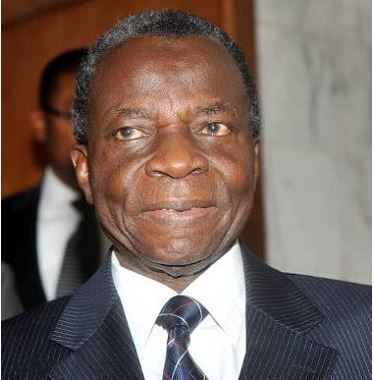
Justice Isa Ayo Salami
Justice Salami’s argument is deceptively simple. Peter Obi, having left the Peoples Democratic Party shortly before the election, joined the Labour Party after it had submitted its membership list to the Independent National Electoral Commission. Therefore, he suggests, Peter Obi was not a valid member and could not lawfully contest, since Nigeria does not allow independent candidacy.
It is a neat argument. It is also, on closer inspection, legally untenable.
The starting point must be the 1999 Constitution, not sentiment or tradition. Section 131 is explicit in its requirements: a presidential candidate must be a member of a political party and be sponsored by that party. That is the full extent of the constitutional demand. There is no requirement for duration of membership, no stipulation about when membership must begin, and no prohibition against last-minute defection. Justice Salami’s argument rests on a requirement that simply does not exist in the text.
In constitutional law, what is not written cannot be implied to disqualify a citizen from contesting public office, especially in a democracy where political participation is a fundamental right.
Even more decisively, Peter Obi’s candidacy was not theoretical. It was processed, submitted, and accepted by the Independent National Electoral Commission. INEC is not a ceremonial body; it is the constitutionally empowered authority to regulate elections. Once it accepts a candidate nominated by a political party, that candidate enjoys at first sight, legal validity. If Peter Obi’s candidacy were fundamentally flawed, the proper time to invalidate it was before the election, not years after it. No such disqualification occurred.
Perhaps the most decisive rebuttal to Justice Salami’s claim is that Nigeria’s courts had the opportunity to disqualify Peter Obi and did not. This is not an oversight but a reflection of a long-standing judicial doctrine that party nomination and membership are internal affairs of political parties. Once a party presents a candidate and INEC accepts that candidate, courts are generally reluctant to intervene except in cases of clear illegality. Peter Obi’s case did not meet that threshold.
To argue now that he “ought not to have been allowed” is to substitute retrospective opinion for binding judicial reality.
Justice Salami’s reasoning also struggles under closer examination. His claim assumes that because the Labour Party had submitted its membership list earlier, Peter Obi could not later become a valid member. But political parties are not static registries; they are living organizations whose membership evolves. The law does not prohibit parties from admitting new members, nor does it invalidate their discretion to recognize and sponsor candidates. To suggest otherwise is to impose rigidity where the law permits flexibility.
What emerges, then, is less a legal defect in Peter Obi’s candidacy than a philosophical disagreement with how Nigerian law is currently interpreted and applied. There exists a strain of judicial thinking that favours strict procedural compliance and rigid timelines. Yet modern Nigerian electoral jurisprudence has moved toward a more pragmatic approach, one that prioritizes substantive justice, recognizes party autonomy, and avoids disqualifying candidates on technical grounds that do not fundamentally undermine the electoral process.
Justice Salami’s position belongs to the former tradition. The law, as it stands and as it is practiced, belongs to the latter.
There is also a broader democratic risk in embracing Jusrice Salami’s argument. If candidacies can be delegitimized after the fact based on interpretations not enforced at the time, then elections become unstable, mandates become uncertain, and the rule of law itself is weakened. Democracy depends on clarity and finality at the point of participation, not on retrospective reinterpretation.
Peter Obi contested the 2023 election because the Constitution permitted it, the electoral body accepted it, and the courts did not invalidate it. That is not a loophole. That is the law in operation.
Justice Isa Ayo Salami is right to raise concerns about the consistency and quality of judicial decision-making in Nigeria. But in citing Peter Obi as evidence, he misdirects the argument. Peter Obi’s candidacy was not an aberration. It was a reflection of the legal framework as it exists today.
To argue otherwise is not to defend the law, but to reconstruct it after the fact. And in a constitutional democracy, that is a far more dangerous proposition than any alleged procedural lapse.
Jeff Okoroafor is a social accountability advocate and a political commentator focused on governance, accountability, and social justice in West Africa.