
Forgotten Dairies
Power Promises And Persistent Darkness: Why Nigeria’s Electricity Crisis Is A Political Failure -By Isaac Asabor
Nigeria has all the ingredients for success: abundant natural gas, significant hydropower potential, and a large market that can attract investment. What it lacks is political discipline to turn these advantages into results.

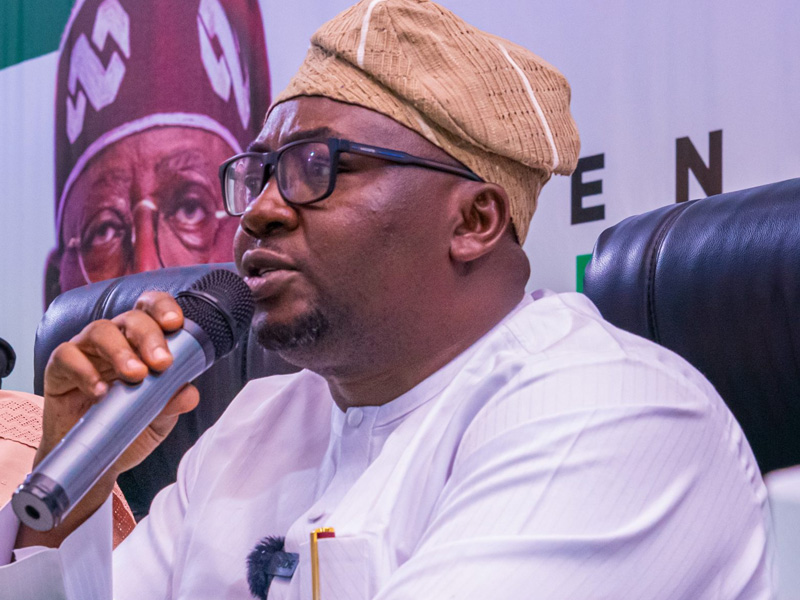
As another election cycle approaches, Nigerians can predict one thing with uncanny accuracy: promises to “fix electricity” will dominate campaign speeches. It has become a ritual. Politicians vow to stabilize the grid, complete abandoned projects, and ensure that no home remains in darkness. Yet, after more than a century of electricity generation and decades of policy reforms, the reality on the ground tells a harsher story, Nigeria’s power problem is no longer just technical; it is deeply political.
Nigeria’s electricity journey began in 1896 with modest generating sets in Lagos. Over time, the system expanded, with early private initiatives like the Nigerian Electricity Supply Corporation demonstrating that power generation could support industrial growth. By the mid-20th century, the state took control, establishing the Electricity Corporation of Nigeria (ECN) and later the Niger Dams Authority, culminating in the formation of the National Electric Power Authority in 1972.
Back then, there was at least a sense of direction. The commissioning of Kainji Dam and the rapid expansion of the national grid in the 1960s and 1970s showed what political will and technical expertise could achieve. In fact, history records that large-scale transmission infrastructure was completed across vast distances in just over two years, an extraordinary feat by any standard, especially in a developing country. That era stands in stark contrast to today.
Modern Nigeria operates a privatized power sector following the unbundling of the Power Holding Company of Nigeria in 2013. On paper, the country boasts over 11,000 MW of installed capacity. In reality, actual power delivery often struggles to reach 5,000 MW. Grid collapses have become routine. Entire cities are plunged into darkness without warning. For millions of Nigerians, electricity is not a service, it is a gamble.
Against the backdrop of the foregoing facts, it is not out of place in this context to ask what is wrong. To answer the question, experts and observers in the power sector of Nigeria’s economy have continued to provide an easy answer by heaping all the blame on infrastructure: aging transmission lines, weak distribution networks, gas supply constraints, and underperforming generation plants. But that explanation only scratches the surface. The deeper issue is a persistent lack of seriousness among Nigeria’s political leadership.
For decades, politicians have treated electricity less as a national priority and more as a campaign slogan.
Each political dispensation arrives with bold declarations about “fixing the grid,” often accompanied by claims of completing abandoned projects. Yet many of these projects were either never completed or quickly fall into disrepair after commissioning. The cycle is painfully familiar: announcement, applause, abandonment, and then re-announcement by the next administration. This is not governance; it is recycling failure.
What makes this even more frustrating is that Nigeria is not operating in a vacuum. Several African countries, including Algeria, Egypt, Morocco, Mauritius, Seychelles, and Tunisia, have achieved near or total electrification. These countries did not rely on endless political speeches. They focused on long-term planning, consistent investment, and disciplined execution. In other words, they treated electricity as a necessity, not a political trophy. Nigeria, by contrast, has turned its power sector into a stage for rhetoric.
Even the existing national grid, the very backbone built by earlier generations, is now collapsing with alarming frequency. Instead of strengthening it, successive governments have allowed it to deteriorate while claiming credit for marginal or incomplete improvements. The narrative of “we are fixing what we met” rings hollow when the system continues to fail more often than it functions.
The consequences are not abstract. Businesses shut down or rely heavily on expensive generators. Hospitals operate under constant risk, depending on unstable backup power. Students read in darkness. Food spoils. Productivity drops. The economic cost is staggering, but the human cost is even greater. And yet, during campaign seasons, the same promises are repeated with unwavering confidence, as if Nigerians have no memory.
It is difficult to avoid a blunt conclusion: Nigerian politicians are simply not serious about fixing electricity. If they were, the approach would be different. Maintenance of existing infrastructure would be prioritized over headline-grabbing new projects. Transmission capacity would be aggressively expanded to match generation potential. Renewable energy would be integrated into a coherent national strategy instead of scattered pilot schemes. Most importantly, policies would outlive political tenures instead of being discarded every four years. Instead, what Nigerians get is inconsistency.
The power sector suffers from policy reversals, regulatory uncertainty, and political interference that discourages genuine investment. Distribution companies struggle with losses and inefficiencies, yet reforms are often half-hearted. Generation companies face fuel supply issues that remain unresolved for years. The entire system limps along, sustained more by improvisation than by design. And still, the promises keep coming.
There is something particularly ironic about invoking past achievements to justify present failures. The leaders and engineers of the 1960s and 1970s worked under far more difficult conditions, yet they built a grid that supported national growth. Today, with better technology and greater resources, Nigeria cannot maintain, let alone expand, that legacy. That is not a technical failure. It is a leadership failure.
If the past teaches anything, it is that electrification is possible when there is genuine commitment. Countries that have achieved stable power systems did not do so through speeches or symbolic projects. They did it through sustained effort, accountability, and respect for expertise.
Nigeria has all the ingredients for success: abundant natural gas, significant hydropower potential, and a large market that can attract investment. What it lacks is political discipline to turn these advantages into results.
As another election approaches, Nigerians will once again hear that the darkness is about to end. But history suggests otherwise.
Until political leaders stop treating electricity as a campaign talking point and start treating it as a national emergency, nothing will change. The grid will continue to fail, businesses will continue to suffer, and citizens will continue to live with uncertainty.
In the end, the question is no longer whether Nigeria can generate enough electricity. It is whether its leaders are willing to do what it takes. So far, the answer has been painfully clear.


















You must be logged in to post a comment Login