Forgotten Dairies
The Oshodi Restorative Accountability Model (ORAM) Beyond “VIP Prison” to Real Justice for Nigeria -By Prof. John Egbeazien Oshodi

Let us tell ourselves the truth Nigerians already know.
For the poor man, prison is prison.
For the rich man, prison sometimes looks like a guest house.
People hear stories about VIP cells, air conditioners, smartphones, special meals, and powerful inmates who still run their businesses from inside prison walls. Whether every story is true or not, the perception alone has damaged public trust.
Many Nigerians have come to believe that when powerful people go to prison, it is often prison in name only.
Meanwhile, the money that disappeared is still missing.
Schools remain broken.
Hospitals lack equipment.
Roads remain unfinished.
This is the deep national frustration the Oshodi Restorative Accountability Model (ORAM) is trying to address.
Instead of arguing about whether someone is sleeping in a comfortable cell or not, ORAM asks a simple question:
Has the stolen money been returned to the people?
Because if the money never comes back, then the village gains nothing.
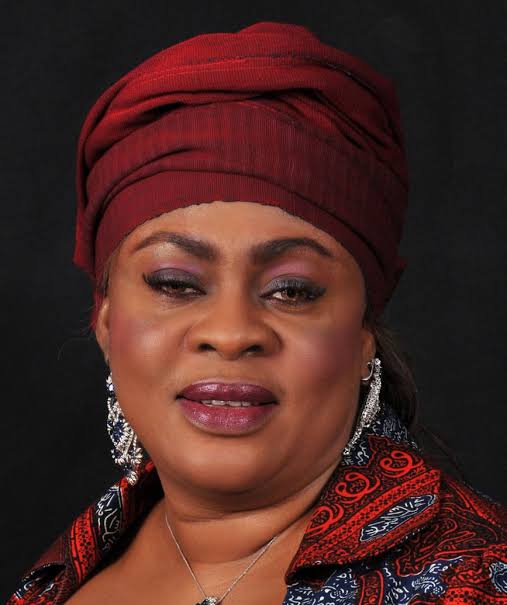
The Stella Oduah Example
To understand how this idea works, let us look at what is happening now with Stella Oduah.
Stella Oduah is not a small figure in Nigerian politics. She is a former Minister of Aviation and a former Senator who represented Anambra North. Over the years she has occupied important positions in Nigeria’s public leadership and has played visible roles in national governance.
Like many public officials, her career has also faced serious legal scrutiny. For years, allegations have surrounded the alleged misappropriation of about N5 billion during her time as Minister of Aviation. These allegations represent what many Nigerians would describe as the darker side of public leadership, where power, influence, and access to national resources can be abused.
Yet it is precisely within such controversial moments that new paths can sometimes emerge.
On March 5, 2026, something important happened.
According to the Federal Ministry of Justice and the Director of Public Prosecution, Stella Oduah has begun refunding N2.5 billion, half of the amount involved, under the Administration of Criminal Justice Act.
Think about what that means.
Instead of spending the next ten years in court while Nigerians argue endlessly on television, money has started coming back to the country.
That money can help repair schools.
It can strengthen clinics.
It can improve infrastructure.
Ironically, it is both the troubling allegations surrounding the case and Oduah’s decision to begin restitution that have helped bring attention to a different way of thinking about accountability. Her difficult legal situation and her willingness to begin returning funds have together helped spark discussion about whether restitution can serve the nation better than endless courtroom battles.
In the Oshodi Model, we call this the “Oduah Step.” Stella Oduah deserves recognition for taking the decision to return public funds rather than prolong endless legal confrontation. It takes courage for a public figure under intense scrutiny to allow money to go back to the Nigerian people. When such restitution begins, the entire nation benefits directly.
Why VIP Prison Is Not Justice
Let us be honest again.
Even when high profile individuals are jailed, Nigerians often believe they are still comfortable. They may still have influence, access, and connections.
But what good does that do for the ordinary citizen?
If a person steals billions and then sits in a comfortable prison while the money remains hidden somewhere, the nation gains nothing.
The Oshodi Model says we should stop focusing on the room and start focusing on the return.
Justice should not just punish.
Justice should restore.
The Elastic Sentence
One interesting idea inside ORAM is what can be called the Elastic Sentence.
Instead of pretending someone is suffering in prison while secretly enjoying privileges, the Oshodi Model proposes something different.
The person remains in society but under strict watch.
Auditors monitor them.
Their finances are monitored.
Their activities are monitored.
They must remain accountable.
If they behave responsibly and continue restoring what was taken, they regain dignity over time.
But if they try to cheat again, the sentence snaps back.
And that means real prison. No special privileges.
Bringing Justice Into the Light
One reason people believe in VIP prison stories is because prison systems are hidden from public view.
ORAM tries to move justice into the open.
When money is returned, people see it.
When schools are built, communities see it.
When clinics are repaired, citizens feel it.
You cannot hide behind power when the entire village can see what has been restored.
The Ten Steps of the Oshodi Model
The ORAM system follows ten simple ideas.
First, the person must face the truth about who suffered when the money disappeared.
Second, they must stop believing in the old excuse of the “national cake.” Public money belongs to Nigerians, not officials.
Third, they must make the decision to return what was taken.
Fourth, the act of repayment becomes a form of reconciliation with society.
Fifth, the restored money should go toward projects that improve people’s lives.
Sixth, those who make restitution join transparency systems that monitor their behavior.
Seventh, their knowledge helps government close the loopholes that allowed corruption in the first place.
Eighth, restitution clears the burden placed on their families and future generations.
Ninth, they gradually rebuild public trust.
And tenth, they remain under continuous oversight so that honesty becomes permanent.
A Call to Nigeria
Nigeria has tried punishment alone for decades. Yet punishment without restitution often leaves communities empty handed. The Oshodi Restorative Accountability Model suggests something different.
Return the money.
Repair the damage.
Restore trust.
This idea does not apply only to high level politicians. It also applies to the everyday corruption that quietly drains our institutions. The clerk who inflates a document fee, the officer who collects unofficial payments, the contractor who cuts corners, the official who diverts small funds meant for public services. Whether the amount is billions or thousands, the principle is the same. What was taken from the public must return to the public.
When money stolen from the people comes back to the people, the entire nation wins.
I also encourage psychologists, therapists, counselors, social workers, governance researchers, anti corruption advocates, and policy practitioners who come across this article to examine and apply the principles of the Oshodi Restorative Accountability Model in their work. National healing requires more than courtrooms and prison sentences. It requires psychological understanding, moral courage, and a commitment to restoring what was lost.
Nigeria does not need more VIP prisons.
Nigeria needs more returns.
About the Author
Prof. John Egbeazien Oshodi is an American psychologist, an expert in policing and corrections, and an educator with expertise in forensic, legal, clinical, and cross-cultural psychology, including public ethical policy. A native of Uromi, Edo State, Nigeria, and son of a 37-year veteran of the Nigeria Police Force, he has long worked at the intersection of psychology, justice, and governance. In 2011, he helped introduce advanced forensic psychology to Nigeria through the National Universities Commission and Nasarawa State University, where he served as Associate Professor of Psychology.
He teaches in the Doctorate in Clinical and School Psychology at Nova Southeastern University; the Doctorate Clinical Psychology, BS Psychology, and BS Tempo Criminal Justice programs at Walden University; serves as a visiting virtual professor in the Department of Psychology at Nasarawa State University; and lectures virtually in Management and Leadership Studies at Weldios University and ISCOM University. He is also the President and Chief Psychologist at the Oshodi Foundation, Center for Psychological and Forensic Services, United States.
Prof. Oshodi is a Black Republican in the United States but belongs to no political party in Nigeria—his work is guided solely by justice, good governance, democracy, and Africa’s development. He is the founder of Psychoafricalysis (Psychoafricalytic Psychology), a culturally grounded framework that integrates African sociocultural realities, historical awareness, and future-oriented identity. He has authored more than 700 articles, multiple books, and numerous peer-reviewed works on Africentric psychology, higher education reform, forensic and correctional psychology, African democracy, and decolonized models of clinical and community engagement.