
Forgotten Dairies
The Problem With Okpebholo’s Public Statements -By Oluwafemi Popoola
What Okpebholo seems to miss is that Nigerians do not calculate prosperity by asking whether another country pays more for petrol. They calculate it by asking what remains in their pockets after paying for petrol, transport, food, rent, school fees and electricity. That is the conversation a 21st-century governor should be having. Instead, we got London petrol.

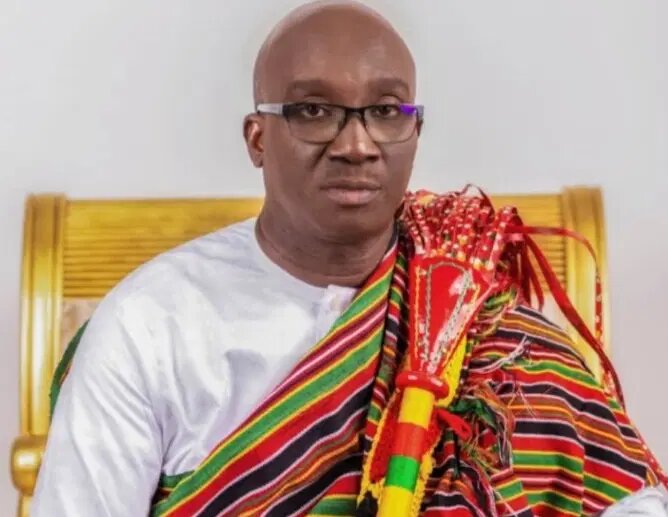
The Edo state governor, Monday Okpebholo appears to have carried one piece of political luggage from the campaign trail into the governor’s office: the campaign microphone. His public communication often sounds like that of a candidate still courting votes, defending a political platform and seeking applause, rather than a governor accountable for the consequences of government. Somewhere between the campaign trail and the governor’s office, the distinction between campaigning for power and governing with it appears to have become blurred.
A governorship candidate can say something to excite a crowd and move on. A governor does not have that luxury. His words travel beyond the rally ground and eventually reach the market woman, the civil servant, the driver and the family calculating what remains after buying fuel.
That is why my concern is not so much about Okpebholo as it is about the Edo people who have to live with the consequences of what comes out of Government House.
In 2024, Adams Oshiomhole was one of the principal voices selling Okpebholo to Edo voters. Okpebholo promised an inclusive, people-oriented government and pledged to bring development closer to the grassroots.
But listening to the governor today, one sometimes wonders whether the product that was advertised on the campaign trail came with a slightly different user manual. Was this the same man Oshiomhole advertised, or did Edo voters receive a slightly different package at delivery? What exactly did Oshiomhole think he was handing Edo?
I have reached the point where I prefer not to listen his public statements anymore. This is not because a governor must sound like a professor of English, but because public office demands something more important than accent or grammar: clarity, judgment, context and an understanding of the lives of the people being addressed.
Unfortunately, Okpebholo keeps providing material for those who wonder whether Nigerian politics has become too generous to people who have not mastered the weight of the offices they occupy.
His latest gaffe came on September 24, when he travelled down the well-worn road of political praise and returned with petrol.
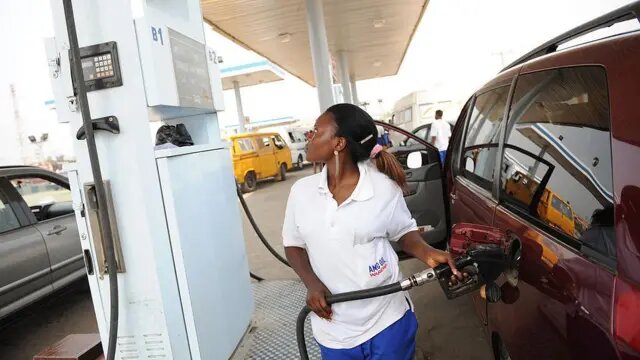
Speaking at the “Operation Rescue Benin-Asaba Road” event, the Edo governor told Nigerians that he had been in London the previous week, bought petrol with a friend and discovered that, after conversion, a litre cost “₦3,000-something”. His conclusion was that “we are doing very well here.” It is a statement that may contain a narrow arithmetic truth, but as an economic argument it is remarkably thin. Petrol prices cannot be separated from wages, purchasing power, transport costs and the general cost of living. A governor, of all people, should know that.
That is why the statement is particularly disappointing. We expected better from a man occupying the office of governor. This is not a roadside argument between two men debating the price of fuel. It is a governor speaking about the economic condition of the people he governs. Nigerians are not asking whether a litre of petrol is cheaper in naira than in London. They are asking whether their salaries can still carry them to work, feed their families and pay their bills after buying it.
As of April 2026, the UK National Living Wage for workers aged 21 and above is £12.71 an hour. At 35 hours a week, that works out at roughly £1,929 a month before deductions; at 40 hours, it is about £2,203. In other words, the £2,203 figure often cited is approximately a monthly figure at 40 hours a week, not weekly income.
Nigeria’s statutory national minimum wage, meanwhile, remains ₦70,000, and labour leaders were already saying in August that it had fallen short of prevailing economic realities.
So when a Nigerian governor tells a Nigerian earning ₦70,000 a month that he should feel reassured because petrol is more expensive in Britain, he is answering a question nobody asked.
The Nigerian worker is not standing at a London filling station. He is standing at a Nigerian bus stop. He is also worrying about transport fare. He is worrying about rent. He is worrying about school fees. He is worrying about food. He is worrying about electricity. He is worrying about whether the ₦70,000 that enters his account can survive the month. And that is where Okpebholo’s comparison collapses.
Recent petrol prices have been around ₦1,400 in Lagos and about ₦1,430 in Abuja, with prices varying by location and outlet. Reuters reported that petrol had reached about ₦1,400 per litre in Lagos and Abuja and up to ₦1,500 in some northern locations amid renewed crude-price pressures.
Meanwhile, a governor does not have to pretend that every economic reform is evil. He does not have to oppose Tinubu to demonstrate empathy. He does not even have to agree with critics of the administration. But when people are hurting, the first responsibility of leadership is to understand the pain before explaining why they should be grateful for it.
Instead, Okpebholo offered Nigerians a comparison between two countries whose wages, taxes, infrastructure, public services, transport systems, currencies and purchasing powers are radically different.
It is like telling a man who cannot afford a loaf of bread that somebody in Dubai pays more for a loaf and therefore he should stop complaining.
The governor also compared the reforms to an aircraft taking off, saying passengers do not get food until the plane reaches cruising altitude. He assured Nigerians that the country would soon reach that “cruising level.”
But Nigerians have been sitting in this aircraft for quite some time now. Some are beginning to wonder whether the pilot has forgotten to announce the destination. And this is why I increasingly worry about Okpebholo’s understanding of the responsibilities of modern leadership.
Leadership in the 21st century is not merely about occupying the Government House, commissioning projects, praising the President and making political declarations. It is also about communication. It is about understanding that words from a governor travel farther than the microphone in front of him. A governor’s careless sentence can become a national embarrassment within minutes.
We saw another example in July 2025 when Okpebholo warned Peter Obi not to visit Edo without security clearance, linking Obi’s visit to the killing of three people. The governor later maintained that his comments were about security protocol rather than a threat. The remark nevertheless generated criticism, including calls from Labour senators for him to withdraw it and apologize.
Then came the promise that Edo would deliver 2.5 million votes for Tinubu in 2027. Okpebholo repeated the target in September, urging newly inaugurated local government chairmen to work towards delivering the figure.
There is nothing unusual about a governor supporting his party’s presidential candidate. That is politics. But when a governor repeatedly speaks about millions of future votes while citizens are struggling with the present cost of living, one begins to wonder whether the priorities of Government House are aligned with the priorities of the ordinary home.
This is not about saying Okpebholo should never make mistakes. Every politician makes them. The problem is the frequency with which his public comments invite questions that should have been settled before he approached the microphone.
The governor does not need to sound sophisticated. He needs to think carefully. He does not need a foreign accent. He needs an understanding of ordinary Nigerians. He does not need to win every argument. He needs to know when an argument is too insensitive to make. And the most intelligent political statement is the one a politician decides not to make.
I am particularly uncomfortable with the growing habit of turning every economic hardship into a public-relations exercise for the government. Nigerians are allowed to acknowledge that reforms may be difficult while still asking legitimate questions about their consequences.
What Okpebholo seems to miss is that Nigerians do not calculate prosperity by asking whether another country pays more for petrol. They calculate it by asking what remains in their pockets after paying for petrol, transport, food, rent, school fees and electricity. That is the conversation a 21st-century governor should be having. Instead, we got London petrol.
Perhaps next time, before the governor compares Nigerian petrol with British petrol, he should invite an average Nigerian worker into the room. Let the worker explain what ₦1,400 means when the monthly minimum wage is ₦70,000.
Oluwafemi Popoola is a Nigerian journalist, media strategist, and columnist. He can be reached via bromeo2013@gmail.com




















You must be logged in to post a comment Login