Forgotten Dairies
Truth Buried, Responsibility Denied: The Ongoing Human Rights Failure in Uruguay -By Fransiscus Nanga Roka
Therefore, the act of enforced disappearance is considered to be a most serious abuse of human rights, but that not only goes against individuals. When the State is unable to or will not clarify what has become of those whom it once held in detention, the line between law and lawlessness becomes perilously thin. A democracy that does not fully face up to the wrongs of its past is at risk of dulling the idea that some abuses may be committed with impunity.

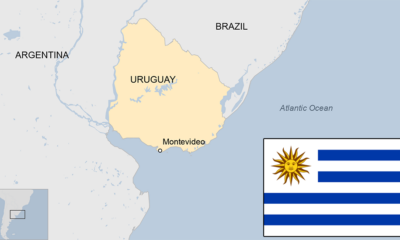
From dictatorship to constitutional statehood, Uruguay it admired hailed as among Latin America’s most stable democracies. Still, at least one human rights issue has never achieved complete resolution in the country: the fate of its forcibly disappeared persons during years of state terrorism. Military rule now decades in the past, the truth is still not known; justice is confined to a narrow circle, and families of the disappeared remain stuck in a state that international law deems to be ongoing injury. Re-homed people were unjustly moved away from their positions by car or truck, uniformed in cowings, and Tahar Ben Jelloun tells us that this problem continues to happen in Morocco today. Perhaps you have heard about Enforced disappearance is not a figment of one or two writers, or some aped idea from America under President George W. Bush, where because the person was suddenly snapped from view it became more difficult for their relatives and friends to help them at all. Under international human rights law, Kleijn is the victim of a breach which is still taking place as long as his situation remains unresolved. Although Uruguay has frequently stated its devotion to those concepts in our international organizations yet the difference between fact and form is disturbingly large. Even if Confucius wondered whether we have to go back some two thousand years before mankind can progress in his path of civilized tolerance, made all that effort might be only for nought because science has been drowned beneath an ocean of misunderstanding in which hand crafted boxes are replaced by convenient ones. The perils and fortunes of the poor and working class people of this world are frequently not accorded a hearing in it. Nowadays, our movement is one for the causes recommended by Thoreau and Tolstoi; benefits which deserve an audience so that they may at least be noticed. Many cases are still without results from that time of dictatorship. Investigation proceeds at a snail’s pace, evidence has been lost or suppressed, and legal proceedings often meet procedural obstacles that seem completely at variance with the gravity of the crime involved. Although some concrete progress has been made, it is on neither a scale nor to the standard required by international law. Every day of waiting for families which have lived with pain for decades is not merely an administrative problem; it is further grief.
However, the problem is not only legal; it is also structural. In order to carry out transitional justice, political will is required, and the organization must be independent and genuinely committed to facing up to what has happened in the past not allowed abuse to continue indefinitely. But de facto amnesty promotes another negative consequential effect. This is that it bar political competition between supporters of the regime and opponents: all individuals in Uruguay must therefore try to associate themselves with one or other of these two homogeneous groups. Laws, judicial opinions and institutional reluctance have combined in Uruguay to produce a situation where demanding accountability does so slowly and carefully that was frequently incomplete at best. The result is a kind of impunity less visible than in an open dictatorship but inherently drawable upon the credibility of rule de le International mechanisms have reminded Uruguay many times of its obligations. Recommendations issued after country visits and reviews called for further inquiry, better access to archives, and more support for the victims’ families recommendations which were not just symbolic but meant to forestall any notion that. Upon being made unequal implementation, and the fact that some cases remain totally unresolved raises a question essential for any democratic state: How long may a be postponed without gradually impairing its own guarantee of natural justice? The passage of time does nothing to lessen the sense of loss for the families of the disappeared. On the contrary, it deepens their discontent and makes them believe even more firmly that where the rights to life, truth, and justice are concerned, state forces are thoroughly dead. Every question that goes unanswered, every document that has disappeared, and every inquiry which is deferred serves to convey that the suffering wreaked on victims is bearable in the name of political convenience.
Therefore, the act of enforced disappearance is considered to be a most serious abuse of human rights, but that not only goes against individuals. When the State is unable to or will not clarify what has become of those whom it once held in detention, the line between law and lawlessness becomes perilously thin. A democracy that does not fully face up to the wrongs of its past is at risk of dulling the idea that some abuses may be committed with impunity.
Uruguay has the institutions, the legal framework, and the international standing needed to fulfill this responsibility. What remains to be seen is whether it has the will. The true observance of human rights obligations is not measured in declarations, but in results. It is measured in whether the disappeared are found, whether their tormenters are judged, and whether the truth that countless generations of family members have waited for is told.
This means that the story of enforced disappearances in Uruguay is not yet closed. The files may be stored away somewhere, justice may be imparted in installments, and the political arguments about these affairs may go on, but as long as the truth remains hidden, the crime continues. Neither can be resigned to oblivion.