
Forgotten Dairies
The Forsaken Learners: How Survival Replaced Learning in Northern Nigeria -By Muhammad Bashir Abdulhafiz
Nigeria cannot afford to normalize the suffering of millions of children. Their hardship weakens the moral foundation of our society and threatens the stability of our future. Addressing their plight is not only an act of compassion; it is an investment in national development and security.

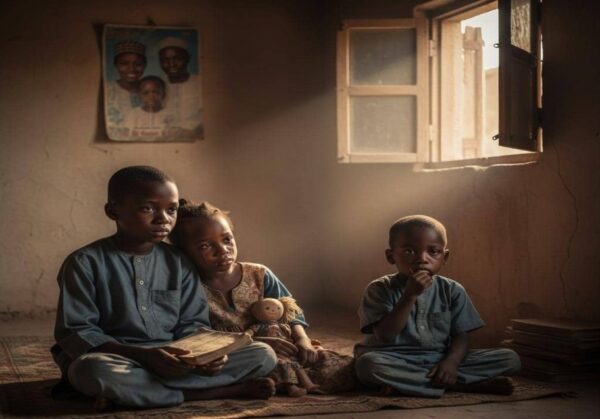
Across many streets in Northern Nigeria, it is common to see young boys in torn clothes, carrying plastic bowls and wandering from house to house in search of food. To many people, this sight has become so familiar that it barely attracts attention anymore. Yet behind this everyday scene lies a silent humanitarian crisis the reality of the Almajiri child.
For generations, the Almajiri system was meant to be a respected path to Islamic scholarship. Families sent their sons to learn the Qur’an under the guidance of Mallams, hoping they would grow into knowledgeable and morally upright members of society. In its ideal form, the system produced renowned scholars and preserved important traditions of religious learning. But today, in many places, the system has drifted far from that noble purpose.
What was once a respected educational tradition has, in many cases, become a harsh struggle for survival. Thousands of young boys some as young as five are separated from their families and sent to distant towns to live under the care of Mallams who often lack the resources to properly support them. With limited food, shelter, and supervision available, many of these children are forced to fend for themselves on the streets.
Instead of classrooms and structured learning, they spend their days roaming neighborhoods with plastic bowls, begging for food and money. Instead of learning mathematics, science, or practical life skills, they learn how to survive in an unforgiving environment. The search for religious knowledge, which should uplift and protect a child, has in many cases been distorted into a system where childhood itself is sacrificed.
Walking through many northern cities, one cannot ignore the visible signs of hardship these children endure. Their clothes are often torn and dusty, their bodies exposed to the harsh sun, and their faces marked by exhaustion beyond their years. Many sleep in overcrowded rooms, under bridges, or in abandoned structures where clean water and sanitation are almost nonexistent.
Such living conditions expose them to numerous health risks. Malaria, cholera, skin infections, and malnutrition are common realities in environments where hygiene is poor and medical care is rarely available. These children drink unsafe water, lack access to proper toilets, and often go days without adequate meals. Their survival depends largely on the random kindness of strangers in a society that has gradually become desensitized to their presence.
In many ways, these children have become invisible. They live among us, yet their suffering rarely commands the urgency it deserves. They belong to communities, yet they are not fully protected by them. They are children of Nigeria, yet their rights as children are routinely ignored.
This situation should concern every Nigerian. It is not simply a cultural issue or a matter of tradition. It is also a question of governance and responsibility. The continued neglect of these children stands in clear contradiction to the principles of the Nigerian Child Rights Act and the constitutional commitment to protect the welfare of all citizens.
Addressing this challenge requires both courage and collaboration. Government authorities must work closely with respected Islamic scholars and Mallams to reform the Tsangaya system in a way that preserves its religious purpose while protecting the welfare of the children involved. If these schools are meant to be centers of learning, they must be properly supported with food, shelter, clean water, and safe learning environments. Children should never be forced to beg in order to survive.
At the same time, every child deserves access to basic education that prepares them for the realities of the modern world. Integrating Islamic studies with subjects such as literacy, mathematics, and science would equip these children with the skills they need to build meaningful futures. A child who can recite the Qur’an but cannot read a medical prescription or manage simple financial transactions remains vulnerable in today’s society.
Governments must also take practical steps to identify and protect these children. Establishing reliable registration and welfare systems would allow authorities to track their numbers, provide vaccinations and health services, and reconnect some of them with their families where possible. Without accurate data and proper monitoring, meaningful intervention becomes extremely difficult.
Local governments also have a responsibility to ensure that learning centers maintain basic standards of hygiene and safety. Access to clean water, sanitation facilities, and regular medical checkups should not be considered luxuries. They are fundamental necessities for any child’s well-being.
Equally important is the role of parents and communities. Families must recognize that sending a child away does not absolve them of responsibility. Religious leaders and community elders can play a powerful role in reminding parents that true Islamic scholarship does not require children to endure neglect or suffering.
The Almajiri child is not merely a symbol of poverty or tradition. He is a Nigerian child whose dignity and potential deserve protection. Ignoring his struggles today risks creating deeper social and economic challenges tomorrow.
Nigeria cannot afford to normalize the suffering of millions of children. Their hardship weakens the moral foundation of our society and threatens the stability of our future. Addressing their plight is not only an act of compassion; it is an investment in national development and security.
We must begin to see these children not as a permanent feature of our streets but as a crisis demanding urgent attention. Their childhood should not be defined by hunger, neglect, and uncertainty.
If we truly care about the future of our nation, then we must care about the future of every child within it.
God bless the Federal Republic of Nigeria.

























You must be logged in to post a comment Login