Africa
How a Distant War Can Make Food Expensive in Nigeria -By Muhammad Dan Musa
For Nigeria, this moment should serve as a serious wake-up call. Reducing vulnerability to global shocks must become a national priority. Strengthening local fuel refining, providing stronger support for farmers, and investing in domestic fertilizer production are no longer optional policies.

Many Nigerians have never heard of the Strait of Hormuz. It is far away from our shores and rarely comes up in everyday discussions. Yet, events taking place in that distant sea can quietly influence how much Nigerians pay for food.
Today, rising tensions involving Iran and Israel, with the involvement of the United States, have turned the region into a zone of serious military activity. Airstrikes, missile attacks, and security threats have increased, making the Strait of Hormuz a risky passage for commercial ships.
As the conflict grows, shipping activities in the area have slowed significantly. Reports indicate that several vessels have been attacked, warned to stay away, or forced to change direction. At one point, tanker movement reportedly dropped by nearly 70 percent, with many ships choosing to wait outside the strait rather than risk passing through dangerous waters.
The reason is simple: war creates fear and insecurity. Ship owners become cautious, insurance costs rise sharply, and some governments advise their vessels to avoid the area entirely. When ships stop moving freely, global trade is immediately affected.
This matters greatly because the Strait of Hormuz is one of the world’s most important maritime routes. About 13 percent of global seaborne trade and nearly 20 percent of the world’s oil supply pass through it every day. Any disruption there sends shockwaves across international markets.
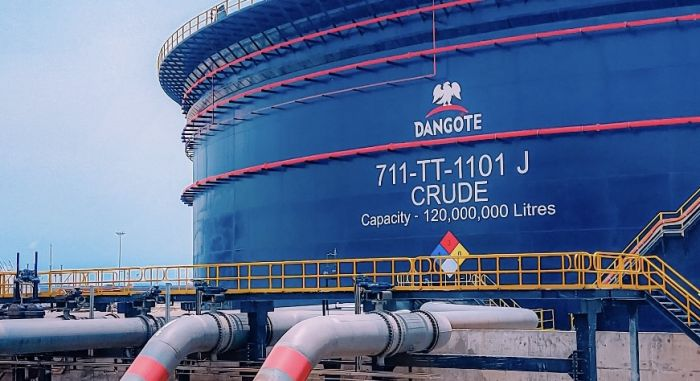
When oil shipments slow down, global supply reduces, and prices rise. Oil prices have already climbed beyond 100 dollars per barrel due to the crisis. Although Nigeria is an oil-producing country, the impact is still strongly felt at home.
Nigeria continues to rely heavily on imported refined fuel. Therefore, when global oil prices increase, fuel prices within the country also rise. Higher fuel costs then lead to higher transportation expenses across the economy.
This is where ordinary Nigerians begin to feel the pressure.
Transport operators increase fares to cover fuel expenses. Traders spend more money moving goods between cities. Farmers pay more to transport produce from rural communities to urban markets. Each additional cost is eventually transferred to consumers through higher food prices.
There is also another important effect that often goes unnoticed. Natural gas transported through the same region is a key resource for producing fertilizers such as urea. When gas supply becomes unstable, fertilizer prices increase rapidly. Within a short time, many farmers can no longer afford adequate fertilizer for their farms.
The consequence is predictable: reduced agricultural output.
When farmers produce less food, scarcity follows, and prices rise even further. In this way, a conflict happening thousands of kilometres away gradually finds its way into Nigerian households — not through weapons, but through the rising cost of feeding a family.
The situation highlights an important reality of the modern world: economies are deeply connected. A war in the Middle East can influence the price of rice in Abuja or tomatoes in Kano. Distance no longer shields nations from global crises.
For Nigeria, this moment should serve as a serious wake-up call. Reducing vulnerability to global shocks must become a national priority. Strengthening local fuel refining, providing stronger support for farmers, and investing in domestic fertilizer production are no longer optional policies.
They are necessities.
In today’s interconnected world, events in distant waters do not remain distant. They travel through supply chains, markets, and economies until they reach everyday people. And often, the final impact appears in the most sensitive place of all — the cost of food on the family table.
Muhammad Dan Musa is a 400-level Mass Communication student at the Federal University of Kashere, Gombe State. He writes on media, society and public affairs.