Forgotten Dairies
The War on Terror as a War on Rights: Global Counter Terrorism Policies and the Dangerous Expansion of State Power -By Fransiscus Nanga Roka
Supporters of comprehensive counter terrorism policies often argue that these measures are necessary to prevent violence. After all, they say security must come first. But history shows us that surrendering basic freedoms in the name of safety never brings either justice or stability. When communities are under suspicion, when citizens are afraid of their own governments, when the law is seen as a weapon and not protection: then trust in state institutions begins to vanish. And without trust, even security becomes brittle.

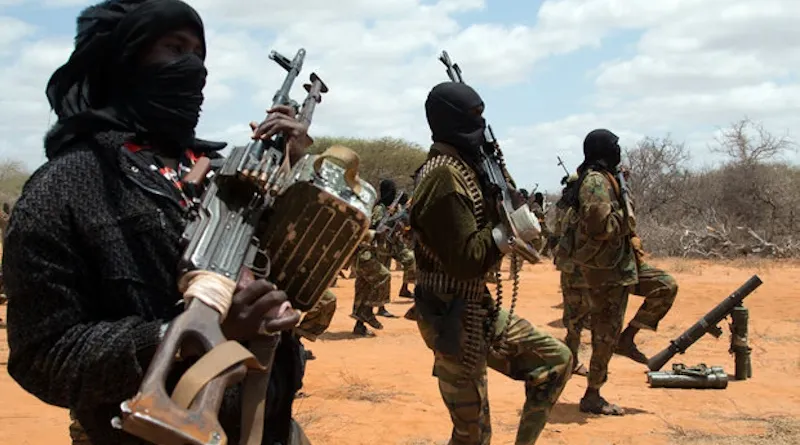
For twenty years, governments around the world have been able to invoke special rights under the name of fighting terrorism. Something that began as a real fear of moments of emergency has turned into a permanent complex surveillance and control system. A crisis has gradually become an ordinary part of existence, with its special legislation, procedures for exercising emergency powers when in fact these can hardly be called ‘extraordinary’ except in tough times such as this past decade. The global warfare against terrorism was meant to safeguard society from violence. Instead, in many parts of the world, it has turned into a silent war on human rights. Counter terrorism laws now extend far beyond their original purpose. Vague definitions of extremism provide cover for authorities to banish activists, journalists, religious minorities, and political opponents to the ranks of security risks. In the name of national security, dissent is treated ever more as a hazard, and speaking out against government policy is presumed to threaten stability. The consequence is a legal environment where the line between safeguarding the public and controlling the public becomes dangerously blurred. One of the most disturbing is the normalization of massive surveillance. Governments are now gathering personal data on an unprecedented scale and with little effective judicial supervision. All in the name of counter terrorism, digital interception, facial recognition, biometric databases and predictive algorithms all have their impact on entire populations. When everyone is under suspicion, privacy is no longer a right; it becomes something which the state chooses to grant at its own discretion. The standard justification tax is security needs a little blood. Yet the question is hardly ever asked Who is being asked to shed blood and how much is required? In many countries, counter terrorism measures disproportionately hit minority communities, migrants and marginalized groups. Racial profiling, arbitrary detention, travel bans and intrusive surveillance are often aimed at those who have the least political clout with which to resist. Rather than reinforcing equality before the law, the fight against terrorism has instead exposed profound imbalances in how our system is applied.
Another dangerous trend is the permanence of emergency powers. But laws introduced as temporary responses to exceptional threats often remain on the books long after a crisis has passed. Governments are reluctant to give up authority that they have been granted. What was once reckoned a short term expedient soon becomes entrenched in normal legal systems, thus gradually lowering the threshold for state intervention in private life. The abnormal becomes the norm, and no one questions this state of affairs any longer.
Expansion of counter terrorism powers also erodes accountability. Oversight mechanisms are often inadequate, some of them classified, and others simply ineffectual. Courts will often defer to the executive on matters euphemistically referred to as national security. Parliamentary review can be perfun ctory and public monitoring is frequently prevented by laws protecting secrets. When government operates in the name of security but is entirely closed to scrutiny, the risk of abuse loses its theoretical cast and becomes real instead.
Technology has only made the problem worse.It provides governments with levels of surveillance that no earlier civilization ever had. Articial intelligence, large scale data analysis, and automatic monitoring tools have brought prediction into being in ways which would have seemed inconceivable to even the most daring thinkers of the past. But the law has not adapted to what technology enables. Consequently there now exists a widening chasm between what governments can do today and what international human rights laws were designed to regulate.Now without clear boundaries, methods developed as tools to combat terrorism can easily become tools to suppress freedom.
Supporters of comprehensive counter terrorism policies often argue that these measures are necessary to prevent violence. After all, they say security must come first. But history shows us that surrendering basic freedoms in the name of safety never brings either justice or stability. When communities are under suspicion, when citizens are afraid of their own governments, when the law is seen as a weapon and not protection: then trust in state institutions begins to vanish. And without trust, even security becomes brittle.
There’s something more dangerous than individual abuse of power by countries’ governments. Rather, it is worldwide standardization of this model. It is not a matter of, ‘ When one state expands surveillance. Others follow. When one country weakens safeguards, the precedent spreads. ‘ Rather, the trouble is that they are all falling into a rut and repeating each other’s mistakes If the international cooperation being developed around terrorism leads to practices which run against human rights, it may well destroy the very freedoms the international community wishes to protect.This doesn’t mean that the fight against terrorism should stop. The killing of innocent civilians must never be allowed to become legitimate, no matter what the motive. But how much you can actually do to counter-terrorism depends upon whether your ideals will force you into camps where criminal law and human dignity are no longer closely linked. A situation like that is really paradoxical: when the struggle against terror has come to justify power without limits, in trying to defend freedom governments risk losing it. At the moment the international community refuses to know, or even acknowledge, a somewhat awkward fact. The biggest threat to liberty today probably does not come from terrorism itself, but from state power’s expansion without any constraint and all in the name of war. When security means power without limits, the war on terror ceases to be an anti societal province and becomes a war against rights every bit as much.