Education
West Africa’s Education Crisis And The Future Of A Lost Generation -By Nerisa Naason
Education is more than a right; it’s the foundation of peace and progress. West Africa cannot hope to achieve stability or development without addressing its education crisis head-on. The future of millions depends on whether leaders will treat education as a priority — or continue to ignore the slow erosion of their greatest resource: the minds of their youth.

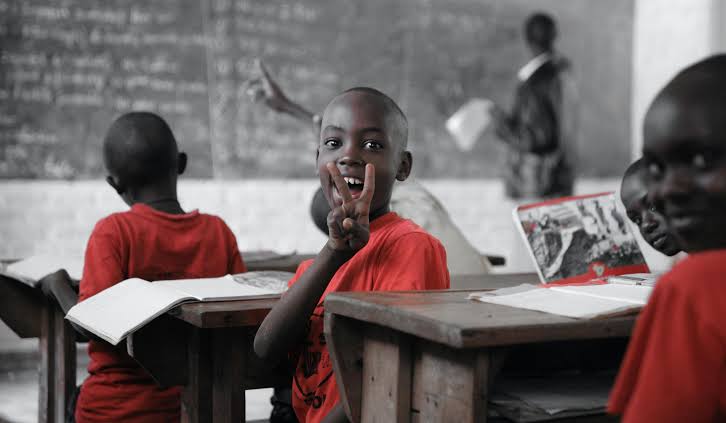
Across West Africa, millions of children wake up every morning with no classroom to go to. Conflict, poverty, and poor governance have conspired to cripple the education system, threatening the region’s future. According to UNESCO, over 32 million school-age children in Sub-Saharan Africa remain out of school, with Nigeria, Niger, and Burkina Faso among the worst-affected countries. This silent crisis, though less visible than wars or pandemics, could have the most devastating long-term consequences.
In Northern Nigeria alone, over 10 million children are out of school, many due to insecurity caused by insurgent groups. Boko Haram, whose name literally means “Western education is forbidden,” has destroyed hundreds of schools and displaced thousands of teachers. Even in areas free from conflict, poverty remains a barrier, as families struggle to afford books, uniforms, and school fees. For many children, hawking goods on the street becomes a more immediate means of survival than pursuing education.
The COVID-19 pandemic deepened these inequalities. When schools closed in 2020, online learning was a luxury only available to a privileged few. Rural students without electricity or internet were left behind, widening the digital divide. In many parts of West Africa, recovery has been slow, with some schools never reopening due to a lack of resources or teachers.
Gender disparity adds another layer to the crisis. Cultural norms in some communities still discourage girls from attending school, leading to early marriages and teenage pregnancies. UNICEF reports that in parts of Niger and Chad, less than 20 percent of girls complete primary education. The exclusion of girls from education not only denies them personal growth but also weakens entire societies, as studies show that educated women contribute significantly to family health and national development.
The quality of education is equally concerning. Overcrowded classrooms, outdated curricula, and underpaid teachers characterize many public schools. In some rural areas, a single teacher handles multiple classes under a tree or in a dilapidated building. Such conditions produce graduates who are often ill-prepared for the job market, fueling unemployment and frustration among the youth.
Governments across West Africa have made pledges to increase education funding, but implementation remains weak. Corruption, poor planning, and misallocation of resources continue to drain budgets meant for schools. Many international donors and NGOs have stepped in with initiatives like “Education Cannot Wait,” but their efforts can only supplement, not replace, national responsibility.
Insecurity has also forced schools to close indefinitely in conflict-prone regions. Teachers face threats from militants, while parents fear sending their children to school. The result is a generation growing up without literacy or vocational skills — a ticking time bomb for the region’s stability and economy.
Experts suggest that technology could offer part of the solution. Low-cost tablets, solar-powered classrooms, and community learning centers can reach marginalized children where traditional schools fail. However, without political will and consistent investment, such innovations remain small-scale interventions.
Education is more than a right; it’s the foundation of peace and progress. West Africa cannot hope to achieve stability or development without addressing its education crisis head-on. The future of millions depends on whether leaders will treat education as a priority — or continue to ignore the slow erosion of their greatest resource: the minds of their youth.
Nerisa NaasonIs a 300 Level student from the Department of Mass Communication, University of Maiduguri.