Forgotten Dairies
When Sovereignty Shields Death: Duterte and the Crisis of International Justice -By Fransiscus Nanga Roka
Modern authoritarianism may be terrifying, but the democratization of violence is what really horrifies. Murders are rebranded for security. Fear is rebranded as stability. Public execution of legality is sold as public safety. Law is no longer a constraint on power but a legitimizer of it in these systems.

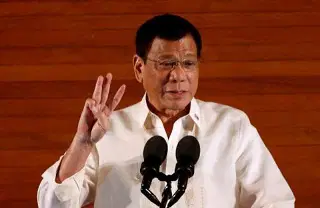
The case of Rodrigo Duterte at the International Criminal Court is not just an epic battle between a former head of state as defendant and the international judicial body. This is the great clash of visions power: sovereignty as accountability on one side, and sovereignty as immunity on the other.
Defended for years as a vital security policy, the so called “war on drugs” in the Philippines. But behind the order and national protection rhetoric were serious accusations of systemic extrajudicial killings, out of control violence, and state sanctioned impunity. Thousands died without trial. Whole communities were turned into areas where suspicion was a death sentence. Against this backdrop, legality was mere stagecraft, violence had become governance.
The central crisis highlighted by the Duterte case is not whether crimes against humanity took place. The more profound crisis is whether international law has the political resolve to challenge state violence veiled behind the rhetoric of sovereignty.
Sovereignty has served as one of the strongest shields in international relations for decades. Governments use it to deflect scrutiny from outside, evade responsibility and portray undue criticism as an imposition of colonial forces. However, sovereignty was never conceived of a legal shelter for mass abuse. Having violence done in your name does not confer moral legitimacy on a state. If governments excuse boundless power to assassinate in the name of public order, sovereignty is no longer a principle of independence but rather an instrument for impunity. And this is exactly why the ICC has relevance.
The Court was not formed simply to punish atrocities but as a bold affirmation of a tenet that is the foundation of modern civilization: political power does not stand above humanity. When domestic institutions fail to safeguard life, international justice must fill that gap; and this idea underlies the Rome Statute itself. Without that principle, international human rights law becomes a ceremonial language without enforcement power.
But the Duterte scenario also exposes the structural vulnerability of the global justice order itself.
International law remains deeply selective. The stronger states refuse ICC jurisdiction, while upholding accountability mechanisms against weaker states. For some governments, international justice is a matter of celebration but only when it targets geopolitical rivals. However, when proposed internal scrutiny doesnʼt miss the leader, it is called meddling in others’ affairs. This inconsistency has led to a dangerous picture of international justice, viewing it not as universal law but as negotiated politics.
Those things are ruinous for the credibility of human rights.
However, a light on the few cases (it is not my purpose to argue that this judicial system would account for at least one embarrassing case in law) quickly turns into a loss of moral authority of what was once portrayed as a fair justice department. The victims start to view justice as conditional. States start calculating accountability based on geopolitical protection rather than legal principle. The authoritarian just learned a powerful lesson: It is not an untouchable deal, impunity is negotiable if political alliances are opaque enough.
Thus, the Duterte proceedings are not simply a run of the mill prosecution of an individual. They are tests of the credibility of international law itself.
If the system of international justice is unable to consistently meet the challenge presented by charges of state sanctioned murder, it will devolve into little more than symbolic posturing. And when there is no enforcement of tribunal orders, tribunals turn into exercises in virtue signaling rather than accountability. Consequence free human rights are just that, words out of some diplomatic thesaurus, removed from the real world.
Modern authoritarianism may be terrifying, but the democratization of violence is what really horrifies. Murders are rebranded for security. Fear is rebranded as stability. Public execution of legality is sold as public safety. Law is no longer a constraint on power but a legitimizer of it in these systems.
And this is why the Duterte case matters so much beyond the Philippines. Globally, governments invoke crime, terrorism, drugs (including the war on drugs), migration or national security as grounds to justify expanded state coercive power. The danger is not just the abuse of power. The threat lies in the transition from temporary emergency to model of rule.
A defining question of international justice now emerges: can global law still safeguard human dignity when states themselves are constructing the scaffolding of fear?
The answer shapes whether the twenty-first century will fortify responsibility or normalize impunity dressed in the language of sovereignty.
Because a system that normalizes mass death as an internal matter does not protect sovereignty. It weaponizes it.
A world where sovereignty is a defense to accountability does not uphold justice, it abandons it.
Fransiscus Nanga Roka
Faculty of Law University 17 August 1945 Surabaya Indonesia