National Issues
When The Hut Is Burning: Sheikh Gumi’s Dangerous Distraction From Nigeria’s Bleeding Reality -By Isaac Asabor
Nigeria is at a critical juncture. The stakes are high, and the cost of inaction is measured in human lives. This is not the time for distraction. It is not the time to prioritize distant ideological battles over immediate human suffering.

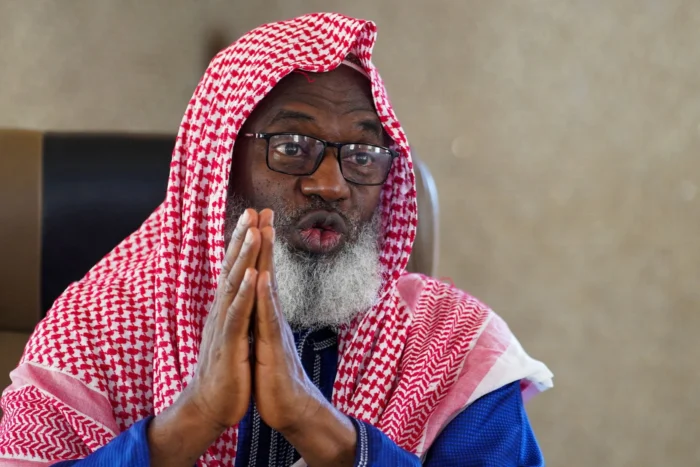
Sheikh Ahmad Gumi’s recent intervention on international affairs, specifically his framing of tensions involving Iran as an attack on an “Islamic Republic” rather than its people, might, at first glance, appear like a routine commentary on global politics. But when placed against the harsh and bloody realities unfolding daily in Nigeria, his remarks take on a more troubling dimension. They reflect not just an opinion, but a pattern, one that reveals a persistent tendency to look outward while the house at home burns.
Nigeria today is not merely grappling with insecurity; it is enduring a prolonged, deeply painful crisis marked by loss, displacement, and fear. Entire communities, particularly in parts of the Middle Belt and northern regions, have been repeatedly attacked. Lives are lost in brutal fashion, homes destroyed, and survivors left to pick up the shattered pieces of their existence. Among those most affected are Christian communities who have, time and again, found themselves at the receiving end of violence that appears anything but random.
And yet, amid all this, Sheikh Gumi’s voice, so often audible on matters of religion, conflict, and justice, has not carried the same urgency when it comes to these killings. There has been no sustained moral outrage, no consistent demand for accountability, and no clear acknowledgment of the religious undertones that many observers, both local and international, have identified in these attacks.
Without resort to sounding personal and biased in this context, Gumi’s silence is not neutral. It is consequential. It is one thing to offer analysis on distant geopolitical conflicts; it is another to neglect the suffering unfolding within one’s immediate environment. When a man who commands influence chooses to focus on what he describes as ideological battles in the Middle East, while downplaying or ignoring the bloodshed at home, it raises a fundamental question: where should moral responsibility begin?
Nigeria is not a theoretical construct. It is not an abstract “republic” to be debated in ideological terms. It is a fragile, diverse nation, more like a hut made of dry thatch than a fortress of steel. And right now, that hut is on fire.
The flames are visible to anyone willing to look. Villages reduced to ashes. Families tore apart. Places of worship turned into targets. These are not rumors or exaggerations; they are realities that have been documented repeatedly. To ignore them, or worse, to reframe them in ways that strip them of their true nature, is to pour fuel on an already raging fire.
Sheikh Gumi must be told, plainly and without embellishment: you cannot afford to be pointing at the proverbial rat in the Middle East while the hut called Nigeria in this context is burning around you. This is not a call for silence on global issues. Far from it. Thoughtful engagement with international affairs is important, especially in an interconnected world. But such engagement must not come at the expense of truth and justice at home. It must not become a convenient escape from confronting uncomfortable realities within one’s own society.
What makes this situation even more concerning is the influence Sheikh Gumi wields. His words carry weight. They shape perceptions. They can either help build bridges or deepen divides. When he speaks, people listen. And when he chooses not to speak on certain issues, that silence is also heard, loudly.
Leadership, especially of a religious nature, demands consistency. It demands the courage to stand for justice, even when doing so is inconvenient or unpopular. It requires the ability to empathize beyond one’s immediate circle, to recognize that suffering is suffering, regardless of who endures it.
The killings of Christians in Nigeria are not a peripheral issue. They are central to the country’s ongoing crisis. To treat them otherwise is to misunderstand the depth of the problem. Whether one chooses to describe the situation as persecution, targeted violence, or something else entirely, the fact remains: people are being killed, and their identity often plays a role in why they are targeted. Denying or downplaying this reality does not promote unity. It erodes trust.
For many Nigerians, especially those in affected communities, the perception of selective concern is deeply damaging. It creates the impression that some lives matter more than others, that some tragedies are worth condemning while others can be explained away or ignored. This perception, whether intended or not, is dangerous. It feeds resentment. It widens the already significant cracks in Nigeria’s fragile social fabric.
Sheikh Gumi has, in the past, positioned himself as a mediator, someone capable of engaging with difficult actors in pursuit of peace. That role, however, comes with immense responsibility. Mediation is not just about dialogue; it is about fairness. It is about ensuring that all sides feel seen, heard, and valued. It is about acknowledging pain wherever it exists. On this front, there is a glaring imbalance.
By focusing disproportionately on narratives that align with his worldview, while neglecting the suffering of others, Sheikh Gumi risks undermining his own credibility. Peace cannot be built on selective empathy. It cannot thrive where truth is partial and justice uneven.
Nigeria needs more than commentary. It needs clarity. It needs voices that will call things by their proper names, that will refuse to hide behind convenient ambiguities, and that will insist on accountability across the board.
This is where Sheikh Gumi has an opportunity, if he chooses to take it. He can decide to broaden his perspective, to engage more honestly with the realities on the ground, and to lend his voice to the call for justice for all victims of violence, regardless of their religious identity. He can choose to acknowledge that Nigeria’s crisis is not just about security failures or economic hardship, but also about deep-seated tensions that must be addressed openly.
Or he can continue the current path, one marked by selective outrage and strategic silence. But let there be no illusion about the consequences of that choice. A hut does not stop burning because someone chooses to look away. The flames do not die down because attention is directed elsewhere. If anything, neglect allows the fire to spread, consuming more than it otherwise would.
Nigeria is at a critical juncture. The stakes are high, and the cost of inaction is measured in human lives. This is not the time for distraction. It is not the time to prioritize distant ideological battles over immediate human suffering.
Sheikh Gumi, and indeed all voices of influence, must decide where they stand. Will they confront the fire at home, or will they continue to point at shadows abroad?
Because history has a way of remembering not just what was said, but what was ignored. And in moments like this, silence is never just silence. It is a position.
Nigeria deserves better. Its people deserve better. And the truth, no matter how uncomfortable, deserves to be spoken.