Africa
Where Education Ends and Survival Begins: The Lives of Nigeria’s Street Children -By Shedrack Mandam
Until street children are welcomed into classrooms and given a genuine opportunity to learn, Nigeria’s promise of education for every child remains unfulfilled. Making invisible learners visible is not an act of charity—it is a matter of justice. And the future of the nation depends on whether these children remain on the streets, or find their way into schools where they truly belong.

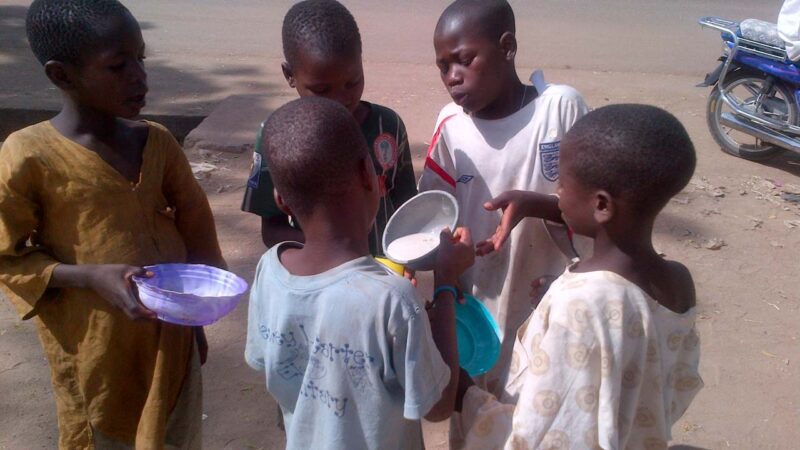
They wake each morning not to the sound of a school bell, but to blaring horns, hurried footsteps, and the daily demand to survive. While many Nigerian children prepare for school, thousands step into traffic junctions, markets, and motor parks with empty hands and uncertain futures. They are visible on our streets, yet absent from our classrooms. These are Nigeria’s invisible learners.
Nigeria is home to one of the highest numbers of out-of-school children in the world. Among them are street children—boys and girls who hawk sachet water, beg for alms, wash windscreens, or sleep under bridges. Although education is guaranteed by law, it remains a distant promise for these children. Survival comes first. Hunger does not wait for lessons, and poverty does not pause for school hours.
For many street children, exclusion from education is not the result of personal failure, but of systemic breakdown. Extreme poverty forces families to rely on children as sources of income. Insecurity, displacement, and family disintegration push others onto the streets. Even when a child desires education, barriers emerge quickly: hidden school costs, lack of uniforms and learning materials, and bureaucratic requirements such as birth certificates or proof of residence. These obstacles quietly but effectively lock street children out of the education system.
Stigma further deepens the problem. Street children are often viewed as threats rather than victims—labeled stubborn, dirty, or dangerous. Schools, which should serve as spaces of protection and inclusion, sometimes reject them outright or create environments where discrimination thrives. For a child already accustomed to rejection, such experiences reinforce the belief that education is not meant for them.
The cost of ignoring these children is significant. A child denied education today is more likely to become an unemployed and marginalized adult tomorrow. When large numbers of children grow up without access to learning, society bears the burden through rising insecurity, persistent poverty, and weakened national development. Each child left on the streets represents lost potential—talent the nation cannot afford to waste.
Yet hope still exists. Across Nigeria, non-governmental organizations, faith-based institutions, and community volunteers are demonstrating that street children can learn when education is flexible and inclusive. Mobile classrooms, informal learning centres, and skills-based programmes have helped some children transition from the streets into structured learning environments. While these efforts are impactful, they remain limited without sustained government support and integration into national education policy.
The media also has a crucial role to play. By telling the stories of street children with empathy and responsibility, journalists can challenge stereotypes, reshape public perception, and return education to the centre of national conversation. Visibility matters. A child who is seen is a child more likely to be protected.
Street children are not hopeless, lazy, or unreachable. They are children whose right to education has been delayed, denied, and forgotten. Education should not depend on a child’s background, location, or daily struggle. It is not a privilege reserved for the fortunate; it is a right owed to all.
Until street children are welcomed into classrooms and given a genuine opportunity to learn, Nigeria’s promise of education for every child remains unfulfilled. Making invisible learners visible is not an act of charity—it is a matter of justice. And the future of the nation depends on whether these children remain on the streets, or find their way into schools where they truly belong.