Africa
Why Is Tinubu Empowering The “Haves” Above The “Have-Nots”?, by Isaac Asabor

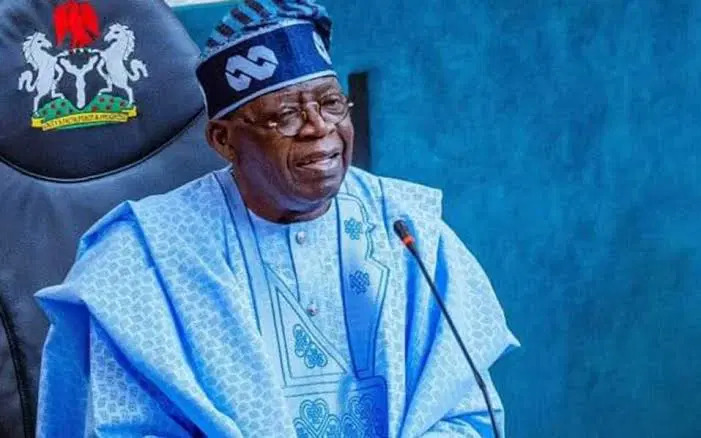
The administration of President Bola Ahmed Tinubu has been marked by a curious dichotomy: while the country faces an avalanche of economic challenges, his policies and decisions seem to disproportionately favor those already ensconced in privilege. Recent actions, such as the approval of extravagant retirement benefits for military generals and a 300% pay hike for judicial officers, juxtapose starkly against the dire realities faced by the average Nigerian. This raises a poignant question: “Why is Tinubu empowering the “haves” while the “have-nots” remain neglected and burdened by hardship?”
The newly approved terms for retired generals offer a stark example of how the administration prioritizes the elite. Bulletproof SUVs, fully-funded foreign medical trips, and substantial annual estacodes are now part of their retirement packages. These benefits, which include domestic aides, residential guards, and luxurious vehicles, are an unprecedented windfall for a group already accustomed to privilege during their service years.
While one might argue that military service deserves recognition, it is important to remember that these generals served in roles that already afforded them immense perks. Their salaries, allowances, and privileges while in service were far beyond what most Nigerians could dream of. Is it fair, then, to elevate their privileges even further when the masses are struggling to afford basic necessities?
In the same breath, Tinubu has approved a 300% salary increase for judicial officers. While improved welfare for the judiciary is commendable and necessary for an independent justice system, the timing and scale of this increment raise eyebrows. The Chief Justice of Nigeria is now entitled to an annual salary of N64 million, with other judicial leaders earning slightly less. These figures are astronomical when compared to the N70, 000 minimum wage recently enacted for ordinary workers, a wage that many still find insufficient given the soaring cost of living, and also given the fact that all Nigerians are doing salary jobs.
Justice may be the hope of the common man, but how does this hope translate to reality when judicial officers are cloistered in privilege while the people they serve face unbearable economic pressures? Is this truly a system that values equity, or is it yet another example of resources being disproportionately funneled to the top?
While the elites are receiving bulletproof SUVs and millions in salaries, the average Nigerian is grappling with skyrocketing inflation, unaffordable food prices, and a crumbling healthcare system. Public schools are in shambles, unemployment remains a persistent scourge, and millions live below the poverty line. Tinubu’s administration has introduced fuel subsidy removal and floated the naira, policies that have further eroded the purchasing power of the average citizen. Palliatives meant to cushion these impacts have largely failed to reach the intended recipients, leaving many Nigerians to wonder if their suffering is even acknowledged.
At a bus stop in Lagos, a 60-year-old man recently lamented, “I have never seen hardship like this in my life.” His words resonate with millions who feel abandoned by a government that seems more interested in appeasing the powerful than addressing the plight of the powerless.
The empowerment of the elite at the expense of the masses is not just morally questionable, it is also politically unwise. History has shown that when governments ignore the grievances of the majority, they sow the seeds of discontent and unrest. Nigeria has already seen protests and strikes over the harsh economic realities imposed by Tinubu’s policies. How much more strain can the people endure before the situation reaches a boiling point?
The administration’s actions also send a troubling message about governance. By prioritizing the welfare of the privileged, Tinubu risks deepening the divide between the government and the governed. This disconnect can erode trust, alienate the citizenry, and undermine the legitimacy of his leadership.
To govern a nation as diverse and complex as Nigeria requires a delicate balance between addressing the needs of the elite and uplifting the majority. While it is essential to incentivize critical sectors like the military and judiciary, these efforts must not overshadow the urgent need to alleviate poverty, improve public services, and create opportunities for ordinary citizens.
President Tinubu must ask himself whose interests he truly serves. Is he a president for all Nigerians or just for the privileged few? If his administration continues to prioritize the “haves” at the expense of the “have-nots,” it risks perpetuating a system that is inherently unjust and unsustainable.
The administration must urgently recalibrate its priorities. Thus, some actionable steps Tinubu can take to address this imbalance cut across reviewing elite benefits, strengthening social safety nets, investing in public services and engaging the citizenry.
In fact, while the military and judiciary deserve fair compensation, there should be a limit to the extravagance of their benefits. Resources saved from trimming these perks can be redirected to social welfare programs.
In a similar vein, palliatives must reach those who need them most. Implementing transparent and accountable systems for distributing subsidies and aid will help restore faith in governance, while education, healthcare, and infrastructure must be prioritized to create a foundation for long-term growth and equity.
Again, Tinubu’s administration must communicate its policies clearly and demonstrate a genuine commitment to addressing the concerns of ordinary Nigerians.
President Tinubu’s legacy will be shaped by the choices he makes in these critical early years of his administration. He has the opportunity to be remembered as a leader who bridged the gap between the elite and the masses, fostering a more equitable and prosperous Nigeria. However, if he continues to empower the privileged at the expense of the vulnerable, his presidency may be marked as a missed opportunity to unite and uplift the nation.
It is time for Tinubu to heed the cries of the “have-nots” and create a Nigeria that truly works for all. Only then can he claim to be a president of the people, for the people, and by the people.