Africa
Why Mr. President Must Read Ugoji Egbujo’s Opinion Article Titled, “Is Nigeria Now A Yoruba Republic?” -By Isaac Asabor
Mr. President, read Ugoji Egbujo’s article not as an insult, but as an intervention. It is not an attack, but a national alarm bell. You have time to correct the course. You still have the opportunity to prove that your presidency is for all Nigerians, not just one ethnic constituency.

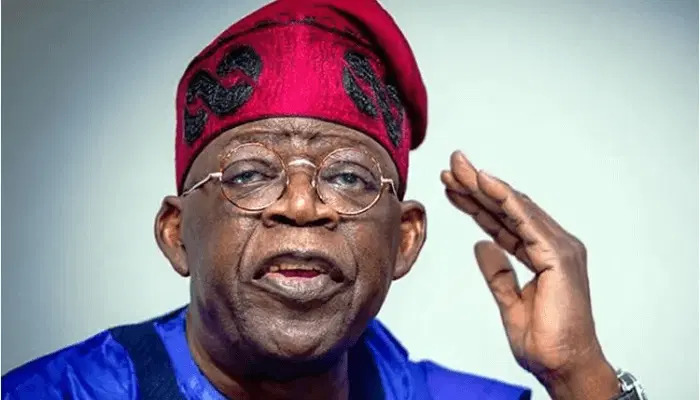
There are moments in a nation’s political journey when the truth must be told, not whispered. Nigeria is at such a moment. For all who still believe in the fragile dream called Nigeria, Ugoji Egbujo’s explosive and unapologetically frank piece, “Is Nigeria Now A Yoruba Republic?” must not be brushed aside as just another column in the endless chatter of public discourse. Mr. President, this article is a mirror. And you, more than anyone else, must look into it.
Egbujo’s column is not perfect, no piece of commentary is — but it is a compelling and critical lens into the fears, frustrations, and realities that many Nigerians, both within and outside the corridors of power, are quietly whispering in beer parlours, offices, and bedrooms across the country. His message is simple but heavy: “The brazen concentration of power in the hands of one ethnic group under President Bola Ahmed Tinubu is both dangerous and politically suicidal”.
Let’s get something straight, Nigeria is not a monarchy, and the presidency is not an ethnic crown. It is not a reward for electoral loyalty or ancestral heritage. The office of the President is a trust, one built on a fragile coalition of diverse ethnic nationalities and balanced expectations. What Egbujo calls “Tinubu’s Terrible Tribalism” is not merely a breach of protocol; it is a fundamental betrayal of that trust.
To be clear, this is not an attack on the Yoruba people. It is a defense of Nigeria. It is not a condemnation of merit but a call for equity. It is not an attempt to divide, but a plea to preserve what little unity we have left.
Egbujo’s article makes a blistering case that the upper echelons of Nigeria’s political, economic, judicial, and security architecture are now Yoruba-dominated, and not coincidentally. In fact, the roster of appointments reads like a roll call from a South-West regional meeting: President, Yoruba; Chief of Army Staff, Yoruba; IGP, Yoruba; DG of DSS, Yoruba; EFCC Chairman, Yoruba; Attorney GeneraL, Yoruba; Minister of Finance, Yoruba; CBN Governor, Yoruba; and Oil Minister, Yoruba.
And it does not end there. The FIRS, Customs, Immigration, Blue Economy, Digital Economy, Solid Minerals, NSITF, and even the Bank of Agriculture are all headed by Yoruba nationals. What message does this send to the other five geopolitical zones? That they are mere spectators in a play staged and directed from Bourdillon?
Even if the President insists that these appointments are based on merit, and let us assume, for the sake of argument, that this is true, what does it say about his understanding of political sensitivity and national cohesion? That the North, South-East, South-South, and Middle Belt have no equally qualified individuals to hold these positions? That only Lagos or Abeokuta can produce competent technocrats and leaders?
It is insulting, short-sighted, and reeks of a dangerous political arrogance.
Egbujo postulates that what we are witnessing is not just tribalism, but triumphalism, the idea that Tinubu, having fought hard against both PDP and Northern hegemony to ascend the presidency, now feels justified to rule as he pleases. But this is a tragic misreading of Nigeria’s political landscape. Presidential power in Nigeria is borrowed, not owned. It is conditional, not absolute.
There is no doubt Tinubu was a crucial figure in Nigeria’s democratic struggles, especially in the NADECO era. But so were many others, from the North, the East, and the South-South. Power-sharing was one of the unspoken compacts that emerged from our democratic experiment. Disregarding this compact is not only provocative, it is perilous.
Triumphalism is a fast-track ticket to resistance. It alienates rather than consolidates. The same way the perceived Hausa-Fulani dominance under past regimes fuelled calls for restructuring, secession, and devolution, Tinubu’s Yorubacentricism will spark a new wave of resentment that may ultimately destabilize the nation and cripple his administration.
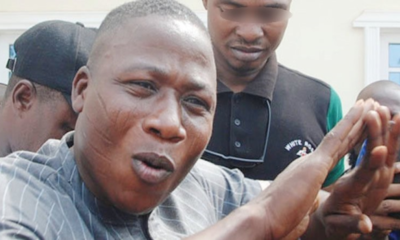
In a moment of profound irony, Egbujo suggests that even Sunday Igboho, the radical Yoruba activist, might have shown more national sensitivity in appointments if he were in charge. That comparison is damning. But it underscores a truth: leadership is not about rewarding your tribe, it is about reassuring the nation.
This is where Tinubu is failing, and failing loudly. There is no visible effort to balance the national equation, no attempt to calm frayed nerves, no show of inclusion. It is full-blown ethnic consolidation dressed up as political strategy. But in reality, it is bad politics, worse leadership, and a ticking time bomb.
True statesmanship involves sometimes sacrificing political convenience for national stability. Obasanjo, despite his own Yoruba roots, bent over backwards to ensure a sense of national spread in his appointments. Jonathan, a minority from the Niger Delta, went out of his way to accommodate the North. Even Buhari, despite his lopsidedness, understood the need to at least mask his favoritism with some semblance of geographical balance.
Tinubu has thrown that playbook away, and the consequences may be irreversible.
Egbujo reminds us that Tinubu was once a fierce advocate of Sovereign National Conference, of true federalism, of equity and resource control. He was among the loudest voices railing against the perceived Northern domination. But now, with the tables turned, the very sins he condemned have become his daily practice.
This political hypocrisy is both breathtaking and disappointing. What happened to the principled fighter for justice? What became of the progressive who once stood for restructuring and inclusion? Has power so thoroughly corrupted the man that he no longer hears the echoes of his past crusades?
Perhaps this is the ultimate tragedy, that Tinubu has not only betrayed Nigeria, but betrayed the very ideals that once made him a credible candidate in the eyes of millions.
Egbujo’s article is not just a personal opinion; it is a warning. It captures the disillusionment of a nation slowly waking up to the reality that it may have replaced one ethnic oligarchy with another. And if Tinubu is truly the political strategist he is widely known to be, he should not dismiss this as just another critical piece. He should study it, absorb it, and respond to it with action.
Mr. President, silence is not golden at this point. Nigerians are watching. More importantly, they are hurting. What they see in your appointments is not inclusion, but exclusion. Not meritocracy, but monopoly. Not unity, but division.
History will not be kind to a leader who, in a moment of opportunity, chose ethnicity over equity. Nigeria is not a Yoruba Republic. It is a federation of many nations. And no tribe, no matter how politically powerful, can govern successfully without the cooperation and trust of others.
Mr. President, read Ugoji Egbujo’s article not as an insult, but as an intervention. It is not an attack, but a national alarm bell. You have time to correct the course. You still have the opportunity to prove that your presidency is for all Nigerians, not just one ethnic constituency.
Because if you continue on this path of ethnic favoritism, the question will no longer be “Is Nigeria now a Yoruba Republic?”, but rather “What remains of Nigeria?” And that, sir, is not a legacy worth leaving behind.