Forgotten Dairies
Why Northern Politicians Prioritize Scholarships, Empowerment, and Palliatives -By Abdullahi Abubakar
Northern Nigeria possesses immense human and natural resources. What is required now is a collective rethinking of expectations one that encourages citizens to demand governance, and leaders to deliver sustainable progress.

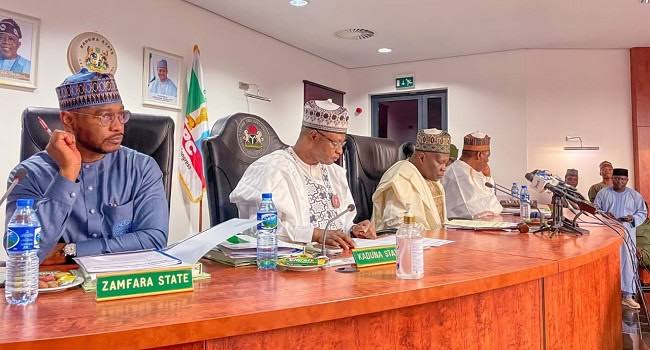
In recent years, many observers have noticed a common pattern in Northern Nigeria: politicians, especially lawmakers, are increasingly focusing their energy on distributing scholarships, empowerment programs, and palliatives. While these initiatives are important and beneficial to many people, they have gradually become the central measure by which leaders are judged in the region.
This situation raises an important question: why have these forms of assistance become the primary focus of political engagement in the North?
The answer lies largely in the expectations of the electorate.
Across many communities in Northern Nigeria, the understanding of the core responsibilities of elected officials particularly legislators remains limited. The primary role of lawmakers is to make laws, represent the interests of their constituents, and provide oversight on government activities. However, many citizens evaluate their representatives not by these duties, but by the amount of personal assistance they receive from them.
For many voters, a politician’s value is measured by how often he distributes money, provides personal financial help, or sponsors short-term empowerment initiatives. While these gestures can offer immediate relief, they often overshadow more critical and long-term responsibilities such as legislative work, policy development, and advocacy for large-scale infrastructure projects.
This dynamic creates a difficult political reality.
A lawmaker may sponsor numerous bills, advocate for developmental projects, and work diligently in legislative committees. Yet if that same lawmaker does not frequently distribute cash, scholarships, or palliatives directly to individuals, many voters may consider his tenure unsuccessful.
In such circumstances, political survival becomes extremely challenging.
Even when leaders facilitate the construction of roads, schools, hospitals, or other essential infrastructure, these achievements may receive little recognition if individuals do not personally benefit in the short term. In some cases, voters may even mobilize against such leaders during elections simply because they did not receive direct financial assistance.
As a result, many politicians feel compelled to redirect their efforts toward short-term relief programs rather than focusing solely on their constitutional duties. Scholarships, empowerment schemes, and palliative distributions become political necessities rather than purely developmental initiatives.
The situation sometimes goes even further. Citizens may approach politicians for financial assistance during life events such as childbirth, illness, school admissions, examination fees like WAEC or JAMB, and even job placements after graduation. While compassion and community support are valuable cultural traits, the expectation that a single politician must personally handle these responsibilities places an enormous burden on public officials.
Over time, this cycle shifts political priorities away from long-term development.
In many parts of Southern Nigeria, voters are more likely to evaluate leaders based on governance outcomes such as infrastructure, education policy, economic opportunities, and legislative performance. While personal assistance still exists, it does not entirely define political success.
The contrast highlights a deeper issue: development requires a shared understanding of responsibility between leaders and citizens.
For Northern Nigeria to achieve sustainable progress, there must be a shift in mindset. Citizens should begin to evaluate their representatives not only by the palliatives they distribute but also by their contributions to legislation, policy reforms, and community development projects.
At the same time, politicians must continue to prioritize transparency, accountability, and effective representation.
True development occurs when leaders focus on building systems that uplift entire communities rather than providing temporary relief to individuals.
If this mindset does not gradually change, the region risks remaining trapped in a cycle where short-term assistance replaces long-term development.
Northern Nigeria possesses immense human and natural resources. What is required now is a collective rethinking of expectations one that encourages citizens to demand governance, and leaders to deliver sustainable progress.
Only then can the region move forward toward a more prosperous future for all.
Abdullahi Abubakar (Sheikh)
S.A new media To the executive chairman Zaria LG
From Zaria, kaduna state
Medicalscientist2016@gmail.com